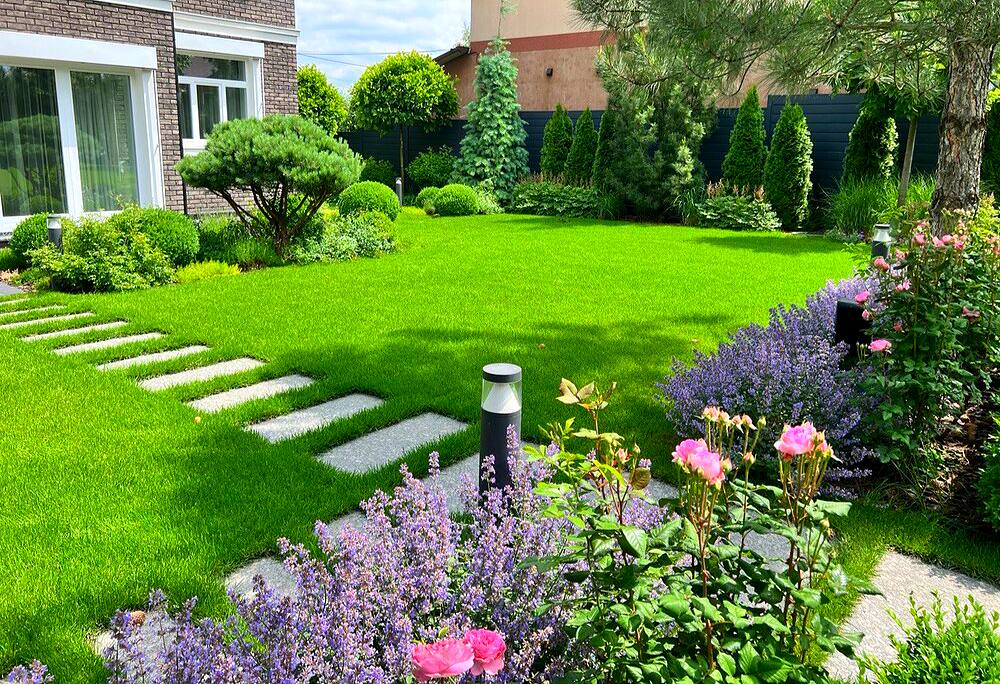
Creating a high quality landscape begins long before construction equipment arrives on site, pathways are installed, or the first plants are placed in the ground. It is the professional design stage that determines how effectively every element of the future environment will work together and how efficiently resources will be used throughout implementation. Attempting to begin site development without a comprehensive landscape concept almost always results in additional costs, design revisions, and the need to correct inconsistencies that could have been avoided through proper planning. Martin Palma, founder and CEO of Ecolandscape Studio, believes that a landscape design project serves as the strategic foundation of the entire development process because it is at this stage that the decisions shaping the long term quality of the property are made. At Ecolandscape Studio, we emphasize that thoughtful planning is the key to transforming an idea into a landscape that performs successfully for many years.
Before any design solutions are developed, we carry out a detailed evaluation of the site itself. We analyze the topography, soil characteristics, hydrological conditions, existing vegetation, engineering infrastructure, natural light exposure, and the relationship between the property and the surrounding architecture. This comprehensive approach allows us to identify potential constraints before construction begins while also recognizing the site’s natural advantages that can become valuable elements of the future composition. Specialists at Ecolandscape Studio analyze every property as a unified spatial system where every design decision influences the overall balance and performance of the landscape.
The next stage focuses on defining how the landscape will actually be used. We determine how the owners will interact with the space on a daily basis, which areas should perform representative functions, where privacy is essential, how movement throughout the property should be organized, and which technical solutions are necessary for comfortable long term operation. Understanding the client’s lifestyle allows us to create landscapes that remain functional not only immediately after construction but throughout many years of use. This methodology eliminates the random placement of functional zones and creates a logical spatial organization that supports both everyday comfort and architectural coherence.
Particular attention is given to integrating the architectural vision with the project’s engineering systems. The layout of pathways, retaining structures, drainage systems, lighting, irrigation, and planting areas is developed as one coordinated system rather than as separate technical disciplines. When these decisions are made independently during construction, the likelihood of technical conflicts increases significantly. Comprehensive planning enables us to evaluate how every component affects the entire landscape before implementation begins, minimizing costly modifications during construction.
An equally important aspect of professional planning is anticipating the long term evolution of the property. We evaluate how vegetation will mature over time, how seasonal changes will influence the appearance of the landscape, how engineering systems will be maintained, and how the environment will continue supporting its intended functions throughout years of operation. At Ecolandscape Studio, we believe that a successful landscape project must address not only how the site will appear upon completion but also how it will perform five, ten, or even twenty years into the future.
Professional planning also plays a vital role in effective budget management. Comprehensive project documentation allows us to determine material quantities, construction sequences, and technical requirements before implementation begins. As a result, unexpected expenses are significantly reduced, unnecessary reconstruction is avoided, and every stage of the project can be managed with greater financial accuracy. Detailed planning makes it possible to allocate investment efficiently while maintaining consistently high quality throughout the implementation process.
Another important advantage of professional landscape planning is the coordination of every participant involved in the project. Architects, engineers, contractors, planting specialists, and technical consultants all work according to one integrated documentation system and one clearly defined architectural concept. This significantly reduces the possibility of errors caused by inconsistent communication between different teams while ensuring that implementation quality remains stable regardless of the complexity of the property.
Ultimately, a landscape design project becomes the framework that brings together architectural vision, engineering precision, functionality, and the natural characteristics of the site into one integrated professional system. At Ecolandscape Studio, we see landscape design not as a formal preliminary stage but as the true foundation of successful site development, enabling us to create environments that preserve their architectural identity, practical value, and operational reliability for decades to come.









