Materials determine far more than the visual character of a landscape. They directly influence safety, everyday convenience, maintenance requirements, and the service life of individual outdoor areas. Martin Palma, founder and CEO of Ecolandscape Studio, emphasizes that professional material selection begins not with finding the most impressive texture but with analyzing the conditions in which a particular surface will be used every day. Foot traffic, exposure to moisture, temperature fluctuations, loads from furniture and equipment, soil characteristics, and the architecture of the building must all be considered together. Only through this approach can aesthetics become an extension of technical reliability rather than a short term decorative effect.
The starting point is to divide the property according to how different areas will be used. A main entrance experiences one type of load, a garden path another, while a terrace requires an entirely different combination of characteristics. Parking areas demand even greater strength from both the foundation and the finished surface. Using the same material throughout the entire property is therefore not always practical. We evaluate expected traffic intensity, slip resistance, exposure to water, and ease of maintenance before defining the technical requirements for each surface.
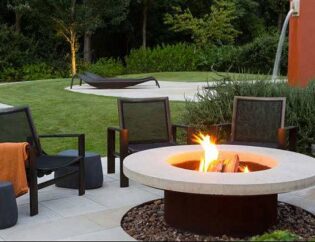
Natural stone remains one of the most expressive options due to its durability and ability to integrate naturally with vegetation. Granite performs well in heavily used areas, certain types of sandstone create a softer and more organic character, while large format stone slabs can emphasize contemporary architecture. Selection should consider not only the origin and color of the material but also its porosity, thickness, surface treatment, and resistance to climatic conditions. At Ecolandscape Studio, we analyze these characteristics before approving a specific material because visually similar products can perform very differently after several seasons of outdoor use.
Modern concrete surfaces provide considerably more design possibilities than conventional paving blocks. Different formats, textures, and installation patterns can create either calm continuous surfaces or more complex paving compositions. High quality elements offer consistent geometry and are suitable for areas exposed to intensive daily use. However, durability depends on more than the product itself. An improperly prepared base, insufficient compaction, or inadequate drainage can cause even expensive paving to settle, making correct installation technology an essential part of material selection.
Timber is particularly suitable for terraces and recreational spaces where tactile comfort and visual warmth are important. Outdoor applications, however, require wood species and construction technologies capable of withstanding continuous exposure to moisture and changing temperatures. Modern composite decking provides an alternative by maintaining greater dimensional stability while requiring less routine maintenance. Specialists at Ecolandscape Studio note that the choice between natural timber and composite materials should reflect the architectural identity of the property, operating conditions, and the owner’s willingness to perform regular maintenance.
Gravel and other loose materials provide opportunities to create more natural surfaces while maintaining permeability in selected areas. They work particularly well for secondary pathways, decorative zones, and spaces with moderate traffic. Achieving a durable result requires correct foundation preparation and clearly defined edges. Without appropriate restraints, loose material gradually spreads into lawns and adjacent surfaces, while inadequate preparation can lead to uneven areas and unwanted vegetation.
Combining several materials can visually separate functions without requiring additional physical structures. A change in texture may indicate the transition from a primary pathway to a relaxation area, define the boundaries of a terrace, or emphasize an entrance. We believe the number of combinations should remain carefully controlled. Excessive material variety fragments the landscape and weakens its architectural clarity. A restrained palette repeated throughout different parts of the property creates a much stronger and more coherent visual language.
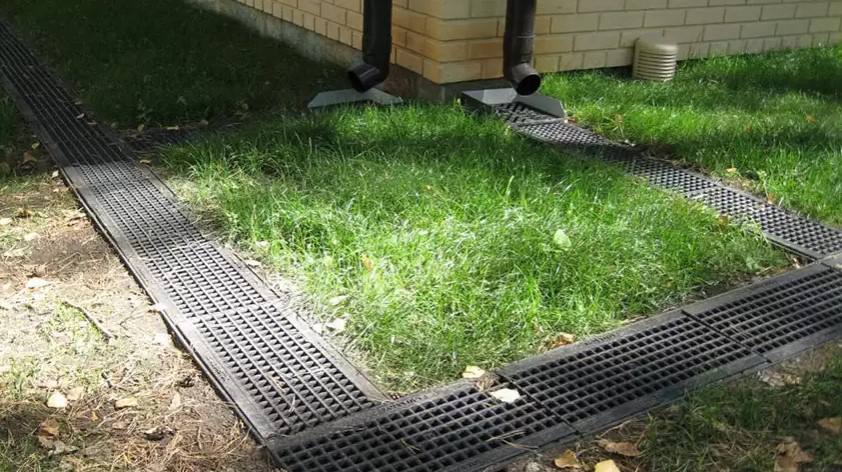
The technical details where different surfaces meet are just as important as their appearance. Transitions between stone, lawn, gravel, and timber must accommodate differences in elevation, soil movement, and water drainage. Poorly designed connections can quickly become areas where paving edges deteriorate or debris accumulates. Elevations, slopes, foundation structures, and methods of securing each material should therefore be established during the design stage so that the completed landscape remains practical and visually precise.
Durability should also be evaluated in relation to future maintenance costs. A material that appears economical initially may require regular treatment, joint restoration, or partial replacement over time. A more reliable solution may require a larger initial investment but prove significantly more efficient throughout its full service life. It is therefore important to consider the complete life cycle of every surface and determine whether localized repairs can be performed without dismantling surrounding landscape elements.
In a completed project, materials should never appear as an unrelated catalogue of surfaces. They must function as an integral part of the overall architecture of the landscape. At Ecolandscape Studio, we see high quality landscaping as a precise balance between aesthetics, technical performance, and actual operating conditions. When stone, timber, concrete, gravel, and other materials are selected according to expected loads and future maintenance requirements, pathways, terraces, and functional areas retain their appearance and reliability for significantly longer while supporting the integrity of the entire landscape.