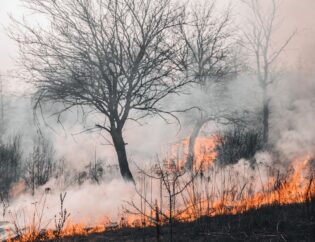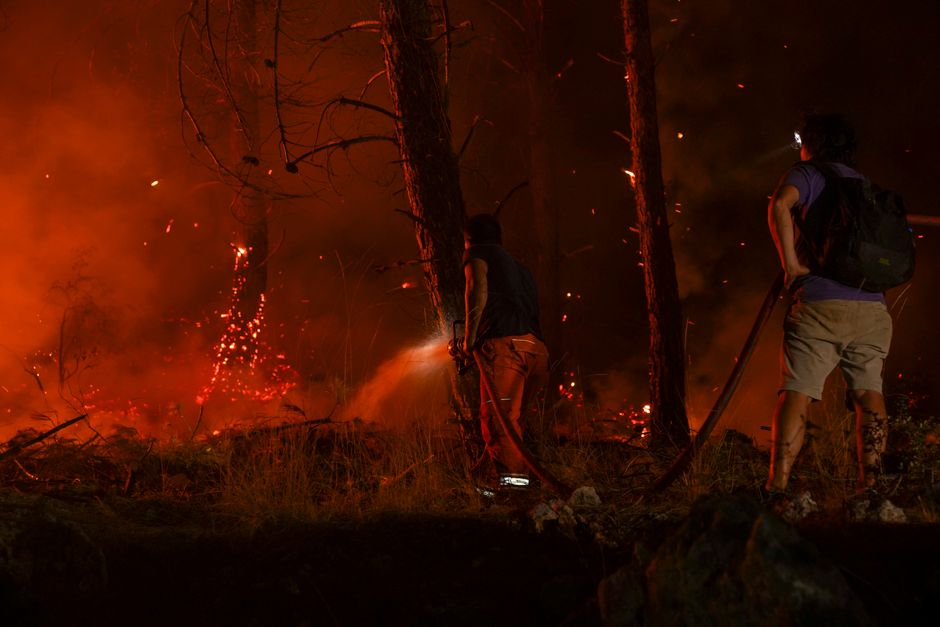
A small community in British Columbia’s Okanagan region recently made headlines for something that deserves more attention from homeowners across fire-prone areas of North America. Peachland has fully allocated its FireSmart grant funding, and local officials described the outcome as «extremely pleased» with the community’s response. Every dollar of the available grant money has been committed to residential properties, helping homeowners take real steps toward fire resistant landscaping and safer yard design.
This kind of program matters beyond the headlines. For anyone living in a dry, fire-prone region, the way a yard is designed can genuinely affect how a home responds to wildfire. Landscape design is not only about curb appeal or outdoor comfort — it plays a direct role in property safety, and the Peachland story is a clear example of what happens when communities take that seriously.
FireSmart is a Canadian program that gives homeowners practical guidance on reducing wildfire risk through smarter yard landscaping design. The core idea is straightforward: create defensible space around your home by choosing the right plants, materials and layout. This connects directly to principles that landscape designers already apply in drought tolerant garden design, xeriscape garden design and low maintenance garden design.
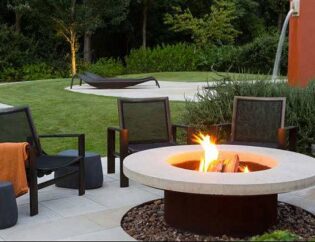
In practice, FireSmart landscaping involves replacing highly flammable plants with fire resistant alternatives, keeping vegetation well-spaced and trimmed, and using non-combustible materials like gravel, stone or concrete in areas close to the home’s foundation. Lawn alternatives such as decomposed granite, river rock or low-growing ground covers can replace traditional grass in zones nearest to the structure. Planting design becomes a safety tool, not just an aesthetic one.
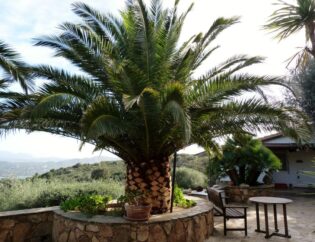
Native plant garden design fits naturally into this approach. Many native species adapted to dry climates are naturally more fire resistant than ornamental exotics, and they also support pollinator garden design goals by attracting bees and butterflies. Water wise landscaping and rain garden design principles also align well with FireSmart recommendations, since drought tolerant plants require less irrigation and tend to have lower moisture content during fire season.
Martin Palma, founder and CEO of Ecolandscape Studio, has worked on residential landscape design projects in regions where wildfire risk is a real concern, and he points out that most homeowners underestimate how much their current planting choices affect fire behavior. In his experience, the biggest shift comes when people start thinking about their yard in zones — what is immediately next to the house, what is within 10 meters, and what lies beyond that — because each zone calls for a different approach to plant selection, spacing and materials.
The Peachland grant program focused on helping residents make specific improvements to their properties. While grant availability varies by region, the landscaping actions themselves are universally applicable for anyone in a fire-prone area.
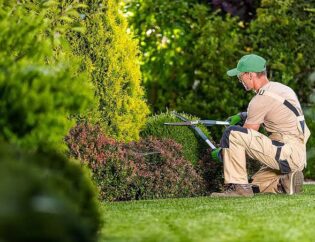
Removing dead plant material and dry debris from around the home is one of the most immediate steps. Dry leaves, bark mulch and dense shrubs close to the foundation create easy pathways for fire to travel. Switching to gravel or stone garden edging ideas near the house, replacing wood chip mulch with non-combustible alternatives, and trimming tree branches that hang over the roof are all practical moves that fall within standard residential landscape design practice.
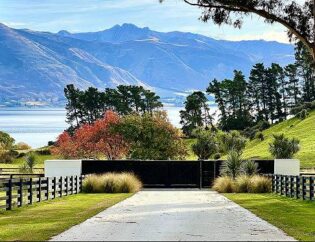
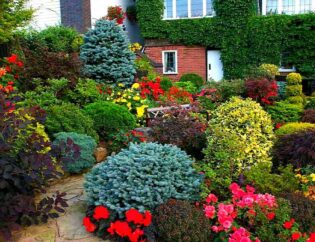
For front yard landscaping ideas in fire-prone zones, spacing plants further apart and choosing lower-growing species reduces the chance of fire spreading from one plant to the next. Modern garden design often favors clean lines, open space and minimal planting density — which happens to align well with fire resistant principles. Privacy landscaping using fire resistant shrubs or masonry walls is another option that serves both safety and aesthetic goals.
Landscape lighting ideas also play a role here. Well-placed outdoor lighting helps homeowners spot hazards at night and improves overall safety around the property, which is a detail often overlooked in fire preparedness planning.
The Peachland example shows that when grant funding is made available and homeowners are given clear guidance, communities respond. The full allocation of funds reflects genuine interest in fire resistant landscaping, and it points to a broader shift in how people think about outdoor living space design in regions where climate conditions are changing.
For homeowners in similar environments, the takeaway is practical. You do not need a grant program to start making smarter landscaping decisions. Reviewing your current planting design, reducing combustible materials near the home, choosing drought tolerant and native species, and thinking about your yard in defensible zones are all steps that improve both safety and long-term property value. Ecolandscape Studio regularly helps clients in dry and fire-adjacent regions rethink their yard landscaping with exactly these goals in mind — building outdoor spaces that are beautiful, functional and genuinely safer to live around.