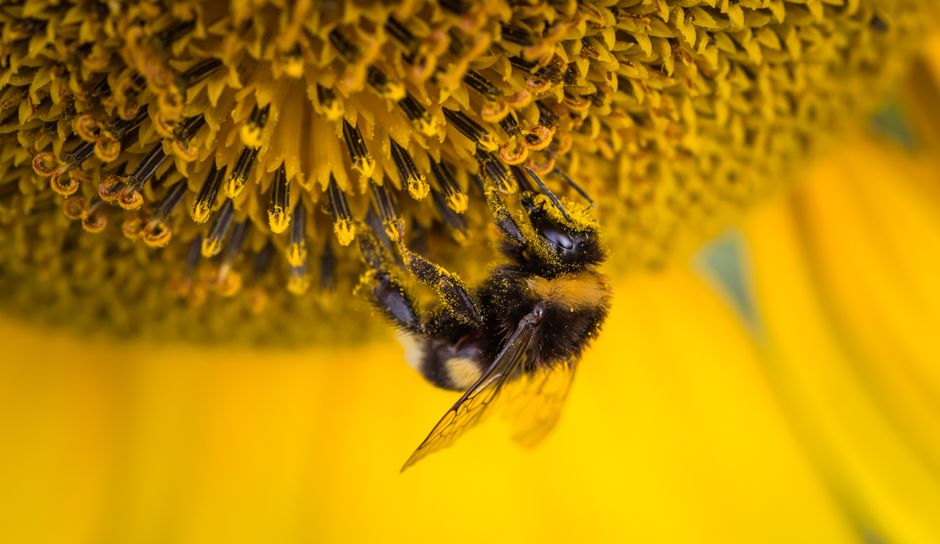
Across the globe, pollinator populations are shrinking at a rate that alarms ecologists, farmers, and urban planners alike. Bees, butterflies, moths, and other insects responsible for fertilizing roughly 75% of the world’s flowering plants are losing ground to habitat destruction, pesticide use, and climate disruption. Against this backdrop, a bold experiment in San Francisco offers a different kind of story — one where urban development becomes part of the solution rather than the problem.
The Mission District in San Francisco became home to the world’s first officially designated Pollinator District, a project that reimagines how cities can be designed and managed to support insect life. The initiative, driven by community organizations and environmental advocates, transformed neglected urban spaces into interconnected corridors of native plants, reduced chemical inputs, and created nesting habitats for wild bees and other beneficial insects. The results have drawn attention from city planners, landscape architects, and conservation scientists worldwide.
The core idea behind the Pollinator District is straightforward: pollinators need food, shelter, and safe passage through the landscape. Urban environments typically fail on all three counts. Manicured lawns, ornamental plantings with little nectar value, and fragmented green spaces leave insects without the resources they need to survive and reproduce. By contrast, the Mission District project replaced conventional landscaping with dense plantings of native flowering species, allowed certain areas to remain unmowed, and installed bee hotels and nesting structures throughout the neighborhood.
What makes this model particularly relevant for landscape professionals and property developers is the evidence that ecological restoration does not require sacrificing aesthetic quality or economic value. The transformed spaces in the Mission District attracted community engagement, increased foot traffic to local businesses, and generated measurable improvements in biodiversity within just a few seasons. Monitoring programs recorded significant increases in native bee species richness and abundance, alongside greater populations of butterflies and hoverflies.
The lessons from San Francisco translate directly into practical guidance for anyone involved in landscape design or property development. Choosing plants with high pollinator value — particularly native species that bloom across different seasons — creates a continuous food supply that supports diverse insect communities. Reducing or eliminating pesticide use, especially systemic insecticides like neonicotinoids, removes one of the most significant chemical threats to bee health. Incorporating bare soil patches, hollow stems, and leaf litter into planting schemes provides nesting opportunities for the majority of native bee species, which nest in the ground rather than in hives.
Connectivity matters enormously in this context. A single pollinator-friendly garden, however well planted, offers limited benefit if it sits in isolation surrounded by hostile terrain. The Pollinator District model works because it links individual properties and public spaces into a network that insects can navigate. This principle has direct implications for how developers and landscape architects approach site planning. Green corridors, living walls, rooftop gardens, and bioswales can all serve as stepping stones that extend the reach of pollinator habitat across an urban area.
Critics of such initiatives sometimes argue that urban greening projects are cosmetic gestures that distract from the larger systemic drivers of pollinator decline, including industrial agriculture and large-scale land conversion. This criticism carries weight. No amount of urban habitat creation will compensate for the loss of millions of acres of wildflower meadows and hedgerows in agricultural landscapes. The pesticide treadmill in conventional farming remains a fundamental challenge that urban projects cannot address on their own.
At the same time, dismissing urban pollinator initiatives as insufficient misses their genuine value. Cities cover a growing share of the earth’s surface, and the cumulative area of gardens, parks, road verges, and institutional grounds within metropolitan areas is substantial. Research has consistently shown that urban environments, when managed sympathetically, can support surprisingly high levels of pollinator diversity — in some cases exceeding that found in intensively farmed rural areas. Urban residents who engage with pollinator-friendly landscapes also develop stronger connections to ecological issues, which can translate into broader support for conservation policy.
For landscape and development professionals, the Pollinator District offers a replicable framework rather than a one-off curiosity. The principles it demonstrates — native planting, reduced chemical inputs, structural habitat provision, and spatial connectivity — are applicable at scales ranging from a private garden to a large mixed-use development. Certification schemes and design standards for pollinator-friendly development are beginning to emerge in several countries, giving practitioners concrete benchmarks to work toward.
The question of whether development can genuinely reverse pollinator decline does not have a simple answer. Urban projects alone cannot undo the damage caused by decades of agricultural intensification and habitat loss. What they can do is demonstrate that the built environment need not be a dead zone for insect life, and that thoughtful design choices accumulate into meaningful ecological outcomes. The Mission District experiment suggests that when communities, designers, and property owners commit to sharing space with the insects that sustain our food systems, the results can be both measurable and inspiring.