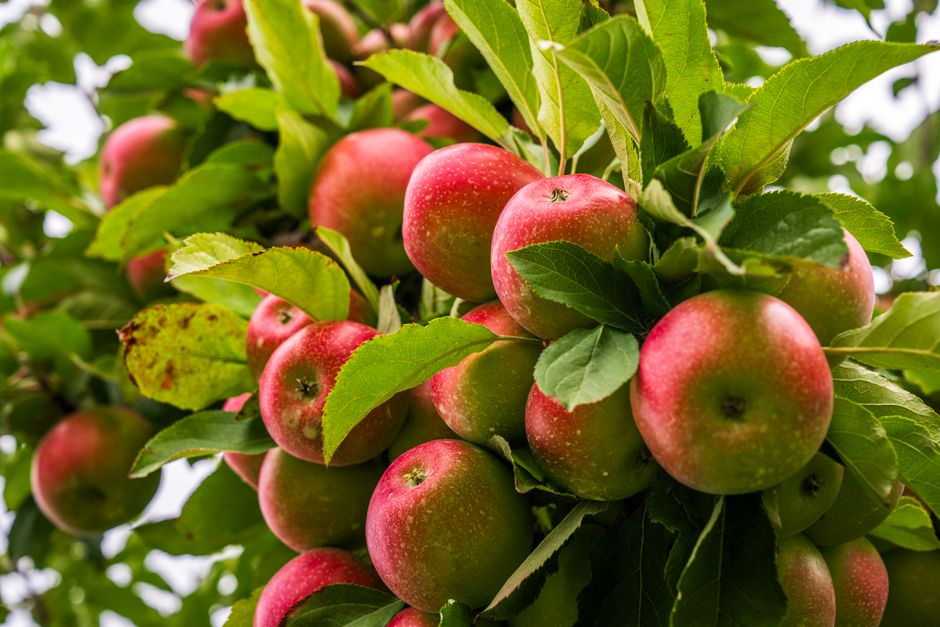
Somewhere in California, between rows of gnarled branches and fragrant blossoms, a quiet revolution in fruit growing is taking place. A small but dedicated nursery has made it its mission to preserve and propagate heirloom fruit trees — varieties that were once common in American orchards but have largely disappeared from commercial agriculture. For gardeners, historians, and food enthusiasts alike, this work represents something far more meaningful than simply selling plants.
Heirloom fruit trees are varieties that were developed and cultivated before the mid-20th century, often passed down through generations of farming families. Unlike modern commercial cultivars bred for uniform appearance, long shelf life, and ease of transport, heirloom varieties were selected for flavor, texture, and regional adaptability. Many of them carry names that sound like poetry — Spitzenburg, Calville Blanc d’Hiver, Newtown Pippin — each one a living artifact of agricultural history.
The nursery’s collection spans hundreds of apple, pear, plum, quince, and citrus varieties, some of which date back centuries. Certain apple cultivars in the catalog were favorites of Thomas Jefferson at Monticello. Others were brought to California by Gold Rush settlers who planted them in the foothills of the Sierra Nevada, hoping to recreate the orchards they had left behind on the East Coast or in Europe. These trees survived not because of commercial demand, but because someone, somewhere, kept planting them.
What makes this work particularly urgent is the pace at which agricultural biodiversity has declined. Over the past century, industrial farming has narrowed the genetic pool of cultivated fruit dramatically. A handful of apple varieties — Gala, Fuji, Honeycrisp — now dominate supermarket shelves across the country, while thousands of older varieties have quietly vanished from cultivation. The loss is not merely aesthetic. Genetic diversity in fruit trees provides resilience against disease, pests, and changing climate conditions. When a single blight or fungus can devastate a monoculture orchard, diversity becomes a form of insurance.
The nursery approaches its work with the seriousness of an archive. Staff members travel to old homesteads, abandoned orchards, and agricultural research stations to locate surviving specimens of rare varieties. Once identified, cuttings are taken and grafted onto rootstock — a propagation technique that preserves the exact genetic identity of the original tree. This process requires patience and skill, and it means that a tree purchased from the nursery today carries the same genetic material as one that may have grown in a colonial-era garden.
Customers who visit the nursery often describe the experience as unexpectedly moving. Walking among trees labeled with names and histories, many people find themselves connecting with a sense of place and continuity that modern gardening rarely offers. A Gravenstein apple, for instance, was once so central to Sonoma County’s identity that it became the subject of local festivals and community pride. Planting one in a backyard garden is, in a small way, an act of cultural preservation.
The nursery also serves an educational function, offering workshops and consultations for home gardeners interested in growing heirloom fruit. Topics covered include:
- Grafting techniques for propagating specific varieties
- Pruning methods suited to older tree forms
- Soil preparation and organic care practices
Variety selection based on climate and regional conditions
Harvesting and storage of less familiar fruit types
This educational component reflects a broader philosophy: that preserving heirloom varieties is only meaningful if people actually grow and eat them. A variety kept alive only in a research collection remains abstract. One growing in a neighborhood garden, producing fruit that neighbors taste and remember, has a chance of surviving another generation.
For landscape designers and ecological gardeners, heirloom fruit trees offer particular appeal. Many older varieties were selected for their ability to thrive with minimal inputs — they evolved in an era before synthetic pesticides and fertilizers, and they often demonstrate natural resistance to common diseases. Incorporating them into a designed landscape adds not only beauty and productivity but also a layer of ecological and historical meaning that newer cultivars simply cannot provide.
The work of this California nursery sits at an intersection that is increasingly relevant: the meeting point of food culture, environmental stewardship, and living history. As interest in local food systems, biodiversity, and sustainable gardening continues to grow, the demand for heirloom fruit trees has expanded well beyond the niche audience of heritage enthusiasts. Home gardeners, small-scale farmers, and restoration ecologists are all finding reasons to look backward in order to move forward.
A single tree, properly cared for, can produce fruit for a century or more. Planting an heirloom variety is an investment not just in a garden, but in a thread of continuity that stretches from past orchards to future harvests. That is a quiet but powerful thing.









