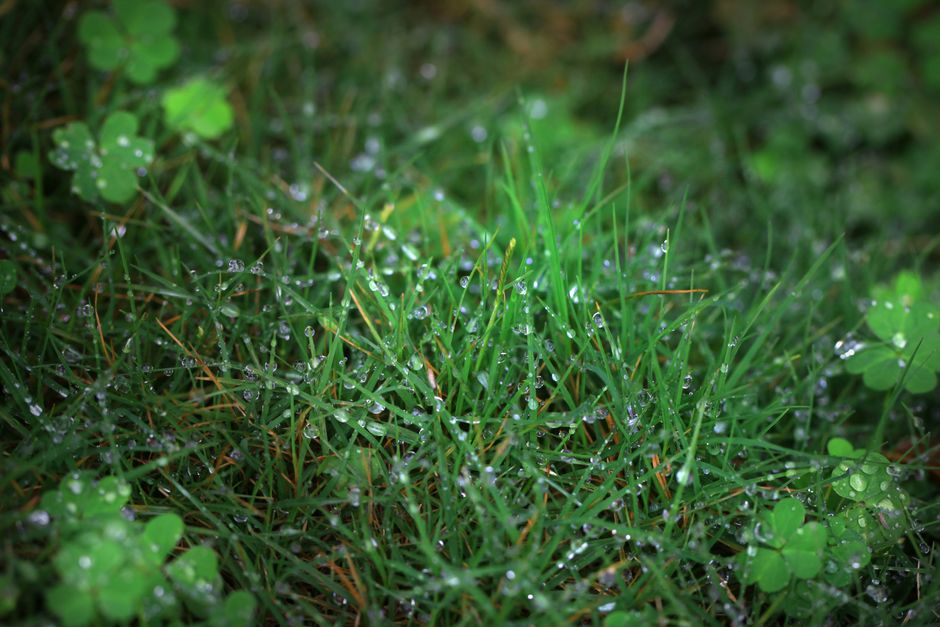
As Denver enforces strict water restrictions and issues fines to homeowners who water their grass during drought conditions, a growing number of residents across the United States are turning to an unexpected alternative: clover lawns. According to recent reports covered by Tech Times, clover lawns can reduce household water bills by as much as 50%, making them a financially attractive option at a time when traditional grass maintenance is becoming both costly and legally complicated.
The shift is not simply a trend driven by environmental enthusiasm. It reflects a practical response to real economic pressure. Water rates in many American cities have climbed steadily over the past decade, and drought-related restrictions have made maintaining a conventional green lawn increasingly difficult. Denver’s decision to fine homeowners for watering grass during designated restriction periods has pushed many people to reconsider what they plant in their yards in the first place.
Clover, particularly white clover (Trifolium repens), requires significantly less water than traditional turfgrass. It has deep root systems that allow it to access moisture further below the soil surface, which means it stays green even during dry spells when grass would turn brown and dormant. This characteristic alone makes it appealing to homeowners who want a visually maintained yard without the water consumption that comes with it.
Beyond water savings, clover lawns offer several additional benefits that contribute to their growing popularity:
- Nitrogen fixation — Clover pulls nitrogen from the air and deposits it into the soil, reducing or eliminating the need for synthetic fertilizers.
- Low mowing requirements — Clover grows to a natural height of around 4 to 8 inches and does not need frequent cutting, which saves both time and fuel costs.
- Pollinator support — The flowers attract bees and other beneficial insects, contributing to local ecosystem health.
Drought resistance — Clover maintains its color and density with far less irrigation than most grass varieties.
Weed suppression — A dense clover lawn naturally crowds out many common weeds, reducing the need for herbicides.
The financial math is straightforward. A homeowner in a city like Denver who currently spends $80 to $120 per month on water during summer months could potentially cut that figure in half by replacing grass with clover. Over a full growing season, that represents savings of $200 to $360 or more, depending on yard size and local water pricing.
Denver’s enforcement approach has added urgency to the conversation. The city implemented tiered fines for homeowners who violate watering schedules, with penalties starting at $100 and increasing for repeat violations. For residents who have already received notices or fines, the appeal of a lawn that simply does not need as much water is obvious. Clover sidesteps the problem entirely rather than requiring homeowners to carefully manage irrigation schedules.
Critics of the clover movement point out that not all municipalities or homeowners associations accept clover as a legitimate lawn alternative. Some HOA agreements still classify clover as a weed and require removal. This creates a complicated situation where a homeowner might be fined for watering grass on one hand and restricted from planting clover on the other. Navigating these regulations requires careful review of local ordinances and HOA rules before making any changes to a yard.
Landscaping professionals have noted that transitioning from grass to clover is relatively simple and inexpensive. Clover seed is widely available and costs a fraction of what homeowners typically spend on grass seed or sod. It can be overseeded directly into an existing lawn, gradually replacing grass as it establishes itself. For a full conversion, light soil preparation and consistent moisture during the germination period are usually sufficient.
The broader context here involves a rethinking of what a lawn is supposed to accomplish. For much of the 20th century, the green grass lawn was treated as a standard feature of residential property, something maintained largely for aesthetic reasons and social conformity. Water was cheap, and the environmental cost of lawn maintenance was not widely discussed. That calculation has changed. Water scarcity, rising utility costs, and growing awareness of ecological impact have all contributed to a reassessment of lawn culture in the United States.
Clover is not the only alternative gaining attention. Native grasses, ground covers, and xeriscaping — landscaping designed to minimize water use — are all part of the same broader movement. But clover has a particular advantage in that it looks familiar and green, which makes it easier for homeowners to adopt without feeling like they are making a radical departure from conventional yard aesthetics.
For homeowners in Denver and similar cities facing water restrictions, the practical case for clover is difficult to ignore. It reduces water consumption, lowers bills, requires less maintenance, and avoids the risk of fines for overwatering. The combination of regulatory pressure and economic incentive is pushing more people toward a lawn solution that was, until recently, largely overlooked.