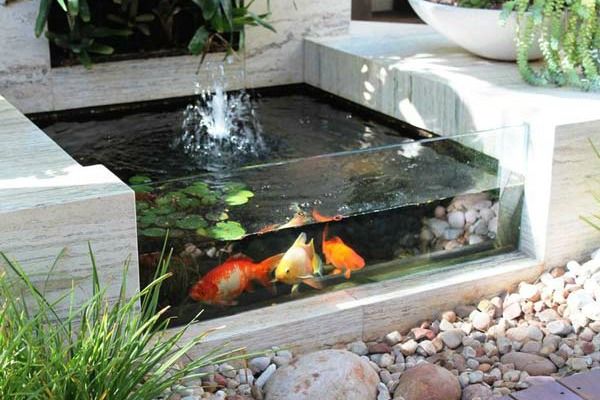
An aquarium is not just a water feature with fish it’s a complete ecosystem that can seamlessly blend into the landscape, infusing your garden with the dynamism and magic of the aquatic world. While traditional garden elements may begin to feel repetitive, an aquarium in landscape design becomes a unique feature that draws attention, making your garden truly exceptional. It enhances not only the visual appeal but also creates a living atmosphere that evolves with every passing moment. Water, plants, fish, and microorganisms form a holistic system that delights the senses while contributing to ecological balance.
A Garden with an Aquarium: A New Space for the Aquatic World
Incorporating an aquarium into your garden allows you to introduce not just a decorative element, but also a natural feature that harmonizes with other landscape components. Aquariums can serve as focal points in the garden, highlighting areas that deserve particular attention. The placement of the aquarium is crucial it can either be tucked away, integrated into a relaxation area, or serve as a bold accent in open spaces.
Types of Aquariums in Landscape Design
- In-Ground Aquariums:
In-ground aquariums create an element of surprise, as though the land itself has been enriched with a naturally occurring water feature. These aquariums serve as primary focal points in the landscape, perfect for placement along pathways, near gazebos, or as part of a larger garden scene. The in-ground aquariums act as «living» pictures, with water reflections and greenery constantly changing, creating a dynamic effect that captures attention. - Mobile Aquariums:
Mobile aquariums embedded in garden furniture (such as tables or partitions) bring both functionality and originality to the space. These aquariums are easily movable, making them ideal for those who enjoy adjusting the focal points of their garden. A great choice for a terrace or gazebo, mobile aquariums allow you to refresh the look of the garden with minimal effort. - Hanging Aquariums:
A more recent trend, hanging aquariums are part of the vertical garden concept. These aquariums create an effect of weightlessness and mystery, adding a sense of lightness and style to the garden. They can be incorporated into balcony railings, pergolas, or decorative screens. Perfect for small gardens, hanging aquariums offer a practical and visually appealing solution where every element must be both functional and aesthetically pleasing.
How Plants and Fish Transform the Aquarium into an Ecosystem
For open aquariums, selecting plants that are well-suited to fluctuating conditions is essential. Water lilies, sedges, reeds, and duckweed are perfect for creating a natural corner in the garden. These plants not only enhance the visual appeal of the aquarium but also play a crucial role in maintaining the ecosystem by purifying the water and preventing algae growth. They absorb excess nutrients, which helps maintain biological balance.
Fish are not only decorative but also active participants in the ecosystem. Goldfish, koi, and carp help control insect populations, clean plants of algae, and add movement to the water. These species are ideal for open aquariums and blend perfectly with the ecosystem, contributing to the living, dynamic quality of the water feature.
Ecological Aspects of Aquariums in Landscape Design
Aquariums in gardens support the ecosystem balance of the property and can be integrated into a sustainable landscape design. For example, aquariums can be linked with rainwater collection systems or used in a closed-loop irrigation cycle, significantly conserving resources and preserving the environment. These elements allow you to create a garden that is not only beautiful but also environmentally sustainable.
Ecolandscape Studio’s Tips for Integrating Aquariums into the Garden
- Choosing the Right Location for the Aquarium:
The placement of the aquarium is key. It should not overheat in direct sunlight during the summer or freeze in the winter. Open aquariums need to be positioned with attention to seasonal changes and should be sheltered from harsh frosts. Additionally, the visibility of the aquarium is important it should be visible enough to catch the eye, but not interfere with the daily activities of the garden. - Integrating with Other Water Features:
If your garden already includes ponds, waterfalls, or fountains, the aquarium can be integrated into the existing water system. This will create not only a visually interesting focal point but also a dynamic addition to the garden. The circulating water will produce soothing, harmonious sounds, enhancing the tranquil and comfortable atmosphere of your outdoor space. - Decor and Lighting:
To make the aquarium stand out, thoughtful lighting is key. At night, the aquarium can become the centerpiece of your garden, creating enchanting reflections and plays of light on the water. The use of decorative elements like stones, driftwood, and accessories that align with the overall garden design will help make the aquarium blend seamlessly into the landscape, increasing its visual appeal.
Martin Palma, the founder and CEO of Ecolandscape Studio, highlights: “An aquarium in the garden is not just a decorative feature; it’s a unique way to integrate nature into your space. The right placement, careful attention to water quality, and the selection of appropriate plants and fish will create a harmonious ecosystem. These aquariums become living components of the landscape, changing with the seasons and adding a dynamic element to any garden.”
An aquarium in landscape design is not merely an accessory it is a full-fledged ecosystem element that can transform a garden, adding natural harmony and bringing elements of water and living nature into your outdoor space. With careful selection and integration, an aquarium can become the focal point of the garden, drawing attention and creating an atmosphere of tranquility and beauty.
At Ecolandscape Studio, we recommend incorporating aquariums into your landscape project to create a unique ecosystem that will delight the eye and bring lasting harmony to your garden.









