At Ecolandscape Studio, we always emphasize that a modern garden is not just about visual beauty. Increasingly, we design spaces that engage all the senses. One of the most innovative and striking approaches is the concept of aromatic winds. This involves designing scent pathways where plants, architecture, and microclimate interact so that every step through the garden becomes a full emotional experience.
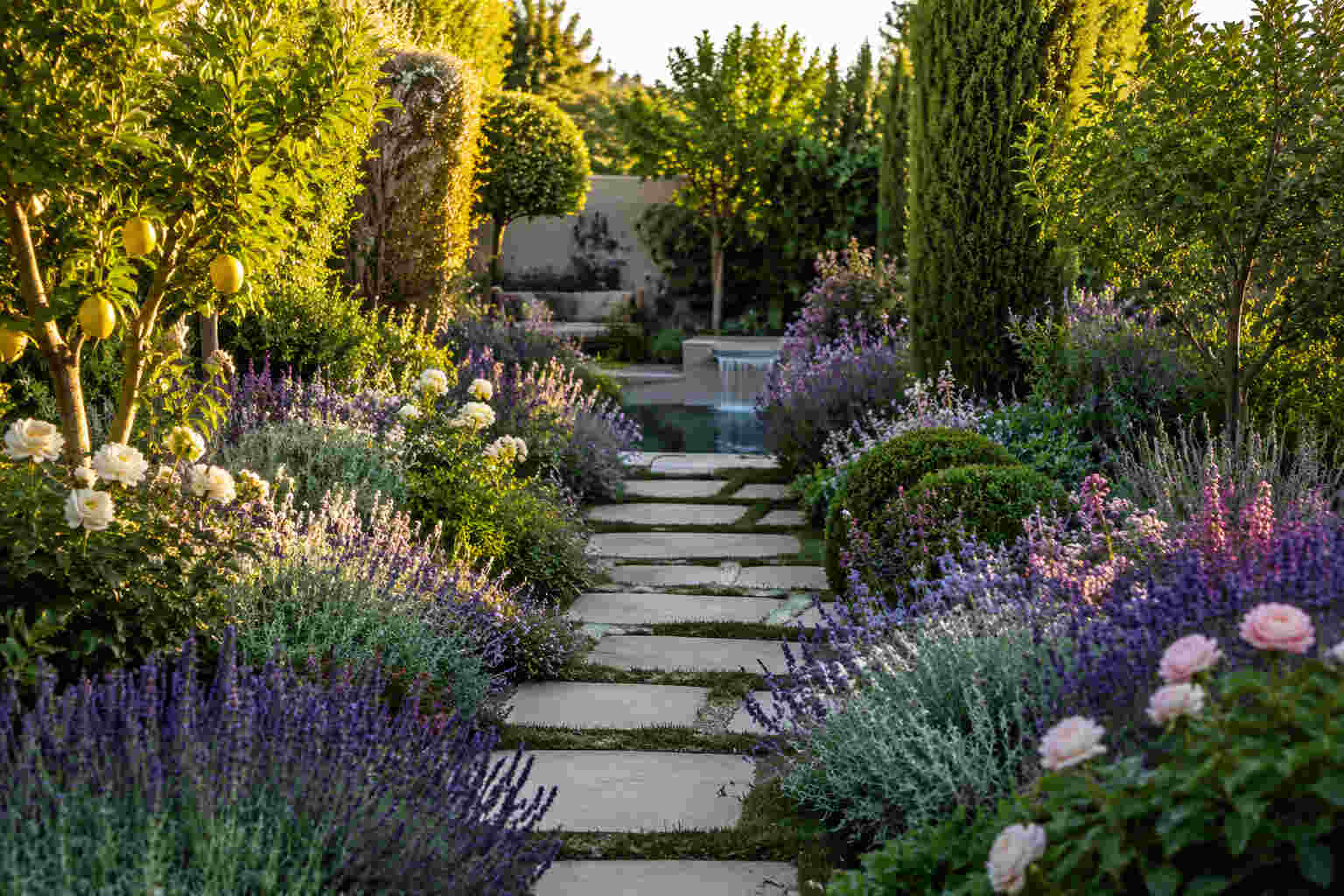
Aromatic winds are based on a detailed analysis of the site and its microclimate. When planning, we consider prevailing wind directions, airflow intensity, humidity, soil type, and sunlight. This allows us to position plants so that their scents naturally disperse, creating harmonious olfactory routes. Lavender, jasmine, thyme, mint, rosemary, roses, and citrus trees form the core of these pathways, crafting complex, layered scent compositions that change depending on the time of day and season.
Martin Palma, founder and CEO of Ecolandscape Studio, shares his experience: “We create gardens that affect people through all their senses. Aromatic routes allow visitors to experience the space differently, making a garden walk emotionally rich and profound.”
In our projects, we often combine aromatic pathways with landscape architecture and microclimate elements. For instance, water features, fountains, and ponds enhance scent dispersion through humidified air, provide a cooling effect, and increase comfort in the garden. Plant height, pathway placement, hedges, and decorative walls help form natural “channels” for aromas, intensifying them where desired.
The psychological effects of aromatic pathways are supported by research in environmental psychology and phytotherapy. Walking through a garden with diverse scents reduces stress, improves mood, and enhances focus. Aromatic gardens are especially beneficial in urban settings, where high-density construction and noise reduce quality of life. In private gardens, we tailor the routes to the individual preferences of the owners, creating emotional scenarios that reflect their personality and seasonal habits. In SPA and hotel complexes, aromatic winds amplify therapeutic effects and create a unique client experience.
The ecological aspect is always present in our projects. We use local and adapted plants to reduce irrigation and maintenance needs, preserve soil health, and support biodiversity. The combination of flowering plants and aromatic herbs attracts bees, butterflies, and birds, forming a complete ecosystem. We also consider flowering phases and scent intensity so the garden remains interesting and diverse throughout the year, without overwhelming visitors’ senses.
Modern technology plays an important role in enhancing aromatic pathways. In enclosed or semi-open gardens, microclimate systems regulate humidity, temperature, and airflow direction, ensuring even and stable scent distribution. Using aromatic clusters in combination with water elements creates a richer and more relaxing environment, amplifying the sensory impact on visitors.
Aromatic winds turn a garden into a living space where every scent is an emotional note, and every pathway tells a unique story. On the Ecolandscape Studio, we share practical tips to inspire you to create your own scent routes: consider wind strength, microclimatic conditions, scent diversity, and seasonal changes in plants.
According to Martin Palma: “Properly designed aromatic routes allow people to experience the garden with all their senses, creating impressions that cannot be conveyed visually.” The concept of aromatic winds unites aesthetics, ecology, and emotional impact, transforming the garden into a space that grows, changes, and “speaks” uniquely to each visitor.