When creating a beautiful and functional garden, many gardeners wonder whether it’s possible to combine decorative plants with fruit crops. The answer to this question is not always obvious, as there are many factors that can influence plant health, growth, and yield. At Ecolandscape Studio, we often encounter situations where decorative plants next to fruit plants can both enhance the aesthetic appearance of the site and lead to competition for resources. In this article, we will share our experience and recommendations for properly combining decorative and fruit-bearing plants in your garden.
How Decorative Plants Can Benefit Fruit Plants
Decorative plants placed near fruit crops can make a great addition to your garden. They can perform several useful functions, such as attracting beneficial insects, maintaining soil moisture, and even protecting against pests. For example, aromatic herbs like lavender, thyme, or sage pair well with fruit trees such as apple or pear, creating a natural insect repellent around them while also enhancing the space aesthetically. These plants can also attract pollinators like bees, which are crucial for a good harvest.
In addition, decorative plants can be effectively used to create beautiful color accents around fruit plants, enhancing the overall visual appeal of the garden. For example, using low-growing flowers or shrubs as a border around apple or cherry trees not only creates a visual division of space but also highlights the fruit plants, giving your garden a harmonious look.
When Decorative Plants Become a Problem
Although decorative plants can bring many benefits to the garden, it’s important to consider the potential risks of combining them with fruit crops. The most significant problem is competition for resources like water, light, and nutrients. As a result, if decorative plants are not properly positioned, they can overshadow fruit trees and shrubs, leading to stunted growth and reduced yield.
Fast-growing decorative shrubs or tall perennials, if planted too close to fruit plants, may deplete the soil of nutrients and moisture, depriving the fruit trees of essential resources. In this case, not only the garden’s appearance can suffer, but the health of the fruit plants as well. For example, decorative shrubs like hostas or lavender, when placed too close to cherries or apples, may shade them, limiting sunlight access and affecting photosynthesis. This, in turn, slows the growth of the trees and leads to low yields.
It’s also important to note that decorative plants with powerful root systems can directly compete with fruit plants, especially if the trees are growing in small spaces with limited room. In such cases, it’s crucial to choose plants carefully so that they don’t interfere with one another.
How to Properly Combine Decorative and Fruit-Bearing Plants
In order to ensure that decorative plants provide benefits rather than cause problems, they need to be positioned correctly. It’s important to consider the needs of each plant regarding water, light, and nutrients. The key is selecting plants that can coexist without excessive competition.
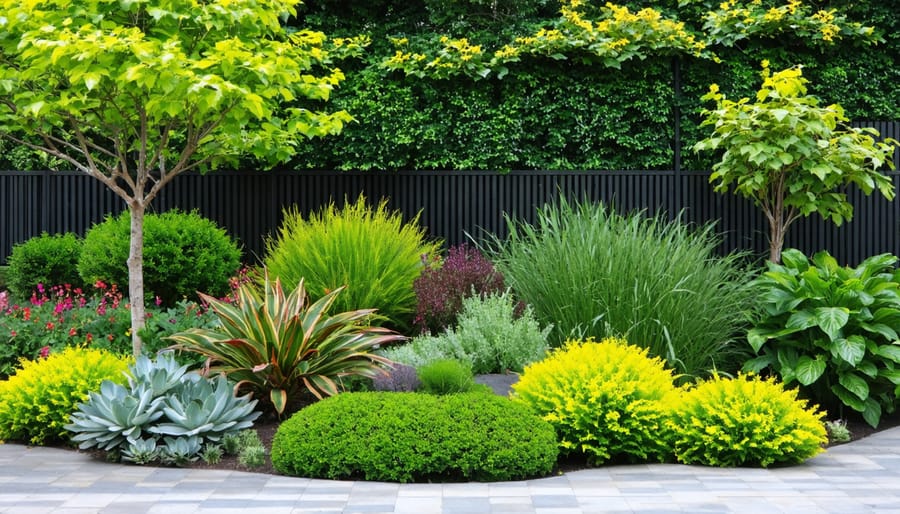
The first thing to pay attention to is the height of the plants. Tall trees or shrubs like apple or pear trees should be placed away from low-growing decorative plants that might overshadow them. On the other hand, decorative plants like lavender or sage are perfect for planting near berry bushes or under apple trees, where they won’t compete for light and will instead help create a beautiful composition that draws attention.
It’s also recommended to choose plants with similar water and light requirements. For example, drought-resistant plants like succulents or certain types of lavender will thrive next to fruit trees that require minimal watering. While moisture-loving plants like irises or water lilies are well-suited for wet areas of the garden near fruit trees that need more moisture.
Recommendations for Placing Decorative Plants
To avoid competition and provide plants with the necessary conditions for growth, follow these recommendations:
- Proper Placement: Place decorative plants so that they don’t overshadow fruit plants. Tall plants should be located away from low-growing fruit plants to ensure they receive enough sunlight.
- Consider Plant Needs: Choose plants with similar requirements for water and light. For example, if the fruit trees need regular watering, you can plant moisture-loving decorative plants nearby.
- Create Accents: Use decorative plants as accents to highlight the beauty of the fruit plants without allowing them to dominate the space. Bright flowers and shrubs should be used moderately so as not to overload the area.
As Martin Palma, founder of Ecolandscape Studio, noted, «The proper combination of decorative and fruit-bearing plants is key to creating a harmonious garden. It’s important to remember that every element in the garden should work towards the overall picture, creating not only an aesthetic but also a functional interaction between plants.»
Combining decorative plants with fruit crops can be a great solution for creating a beautiful and functional garden. However, it’s important to consider the needs of each plant and how they interact with each other. Proper planning and selecting plants with similar requirements will help avoid competition and maintain the health and productivity of your fruit crops. Decorative plants can become not only ornaments but also allies in creating a sustainable and beautiful garden space.