Creating a garden based on Feng Shui principles is not only an art of landscape design but also a way to harmonize the space, where each element has its significance and impact on the life energy. At Ecolandscape Studio, we believe that a Chinese garden rooted in Feng Shui principles can be a source of harmony and tranquility, improving not only the appearance of your plot but also your inner well-being. In this article, we will explain how to properly arrange garden elements to create a space that positively influences your energy and the atmosphere of your home.
Feng Shui Principles in Landscape Design
Feng Shui is an ancient Chinese philosophy that teaches how to interact with the surrounding environment to achieve balance and harmony. The most crucial aspect is the energy Qi, the life force that permeates all living things. In the context of landscape design, this means creating a space where Qi can flow freely, bringing peace, happiness, and health to the owners of the garden.
When designing a Chinese garden, it’s essential to consider several key aspects, such as the proper placement of plants, water features, pathways, and other elements to foster a favorable flow of energy. At Ecolandscape Studio, we apply these principles to ensure that your gardens not only delight the eye but also enhance the quality of your life.
Martin Palma, the founder and CEO of Ecolandscape Studio, shares his experience: «Applying Feng Shui principles in garden design is not just following a trendy movement, but a deep understanding of the connection between humans and nature. We strive to create gardens that foster harmony and inner well-being, and we always focus on Feng Shui.»
Water Placement: The Key Element for Attracting Positive Energy
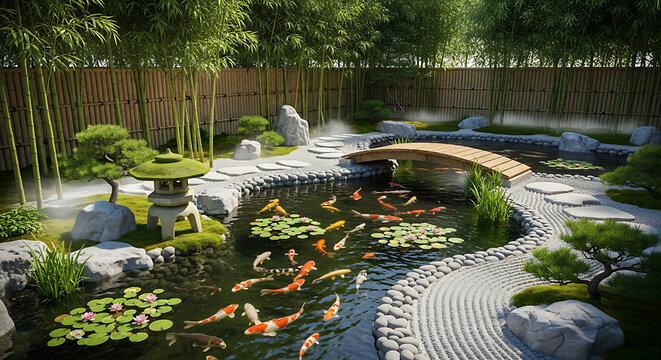
One of the most critical elements in a Chinese garden is water, which in Feng Shui symbolizes wealth, prosperity, and life energy. Water features, fountains, and ponds should be placed so that the water can flow calmly, not stagnate.
A fountain or pond should be positioned at the beginning of the garden so that energy Qi can move from the entrance, creating a flow of positive energy. It’s important to avoid sharp angles and straight lines: the water should not flow directly towards the house or garden buildings, as the energy may be «burned» too quickly.
The size of the water feature also matters: too large a water element may attract too much energy, while a small one may not provide enough flow.
Plants: Symbolism and Their Influence on the Space
Plants play a vital role in creating an energetic balance. In a Chinese garden, it’s essential to choose plants that promote health, prosperity, and harmony.
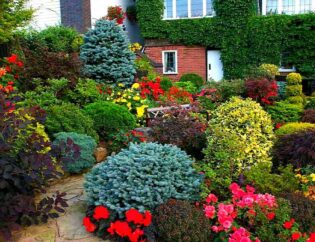
Green plants symbolize growth and renewal and should occupy the central place in the garden. Tall plants are better positioned along walls or fences.
Flowering plants add positive energy, especially those that bloom at different times of the year. This helps maintain a steady flow of Qi.
It is advisable to avoid dry and thorny plants, as they may create an unfavorable atmosphere in the garden.
Furthermore, it’s important to choose plants based on Feng Shui directions: for example, red flowers are best placed in the south, while white and silver ones should be placed in the west.
Garden Pathways and Their Impact on Energy Flow
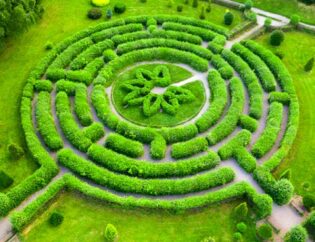
Pathways are an essential element in guiding the flow of Qi through the garden. It’s important that they are smooth and winding, without sharp corners.
Curved paths create a smooth movement of energy, unlike straight ones, which can block its flow. The width of the paths should be sufficient for comfortable movement, but not too wide, so that energy does not escape from the garden.
The material used for the pathways is also important. Natural materials like stone, gravel, or wood are ideal as they harmoniously blend with the natural landscape.
Fencing and Statues: Creating Comfort and Balance
The use of fences and statues in the garden is another important aspect of maintaining harmony.
Fences should be low and continuous, without sharp angles, to avoid blocking energy flows. Statues and stone elements can be used to create accents in the garden. Statues symbolizing luck and well-being, such as lions or turtles, are particularly popular.
Martin Palma adds, «Fences and decorative elements in a Chinese garden not only serve a protective function but also help create an atmosphere of coziness and tranquility, which is crucial for the proper flow of Qi.»
Designing a Chinese garden with Feng Shui elements requires attention to detail and respect for nature. The placement of elements in the garden, such as water features, plants, pathways, and decorative objects, should promote the harmonious flow of Qi. At Ecolandscape Studio, we apply these principles to create gardens that are not only visually appealing but also beneficial for the health and mood of the owners.
According to Martin Palma, «Working with Feng Shui helps us create not just beautiful gardens, but spaces that support well-being and harmony in people’s lives. We are proud that our projects bring joy and tranquility to our clients.»
At Ecolandscape Studio, we are ready to help you bring the concept of a Chinese garden with Feng Shui elements to life, creating a space that will harmoniously blend with nature and your inner state.