A garden for children is a space that should not only be beautiful but also safe, comfortable, and, most importantly, developmental. Properly designing such a garden allows you to maintain the interest of children while providing them with a safe space for play, learning, and connecting with nature. When it comes to a children’s garden, an important aspect is creating not just a play area, but a place where children can learn and grow while also becoming closer to nature. At Ecolandscape Studio, we always take these needs into account and offer solutions that will help you create the perfect garden for children that combines safety, functionality, and beauty.
How to Properly Plan a Space for Children?
Before starting the design of a children’s garden, it is important to consider several key points. First of all, the primary focus should be on safety. The space should be free of potential hazards such as sharp corners, toxic plants, slippery paths, or dangerous structures. Secondly, the garden should be engaging and educational, so that children can develop their physical and mental abilities through play, experiments, and exploring nature.
As Martin Palma, founder of Ecolandscape Studio, mentioned: «When we design a children’s garden, we always focus on two main aspects: safety and functionality. We create spaces that not only protect children but also foster their development, offering play and educational zones suitable for different ages.»
Choosing Safe Plants for the Children’s Garden
It is very important to select the right plants for a garden, especially if children will be spending time there. The plants should not be toxic, and their leaves and flowers should not pose a danger to children. Avoid using plants with poisonous berries or sharp thorns, such as nightshade, oleander, or toxic ivy. Instead, it is advisable to choose safe and accessible varieties that children can touch and explore.
Ideal plants for a children’s garden would be herbaceous plants, shrubs, and flowers with soft leaves, such as lavender, daisies, mimosa, and plants with safe fruits and aromas. They not only brighten up the garden but can also become part of fun activities like aromatic paths, flower mazes, or «nurseries» for studying flora.
Interactive Elements for Creativity and Play
When designing a garden for children, it is important to consider its play components as well. Well-designed play zones are not just about swings and sandboxes but also areas for active and creative games. Various play elements like rope bridges, mazes, slides, as well as small houses or tents, are perfect for physical development and active play. These elements can be made from eco-friendly and safe materials, allowing children to explore the space comfortably.
Don’t forget about elements such as water features, small streams, or decorative ponds. Water is not only an aesthetic feature but also an opportunity for teaching children. These elements can help explain the basics of ecosystems, the importance of water for nature, and provide a chance for safe water play. However, it is essential that all water elements in the garden are safe: ponds or water features should be fenced off to prevent children from accidentally falling in, and care should be taken to keep the water clean, free from harmful chemicals or pollutants.
Creating Educational Zones and Relaxation Corners
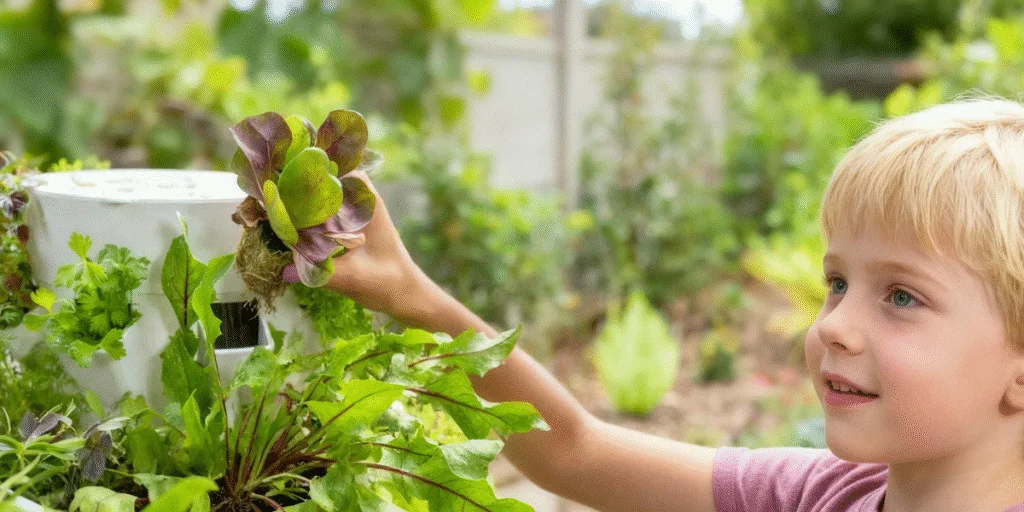
To ensure that the garden is not just a play area but also a learning space, it is important to create themed zones. For example, you could organize a small vegetable garden or a corner for growing herbs and flowers. This can be a small patch where children can plant, monitor their growth, and learn to care for nature. This experience helps develop responsibility, attention to detail, and an understanding of the life cycle of plants.
Additionally, you can add creative elements such as sculptures or outdoor drawing tables. These zones will help children develop their imagination, explore the world through art, and enjoy nature.
Organizing Rest and Shade Areas
Since children may spend a lot of time outdoors, creating areas for rest and shade becomes an important element. Shaded corners with cozy benches or hammocks are ideal spots for resting, snacking, or reading outdoors. You can create these zones using both natural and artificial elements. For example, creating arches from climbing plants or installing tents and canopies will provide shade on hot summer days and protect from the sun.
It’s Important to Remember Water Safety
Water features in a children’s garden are not only aesthetic additions but also elements that can become potential hazards. Therefore, it’s important to design ponds and streams carefully to ensure they don’t pose a risk to children’s safety. For example, ponds should be shallow with low edges to prevent children from falling in. It is also important to install protective fences around water bodies and monitor their cleanliness.
A garden for children is not only a place for rest but also a space that fosters respect for nature and teaches children the basics of ecological responsibility. It is crucial to remember that a garden for children should not only be safe but also filled with engaging, educational elements that allow children to express creativity, develop coordination, and discover the world around them.
As Martin Palma, the founder and CEO of Ecolandscape Studio, said: «Creating a garden for children is always a creative process. We strive to combine safety, functionality, and aesthetic enjoyment, creating a space where every element helps the child learn, play, and grow.»









