When a garden manages to feel both deeply rooted in place and genuinely forward-thinking, it tends to leave a lasting impression on anyone who works in landscape design. The Queen Elizabeth II Garden, created by HTA Design for the Royal Institute of British Architects, does exactly that. It draws attention not just for its planting design or layout, but for the way it treats materials — specifically, how it finds new purpose for things that might otherwise be discarded. For anyone thinking about residential landscape design, backyard landscaping ideas, or even a modest front yard landscaping project, the principles behind this garden offer something genuinely useful.
The garden was designed as a tribute space, but it also functions as a working demonstration of what thoughtful, resource-conscious design looks like in practice. HTA Design approached the project with a clear intention: to use materials creatively and responsibly, giving reclaimed and repurposed elements a central role rather than treating sustainability as an afterthought. The result is a garden that feels considered at every level, from the ground plane up through the planting layers.
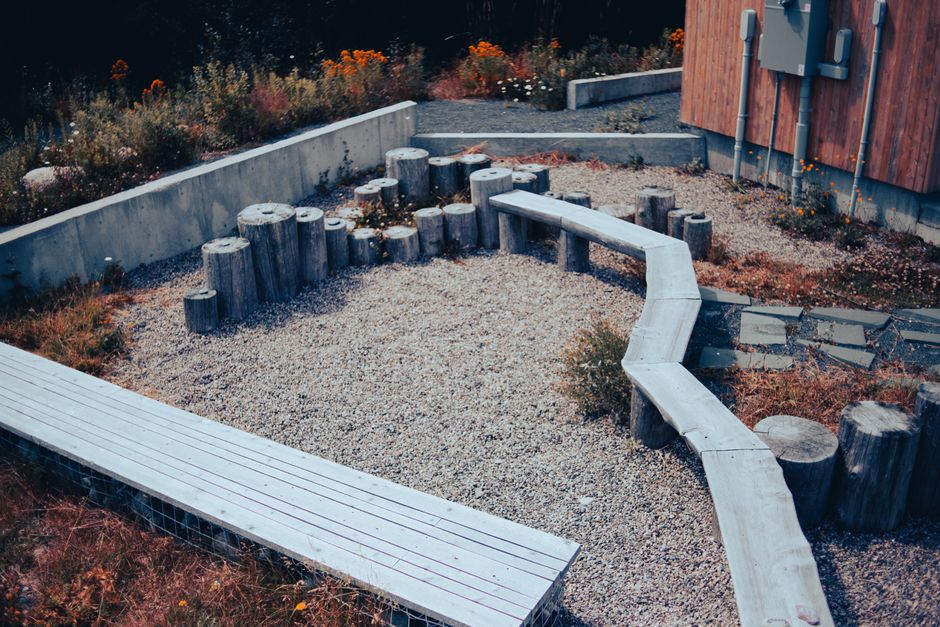
One of the most striking aspects of the project is how reclaimed stone and salvaged structural elements were integrated into the yard landscaping design without looking patched together or makeshift. The materials were selected and placed with the same care you would give to new components, which is the key distinction between genuine creative reuse and simply using old things because they are available.
Paving and edging details were handled with precision. Garden edging ideas that draw on reclaimed materials can easily look inconsistent if the detailing is not resolved properly, but here the transitions between surfaces were clean and intentional. This is a lesson that applies directly to home garden design at any scale — the quality of the junctions between materials often determines whether a garden reads as cohesive or chaotic.
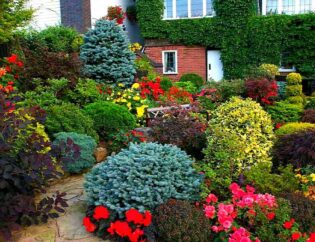
The planting design complemented the material palette rather than competing with it. Native plant garden design principles were woven through the scheme, with species chosen to support pollinators and work with the local ecology. A pollinator garden design approach like this does not require a large space. Even a small backyard design can incorporate flowering natives that attract bees and butterflies while reducing the need for intensive maintenance.
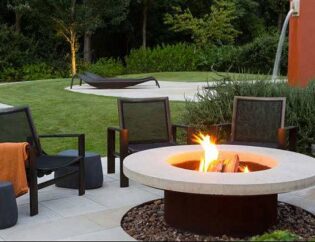
Landscape lighting ideas were also part of the overall composition. Lighting was used to extend the usability of the outdoor living space into the evening without overwhelming the naturalistic character of the planting. This kind of restraint in lighting design is something that gets overlooked in many residential projects, where fixtures are added as a final step rather than considered as part of the spatial experience from the beginning.
Martin Palma, founder and CEO of Ecolandscape Studio, has observed this pattern across many client projects: the gardens that age best are the ones where materials were chosen for their character and longevity rather than their novelty. When reclaimed stone, recycled timber, or salvaged brick is used thoughtfully, it brings a sense of history and texture that new materials rarely achieve straight away. The challenge is always in the detailing — getting the levels right, managing drainage, and making sure the reused elements are structurally sound before they become part of a permanent design.
For homeowners exploring backyard design or planning a front yard landscaping update, the Queen Elizabeth II Garden offers a few transferable ideas. Reclaimed materials are not just an aesthetic choice — they reduce the environmental footprint of a project and often cost less than new equivalents when sourced well. Drought tolerant garden design and water wise landscaping principles pair naturally with this approach, since gardens built with durable, low-impact materials tend to require less intervention over time.
Low maintenance garden design benefits from this philosophy too. When the hard landscaping is resolved with quality materials and clean detailing, the planting can do more of the visual work without needing constant management. Rain garden design elements, permeable surfaces, and xeriscape garden design techniques all become easier to integrate when the material palette is already oriented toward durability and ecological function.
Privacy landscaping and patio landscaping ideas also gain from a reuse-led approach. Reclaimed brick walls, salvaged timber screens, and repurposed stone features can define outdoor spaces with a warmth and solidity that manufactured alternatives rarely match.
The broader point is that creative material reuse is not a compromise — it is a design decision that, when handled well, elevates a garden rather than limiting it. The Queen Elizabeth II Garden demonstrates that sustainable choices and high design quality are not in tension. They reinforce each other. For anyone planning a yard landscaping project, whether large or small, that is a principle worth carrying into every decision from the first sketch to the final planting.