Modern urban planning demands not only aesthetic solutions but also ecological awareness. In cities, where natural spaces are increasingly scarce, container gardening has become a key tool for creating sustainable and harmonious landscape solutions. The use of green containers is not just a trend but an essential element of adaptive landscape design, where every component plays a role in ecosystem balancing. At Ecolandscape Studio, we adhere to the principle of integrating natural elements into the urban context, understanding that landscape ecology requires a holistic approach.
Container Gardening as a Tool for Urban Landscape Design
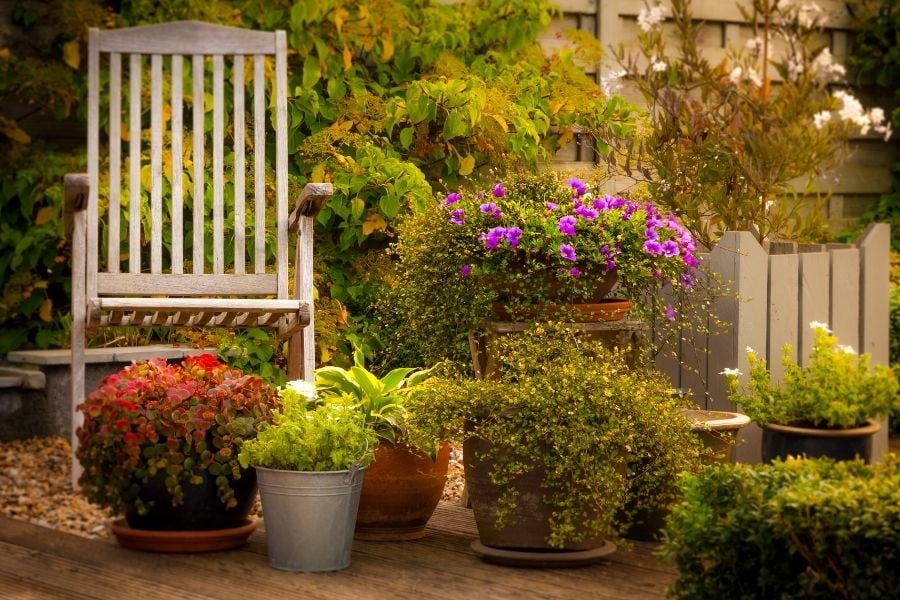
Green containers have become an integral part of the concept of sustainable urban landscapes. They effectively address the challenges of territorial landscaping, facilitating dynamic changes in urban fabric while fulfilling important ecological functions. The creation of green islands with containers not only supports aesthetic balance but also contributes to reducing the urban carbon footprint, modifying the microclimate, and improving air quality.
As Martin Palma, founder and CEO of Ecolandscape Studio, states: «For us, container gardening is not just an aesthetic improvement of urban environments. It is a crucial part of the ecological integration concept in the urban context, aimed at harmonizing the relationship between humans and nature.» These solutions allow for the adaptation of landscape forms using various plant types that can easily integrate into urban structures.
The Ecological Significance of Container Gardening
When discussing container gardening, it is important to highlight its impact on improving the climatic comfort of cities. In megacities, where traditional landscaping often faces space limitations, containers make efficient use of both vertical and horizontal elements of the urban environment. They help improve the thermal insulation of buildings, regulate air temperature, and reduce the «urban heat island» effect. As a result, the use of green containers helps not only decorate spaces but also influences the microclimate and serves as a vital component in stormwater management systems, absorbing rainwater.
Phytoremediation, applied in container installations, is an effective method for reducing field pollutants and improving air quality. This important aspect is actively discussed in landscape ecology and plays a crucial role in enhancing the urban ecosystem.
Choosing Plants for Container Gardening in the City
Selecting plants for container gardens should take into account not only decorative but also functional characteristics. In the urban environment, where growing conditions differ drastically from natural habitats, it is essential to choose plants that are highly resistant to air pollution and temperature fluctuations. Succulents such as aloe, agave, and echeveria have become popular for their ability to survive in extreme conditions and adapt to limited soil volumes.
Furthermore, it is important to use plants that promote biodiversity and support the balance of city ecosystems. For example, grasses and shrubs like lavender and thyme not only adapt well to urban landscapes but also effectively function as phytosorbents, absorbing harmful substances from the air and reducing noise levels.
Additionally, the creation of vertical gardens and green facades with containers helps to soften visual and acoustic effects in the surrounding urban landscape, integrating them into building structures and creating a harmonious blend of natural and artificial systems.
Caring for Container Gardening: Professional Recommendations
Caring for plants in containers requires attention, especially in urban environments. Understanding the principles of balanced water management and optimizing soil conditions plays a key role in maintaining plant health. Using drainage layers and regular mulching helps prevent waterlogging and ensures proper oxygenation for the roots.
As Martin Palma notes: «One of the most important aspects of caring for container plantings is ensuring the circulation of water and nutrients in closed systems, which allows plants to develop without harming the environment.»
In addition, it is essential to periodically apply organic fertilizers made from humus and compost. These materials not only provide nutrients to the plants but also improve the soil structure, ensuring healthy root development. With such practices, the lifespan of container installations can be significantly extended, enhancing their functionality.
The Role of Container Solutions in Landscape Design
Modern cities are increasingly adopting the concept of a rethought landscape, where every element has multi-layered functionality. Container gardening becomes a crucial tool in designing green corridors and creating an efficient system of ecological urbanism. Containers can be placed on rooftops, in parks, along roads, and on private properties, creating dynamic green spaces that serve as the «lungs» of cities.
Equally important is the use of container plants for pollution removal and optimizing water management. Aquatic plants such as lotuses or ferns are often key elements in containers for landscaping water bodies and systems, contributing to natural water filtration.
In these integrated spaces, plants not only perform aesthetic functions but also enhance the quality of life, providing city dwellers with fresh air and reducing stress by creating relaxation areas.
Container Gardening as an Integral Part of the Future City
Container gardening is an essential element of any city’s ecological strategy. As demonstrated by the practice of Ecolandscape Studio, it not only improves the appearance of the urban environment but also plays a significant role in regulating the microclimate and enhancing the quality of life for residents. It is an environmentally sustainable and aesthetically attractive alternative to traditional landscape design, opening up new horizons for the future city.
Rather than viewing container gardening as a temporary trend, it should be seen as a long-term ecological practice that can benefit both urban inhabitants and the environment. It is important to understand that each element, whether a plant or container, plays its part in the larger urban ecosystem, improving the city’s resilience and quality of life.