Choosing plants for your garden is a key task faced by anyone looking to transform their outdoor space. It’s not just about aesthetics, but also about functionality, and creating a space that will delight the eye in every season. At Ecolandscape Studio, we believe that the right plant selection is not only about beautifying your garden, but also contributing to its sustainability and longevity.
In this blog, we will share our experience and recommendations on how to choose plants that will help you create not only a beautiful but also a harmonious landscape. Martin Palma, the founder and CEO of Ecolandscape Studio, believes that “the right plant selection is the foundation of any successful landscape design. It creates balance, enhances the functionality of the area, and allows you to enjoy the beauty of the garden while making it easier to maintain.”
Why Is the Right Plant Selection So Important for Landscape Design?
Every plant in the garden should not only fit into the overall picture but also serve a purpose. In landscape design, it is important to consider not only the beauty of plants but also their ability to adapt to the conditions of the site. For example, some plants can serve as excellent natural windbreaks or create cozy shaded areas. Others strengthen the soil and help prevent erosion.
Don’t forget to consider local climate conditions and soil type. This will help you select plants that will thrive in your garden and require minimal attention.
Key Factors to Consider When Choosing Plants
Plant Height: This is one of the key factors that affect the perception of the garden. It’s important to distribute plants according to their height to create a sense of depth and volume. Tall plants should be placed in the back, while shorter ones belong in the front. This will help create an interesting and balanced composition.
Plant Density and Spread: These factors determine how much space plants will occupy in your garden and how this will affect its perception. Some plants, like shrubs, create dense green zones that can serve as living fences or hide undesirable views. Others with a wide spread, such as grasses or perennials, fill the space and create a harmonious blend with other plants.
When choosing plants, consider their future size. Some plants, like trees and large shrubs, may take up a large portion of the space, while smaller plants will not compete as much for resources. Planning several years ahead will help you avoid overcrowding the site and overloading certain areas of the garden.
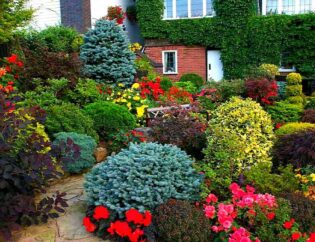
Seasonal Features of Plants: To ensure the garden remains beautiful throughout the year, it’s important to alternate plants that bloom in spring, summer, and autumn. For instance, in the spring, your garden can be adorned with tulips and daffodils, in summer—bright and colorful flowers, and in autumn — plants with golden or red leaves. This will help maintain the visual appeal of the garden throughout the year.
How to Combine Plants in the Garden
When designing your garden, always keep in mind the principle of layering. Divide plants into several groups based on their function and height to create harmony in the space.
These plants occupy the front of the garden and form the foundation. They are usually low-growing, around 30 cm in height, and can serve as a solid base for taller plants. Examples of base plants include autumnal Sesleria (Sesleria autumnalis), Petunia (Ruellia humilis), and Pennsylvania Sedge (Carex pennsylvanica). These plants create a dense green carpet, preventing weed growth and retaining moisture in the soil.
Martin Palma’s Recommendations: “Base plants form the foundation of the garden, protect the soil, and create a light perception of the whole space. To add bright accents to these plants, you can plant seasonal flowering plants.”
Seasonal plants are accents in the garden that draw attention with their vibrant blooms or unusual foliage. These plants can serve as temporary highlights, adding fresh elements to the garden during specific seasons. Examples include meadow sage (Salvia x sylvestris ‘Blue Hill’) and irises.
Seasonal plants are perfect for creating bright spots in the garden. They can change colors and forms depending on the season, helping to avoid monotony.
Structural plants are tall elements of the landscape that create accents at the back of the garden. These plants, such as Echinacea (Echinacea ‘Virgin’) or Rodgersia (Rodgersia pinnata), add verticality and serve as focal points.
Structural plants create accents, draw the eye, and add dynamics. However, there should not be too many of them so as not to overcrowd the space.
How to Distribute Plants Throughout the Garden
To create harmony in the garden, it is important to properly distribute plants based on their height, texture, and color. Place tall plants in the back and low ones in the front to create a sense of depth. It’s also important to keep in mind that base plants should occupy about 50% of the space, seasonal plants about 30-40%, and structural plants 5-15%.
Recommendations for Plant Distribution:
- Base Plants form the backdrop and occupy up to 50% of the space.
- Seasonal Plants serve as accents and occupy about 30-40% of the space.
- Structural Plants are vertical accents and occupy 5-15% of the space.
The right plant selection is the foundation of successful landscape design. By considering plant height, density, space they occupy, and seasonality, you can create a garden that will delight you throughout the year. It’s important to remember that plants should not only be beautiful but also serve a purpose — whether it’s wind protection, providing shade, or improving the microclimate of the site.
As Martin Palma emphasizes: “Every plant should be selected with care so that it not only pleases the eye but also serves the purpose of creating a harmonious and comfortable space. The right plant selection is the key to ensuring your garden will thrive and evolve, providing joy for many years to come.”
The right landscape design and plant choice will help you create a garden that harmonizes with the surrounding nature and serves as a comfortable space for relaxation and enjoyment.