The French garden is a symbol of refined elegance, strict form, and perfect symmetry. This style attracts attention with its harmony, clear geometry, and flawless order. For those who want to transform their yard into a French garden, there are several principles to keep in mind to create a space that combines beauty and functionality. At Ecolandscape Studio, we’ll guide you on how to plan a French garden, highlight its uniqueness, and make it a cozy retreat.
The French Garden: What Lies Behind This Style?
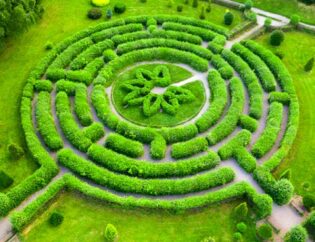
A French garden is not just a collection of plants and paths; it’s a carefully planned landscape where each element plays a role. In this style, geometry and symmetry are the key characteristics. Everything must be organized clearly and balanced, from the roads to the shrubs. There are no random elements in such a garden – every corner and plant has its place and function. All plants are selected based on their form and ability to blend harmoniously into the overall composition.
The most important aspect of a French garden is its central composition, often centered around an open, flat area, or parterre. This space, adorned with ornamental designs, clipped shrubs, and perennials, serves as both a decorative element and a unifying feature that ties the rest of the garden together. The parterre should be simple but elegant, with minimal use of decorative objects.
The French garden also includes bosquets – small secluded corners hidden by living hedges. These private spaces offer a retreat for relaxation and may include decorative elements like fountains, statues, and luxurious planters. Bosquets help create an atmosphere of silence and solitude, allowing one to fully enjoy nature in harmony.
Artificial Perspective and Symmetry
One of the most important elements of a French garden is its artificial perspective, created through narrowing alleys and paths. This technique significantly increases the perception of space, creating depth and visual expansion within the garden. Trees and shrubs planted along the alleys are also trimmed to emphasize this perspective, adding grandeur and scale to the garden.
To maintain harmony and refinement, constant care for each element is essential. Lawns should be perfectly trimmed, and shrubs and trees must be shaped meticulously. Maintaining order is not just an aesthetic choice; it is the foundation of the style. A French garden does not tolerate disorder, so all elements must be well-maintained and kept in perfect condition.
Choosing Plants for a French Garden
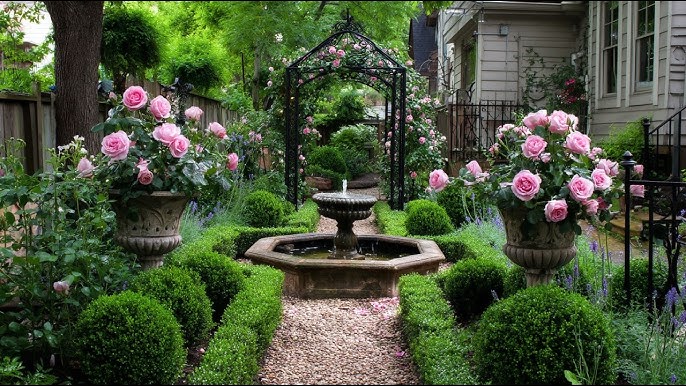
A key factor for a successful French garden is the right choice of plants. They should be not only beautiful but also suitable for trimming and shaping. Excellent choices include coniferous trees such as thuja, cypress, and spruce, which are easy to prune and maintain their shape well. Decorative shrubs are also important elements, used to create symmetrical hedges and flowerbeds.
To create the desired mood in the garden, it’s essential to combine plants correctly. For example, flowering perennials are perfect for decorating the parterre, while topiary trees add strict forms and accents. It is important that each element is carefully selected and harmonizes with the rest.
The Importance of Water and Decorative Elements
An integral part of the French garden is its water features. These can include fountains, ponds, or marble basins, which serve not only as decorative elements but also help create a sense of freshness and relaxation. Water in the garden enhances its elegance and tranquility, while carefully chosen decorative elements such as statues and vases emphasize the refinement and grandeur of the style.
Common Mistakes in Creating a French Garden
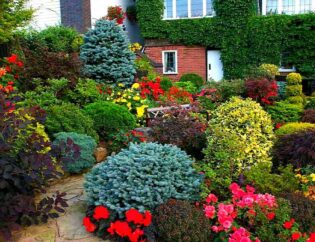
When designing a French garden, it’s important to remember that even small deviations from the principles of symmetry can destroy its harmony. Overloading with decorative elements or using overly bright colors and shapes disrupts the strict balance that forms the basis of the style. Moderation and simplicity are key to preserving elegance. Additionally, regular plant care is a must for maintaining the garden’s perfect condition. A French garden requires attentive care for every detail, from trimming shrubs to maintaining a neat lawn.
Opinion from Martin Palma, Founder of Ecolandscape Studio
«The French garden is not just a landscape design art; it’s a philosophy where every line and shape matters. For me, this style has always been attractive because of its strictness and beauty. It doesn’t allow for randomness, and every element must be carefully thought out. At Ecolandscape Studio, we always advise our clients to carefully select plants and materials, ensuring the garden is not only beautiful but also easy to maintain,» shares Martin Palma, founder and CEO of Ecolandscape Studio.
Why It’s Important to Work with Professionals
Creating a French garden is not just about designing a beautiful plot; it’s an art that requires knowledge and experience. At Ecolandscape Studio, we consider all the specific features of your site and help you choose the best solutions for creating a harmonious garden. We’ll assist you in selecting plants that are perfect for your climate and conditions, as well as provide professional maintenance recommendations. Our designers and landscape architects will help you create a unique space that you’ll enjoy every day.
Conclusion: The French Garden as an Element of Luxury and Order
The French garden is not just a style but an expression of a love for beauty, order, and harmony. It is a project that requires patience and attention to detail. At Ecolandscape Studio, we believe that a French garden in your yard will not only highlight your style but also become a true work of art. Our experts are always ready to help you create a garden that combines beauty, functionality, and elegance.