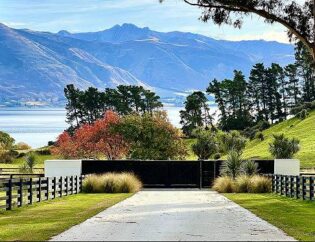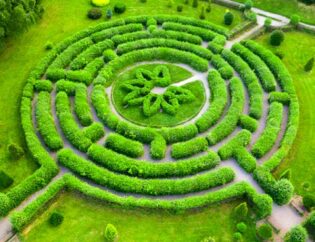
At Ecolandscape Studio, we view landscape design as precise work with a living natural system rather than the creation of a visually pleasing composition. One of the most promising directions in contemporary practice is the hyperlocal landscape approach, based on the analysis of micro-relief, soil variability, and hidden climatic gradients within a single site.
This method allows us to create resilient and self-regulating ecosystems in which each area of the site operates according to its own natural logic.
What hyperlocal landscape means in our practice
A hyperlocal landscape is a design approach in which a site is not perceived as a single surface. Instead, it is analyzed as a system of micro-environments, each with its own conditions of light exposure, humidity, wind load, soil composition, and temperature regime.
In our blog and professional practice at Ecolandscape Studio, we emphasize that even small territories contain a high degree of natural heterogeneity. Ignoring these differences leads to reduced planting resilience, increased maintenance requirements, and a loss of the site’s natural potential.
The hyperlocal approach allows these variations to become the foundation of design.
Micro-relief as a key tool of sustainable design
Micro-relief is a fundamental basis of hyperlocal design. Even minor elevation changes influence water distribution, heat exchange, and air movement.
In depressions, moisture and organic matter accumulate, creating favorable conditions for more moisture-loving and shade-tolerant plant communities. On elevated areas, drainage and solar exposure increase, forming conditions suitable for drought-resistant species.
It is also important to note that cold air naturally settles in low-lying areas, creating microzones with a higher risk of frost. This directly affects plant selection and planting structure.
Thus, micro-relief becomes not a limitation but a tool for managing the ecological resilience of a site.
Invisible boundaries as the foundation of professional zoning
In the hyperlocal approach, we actively work with so-called “invisible boundaries” of a site. These are zones that are not visually defined but are determined by physical environmental processes.
They include solar exposure boundaries that change throughout the year, wind corridors formed by surrounding buildings and vegetation, heat reflection zones from hard surfaces, and areas with different levels of soil compaction.
At Ecolandscape Studio, we consider these parameters as the basis for functional zoning. This allows us to create more precise and resilient landscape solutions that operate in real natural conditions rather than only within a design model.
Formation of micro-zones as ecosystem modules
A hyperlocal landscape is always built as a system of micro-zones. Each is treated as an independent ecological module with its own structure of water, soil, light, and vegetation.
Dry sunny zones are formed in areas with high solar exposure and fast drainage. They require mineral soil mixtures, rocky inclusions, and drought-resistant plants.
Moist shaded zones are characterized by stable humidity and reduced light levels. They use organically rich soils, mulching materials, and shade-tolerant species.
Transition zones are the most valuable in terms of biodiversity. They represent intersections of different microclimatic conditions, enhancing natural self-regulation processes within the ecosystem.
Materials as part of the ecological system
In hyperlocal design, materials are not treated as a decorative layer but as active elements of climate and soil regulation.
Stone is used to stabilize temperature fluctuations and manage water balance. Wood creates soft transitions between zones and influences local humidity. Gravel and mineral surfaces provide effective drainage. Organic mulch supports soil biological activity and accelerates its regeneration.
This approach integrates materials into the natural dynamics of the site rather than placing them on top of it.
Plants as a functional ecosystem
In a hyperlocal landscape, plants serve a functional rather than decorative role. We select them as components of an ecological system, considering their impact on soil, water, and microclimate.
Deep-rooted species stabilize soil and regulate water balance. Ground cover plants reduce evaporation and protect the soil. Shrubs shape the wind structure of the site. Trees create long-term climatic zones and establish a stable microclimate.
This forms a multi-layered system in which plants function as a unified natural mechanism.
Professional significance of the hyperlocal approach
From the perspective of contemporary landscape practice, the hyperlocal design approach significantly enhances site resilience. It reduces the need for irrigation and intensive maintenance, lowers the risk of planting degradation, and increases adaptability to climate change.
This is especially important in conditions of climate instability, where traditional solutions often prove insufficiently flexible.
In our practice, we observe that transitioning to hyperlocal design changes the very logic of interaction with space. A site ceases to be a “design object” and becomes a living system that can be precisely tuned to natural processes.
As Martin Palma, founder and CEO of Ecolandscape Studio, notes, working with micro-relief and hidden site boundaries has become a key insight in understanding how subtly nature structures space even at the smallest scales.
Hyperlocal landscape is a contemporary professional approach to design based on a deep analysis of natural processes. It enables the creation of resilient, adaptive, and ecologically balanced spaces where every element of the site operates within the logic of a natural system.
At Ecolandscape Studio, we consider this method one of the key directions in the development of modern landscape architecture and share our practical observations and recommendations in this blog.