Modern technologies are radically changing the approach to landscape design and care for green spaces. In recent years, drones, robotic devices, and automated irrigation systems have become integral parts of the work of gardeners and landscape designers. These tools not only significantly ease the labor but also help create more sustainable, eco-friendly, and harmonious landscapes. In this article, Ecolandscape Studio will explain how innovative technologies are affecting the landscaping processes and how they can help create modern, efficient, and resource-saving landscapes.
Drones in Landscape Design: Monitoring and Optimization
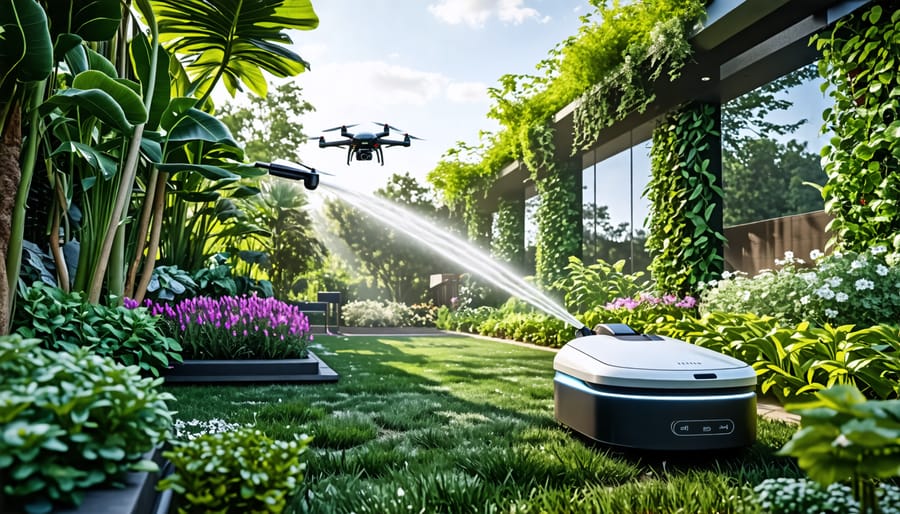
Drones have become an important tool in landscape design, providing gardeners and designers with the ability to monitor and assess the condition of plants, soil, and the microclimate of a site. These devices are equipped with highly sensitive cameras and infrared sensors that allow for fast and accurate data collection over large areas.
With drones, it is possible to analyze plant health, identify symptoms of diseases, stress, and issues with irrigation and nutrients. Infrared imaging helps to detect changes that are not visible to the naked eye, such as areas with water or nutrient deficiencies. This enables timely action to prevent problems from developing. This approach significantly reduces the time spent inspecting large territories and helps optimize resource use.
Moreover, drones can monitor soil moisture levels, allowing for precise irrigation management. Ecolandscape Studio notes that drone monitoring can minimize excess water usage, which is particularly important in areas facing water scarcity. Additionally, data collected by drones allows for more accurate landscape design, creating conditions that match the needs of different plant types.
Robotic Devices for Plant Care
As technology advances, robots for planting, irrigation, and plant care are becoming an essential element in landscape design. These devices greatly expand the capabilities of gardeners and landscape designers by performing tasks that traditionally took a lot of time and effort.
Modern robotic devices can automatically plant plants, ensure regular watering, fertilize, and even perform pruning. Thanks to artificial intelligence, such devices can adapt to changing conditions on the site, taking into account soil conditions, weather, and other factors. This significantly increases work efficiency, eliminating human errors related to improper care.
Robots for plant care work around the clock, performing tasks that would typically require human effort. This is especially important in large-scale landscaping projects where maintaining large green spaces is necessary. Additionally, robots can work in hard-to-reach areas, such as slopes or building rooftops, where traditional care methods are ineffective or too complicated.
Robots also help optimize the distribution of time and resources. They can precisely determine how much water and fertilizer each plant needs, reducing the risk of overwatering or overfertilizing and minimizing the ecological footprint. As a result, robotization makes landscape design more accurate and efficient.
Automated Irrigation Systems: Managing Water Resources
Automated irrigation systems are another significant achievement in landscape design. These systems, equipped with moisture sensors, automatically adjust the water supply based on soil conditions. This approach allows for a significant reduction in water consumption, improves plant resilience, and lowers irrigation costs.
Automated irrigation systems can be integrated with weather forecasts, which helps eliminate watering on rainy days. This not only saves water but also reduces the load on the system itself. Additionally, many of these systems can use rainwater collected in special tanks. This makes landscaping even more eco-friendly and helps save on potable water usage.
One of the key advantages of automated irrigation systems is their ability to adapt to the unique needs of each site. Sensors placed in the soil continuously monitor its moisture levels, allowing for precise determination of when and how much water to deliver. This also helps avoid overwatering, which can lead to soil erosion or plant diseases. This approach makes landscape design more sustainable and harmonious.
The Impact of Technology on Landscape Design
The integration of technologies such as drones, robotic devices, and automated irrigation systems is significantly changing the process of landscape design itself. These tools allow for the creation of more sustainable and eco-friendly green spaces that are adapted to individual conditions.
Technologies provide the opportunity to design landscapes not only with aesthetic preferences in mind but also with ecological factors in consideration. For example, using data obtained from drones, it is possible to more accurately assess soil conditions, sunlight levels, and humidity, which helps determine the best locations for planting. Robots, in turn, can perform precise planting tasks, ensuring proper spacing between plants and minimizing potential errors.
Furthermore, the use of automated irrigation systems and plant care robots reduces the need for chemical fertilizers and pesticides, contributing to the preservation of natural balance. This approach helps create harmonious and sustainable ecosystems that function effectively over long periods.
Martin Palma, the founder and CEO of Ecolandscape Studio, firmly believes that technology plays a decisive role in the future of landscape design. At our company, we have repeatedly seen how the use of innovative tools not only reduces costs and increases efficiency but also creates more sustainable and eco-friendly projects. For us, it is not just about improving processes but also about contributing to the sustainable development of urban and natural ecosystems.
Technology allows us not only to monitor plant conditions in real time but also to actively optimize all stages of work, from planning and design to care and maintenance. By applying robotic devices and automated systems, we make our work more precise while ensuring minimal interference with nature, which has always been and will remain our priority.
The Future of Landscape Design: New Horizons for Sustainable and Eco-friendly Solutions
With the development of technology, landscape design continues to move toward ecological sustainability and efficiency. In the future, we can expect even more innovations in automation and artificial intelligence. Irrigation systems, robots, and drones will become smarter and more integrated, enabling them to adapt to changing conditions and predict the needs of plants in advance.
Moreover, with technological advancements, ecology and sustainability will remain central themes. We will see new solutions aimed at minimizing environmental impact, such as the use of renewable energy sources to power equipment, recycling water and materials, and implementing permaculture methods.
Technologies that today seem innovative will tomorrow become standard in landscape design. The use of drones, robots, and automated irrigation systems will open new horizons for creating harmonious, sustainable, and eco-friendly landscapes that will serve not only humans but the entire planet.
Innovative Tools for Landscaping, such as Drones, Robotic Devices, and Automated Irrigation Systems, open up new opportunities for creating sustainable, harmonious, and efficient landscape solutions. These technologies help not only improve plant care quality but also minimize resource usage, which is crucial for environmental conservation. At Ecolandscape Studio, we are confident that the future of landscape design lies in high-tech and eco-friendly solutions. We continue to follow the latest trends and implement innovations to offer our clients only the most advanced and sustainable solutions for their projects.