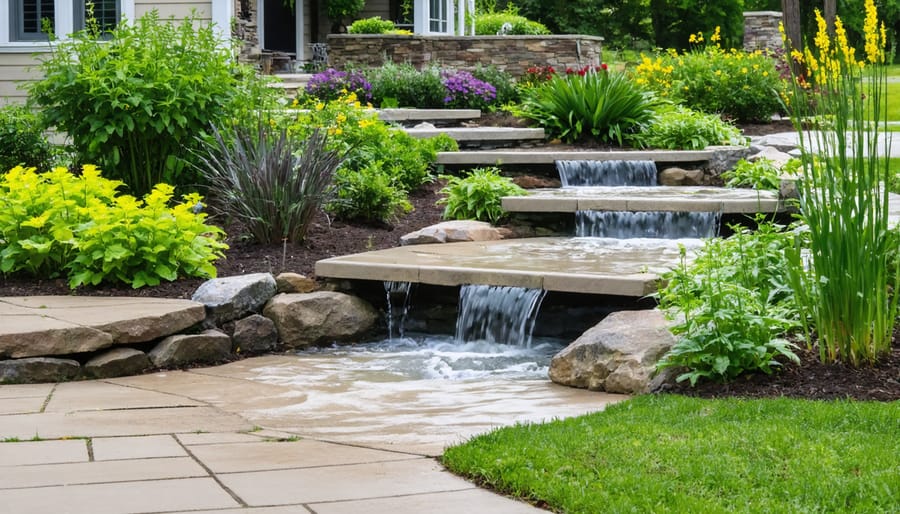
In recent years, urbanization and climate change have led to an increase in the intensity of rainfall, rising flood levels, and the deterioration of water quality. Solving these issues requires a comprehensive approach that not only improves infrastructure but also integrates natural solutions into urban landscapes. In this context, particular attention should be paid to managing rainwater through landscape design. At Ecolandscape Studio, we believe that integrating rainwater zones into the landscape helps create not only sustainable and eco-friendly spaces but also more comfortable and attractive areas.
In this article, we will share approaches and solutions that will help you effectively manage rainwater on your property, as well as highlight global examples worth learning from.
Why Does Integrating Rainwater Zones in Landscaping Matter?
Every year, cities face new challenges related to water resource management. Traditional drainage methods, such as concrete and asphalt surfaces, only exacerbate the problem by preventing rainwater from penetrating the soil and cleansing itself naturally. This leads to overloaded stormwater systems, flooding, and water pollution.
Integrating rainwater zones into landscape design is an effective way to reduce the negative impact of rainfall on urban landscapes. By using solutions such as permeable surfaces, rain gardens, water bodies, and green roofs, it is possible not only to solve the flooding issue but also to enhance the ecological sustainability of the area, improve water quality, and create a pleasant atmosphere for city dwellers.
As Martin Palma, founder and CEO of Ecolandscape Studio, stated, «Integrating natural solutions for water management is not only a step toward improving the environment but also towards creating a comfortable and harmonious urban space.»
What Approaches Do We Recommend for Managing Rainwater?
Permeable Surfaces for Rainwater: The primary principle used in landscape design to solve the drainage issue is the use of permeable materials that allow rainwater to soak into the soil rather than flow into the sewer system. For example, porous paving stones, gravel, perforated surfaces, and other permeable materials serve as an excellent alternative to asphalt and concrete.
This approach is successfully used in the River Lee Park project in London, where permeable surfaces and rainwater absorption zones were implemented to create a sustainable drainage system. These materials not only help rainwater absorb more efficiently but also assist in filtering it from pollutants, thereby improving the park’s ecosystem.
Rain Gardens: An Effective and Beautiful Landscaping Element: Rain gardens are specially designed areas with vegetation that capture and absorb rainwater. These can be used in both public and private spaces, combining aesthetic and functional benefits. These systems act as natural filters for rainwater, purifying it and preventing pollution of water bodies.
The High Line Park project in New York is an excellent example of how rain gardens and biophilic systems can be integrated into urban spaces. This project not only effectively addresses water drainage issues but also serves as an example of how urban spaces can be improved by placing nature at the heart of the city.
Water Bodies and Lagoons for Rainwater Collection: In large landscaped projects such as city parks or squares, water bodies and lagoons can be an excellent solution for collecting rainwater. These landscape elements help store water, which can then be used more effectively, for example, for irrigation.
A notable example of this approach is the Aviapark project in California, where water bodies are used to collect rainwater, which is later used to support plant life in the area. Furthermore, these water features create valuable landscape elements, providing additional spaces for rest and recreation.
Green Roofs and Facades for the City: Green roofs and facades are becoming an essential part of sustainable urban ecosystems. They help absorb rainwater, reduce temperatures in hot months, and improve air quality. These solutions are perfect for densely built-up cities where every square meter matters.
The Bosco Verticale project in Milan is a prime example of using green facades for managing rainwater. This project employs innovative approaches to minimize drainage while also creating biodiversity-rich ecosystems within the urban environment.
Benefits of Using Rainwater Zones
Integrating rainwater zones into landscape design offers a wide range of benefits for both the city and its residents. These solutions:
- Prevent flooding and reduce the load on drainage systems, which is especially important given the increasing intensity of rainfall.
- Improve water quality, as rain gardens and other biophilic systems filter water, removing pollutants.
- Support biodiversity by creating new ecosystems for plants and animals directly within the city.
- Enhance the aesthetic value of urban spaces by transforming ordinary yards and parks into attractive and functional spaces for relaxation and socializing.
Integrating rainwater zones into landscape design is a step towards creating more sustainable, eco-friendly, and comfortable environments. The application of solutions such as permeable surfaces, rain gardens, and green roofs not only helps address flooding issues but also contributes to the creation of harmonious spaces where nature and people coexist in balance.
It is important to remember that each project should take into account the local climate conditions and ecosystems to ensure that the solutions are not only effective but also adapted to the specific region.
At Ecolandscape Studio, we believe that these approaches should become the standard in landscape design, and we are proud to offer our clients the most innovative and eco-friendly solutions. As Martin Palma, founder and CEO of Ecolandscape Studio, said, «Every space we create should be not only beautiful but also environmentally sustainable, ensuring comfort and harmony for both people and nature.»









