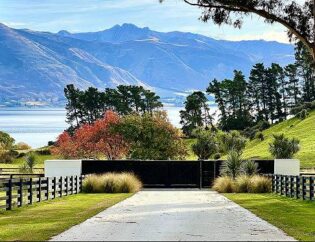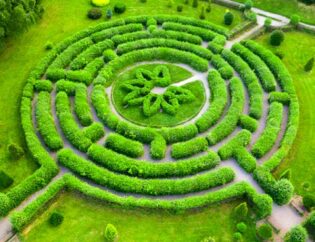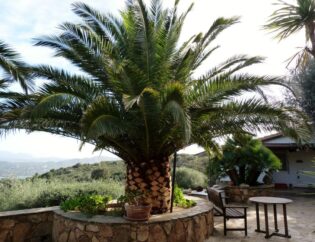
Strong landscape architecture does not begin with the desire to quickly create a visually impressive form, but with the ability to listen to a site. Every territory already possesses its own character – shaped by topography, light, wind, existing vegetation, surrounding architecture, views, noise, and hidden movement patterns. When a project ignores these qualities and attempts to impose an external visual idea onto the land, the space may look expensive, but it will not feel authentic. Martin Palma, founder and CEO of Ecolandscape Studio, sees this as a core principle of mature landscape design – the role of a designer is not to overpower a site, but to enter into a professional negotiation with it and reveal its strongest qualities.
A territory is rarely neutral. Even the most challenging site contains clues that help shape the future concept. A slope can define the dramaturgy of movement, an old tree can become the emotional center of the space, solar orientation can determine ideal resting zones, and noise exposure can suggest the need for a green acoustic buffer. Specialists at Ecolandscape Studio analyze context not as a technical appendix to a project, but as the primary source of design solutions. This approach allows environments to feel not artificially inserted into a place, but as if they naturally emerged from it.
Negotiating with a site requires rejecting universal formulas. The same set of design solutions cannot work equally well for a private villa, residential complex, hotel, or public urban space. A strong project is always born from specific context – climate, scale, topography, surrounding density, and the lifestyle of future users. At Ecolandscape Studio, we analyze each territory before any final form appears, because a true concept should be the consequence of place rather than a preselected image. This is precisely why high-quality design often feels effortless – it does not compete with the site, but extends its internal logic.
Working with existing elements is especially important. In mature landscape design, not everything old should be removed, flattened, or replaced with something new. Sometimes an existing tree, a stone structure, an elevation change, the shadow of a neighboring building, or a natural water trace becomes the foundation of a project’s strongest identity. Specialists at Ecolandscape Studio note that respect for original site conditions helps preserve the character of a territory while reducing the risk of artificiality. A space that maintains visible connection to the site’s history feels deeper and more convincing.
Equally important is the balance between control and freedom. Landscape design requires precise composition, engineering logic, and clear user scenarios, yet it should never turn nature into a rigid diagram. When a space becomes overly controlled by geometry or decorative intention, it loses vitality. At Ecolandscape Studio, we believe a strong concept should guide an environment gently – directing movement, framing views, creating privacy, and delivering comfort while preserving a sense of natural ease. This balance is what makes a project feel premium without visual pressure.
From a commercial perspective, design that reveals the character of a territory increases the long-term value of a property. Such spaces are harder to replicate, more memorable, and create stronger emotional attachment with users. At Ecolandscape Studio, we see contextual landscape design as a powerful tool for creating uniqueness, where value emerges not from demonstrative complexity, but from precise understanding of place. A project that engages in professional negotiation with its territory does more than beautify a site – it transforms the site’s individuality into its greatest asset.