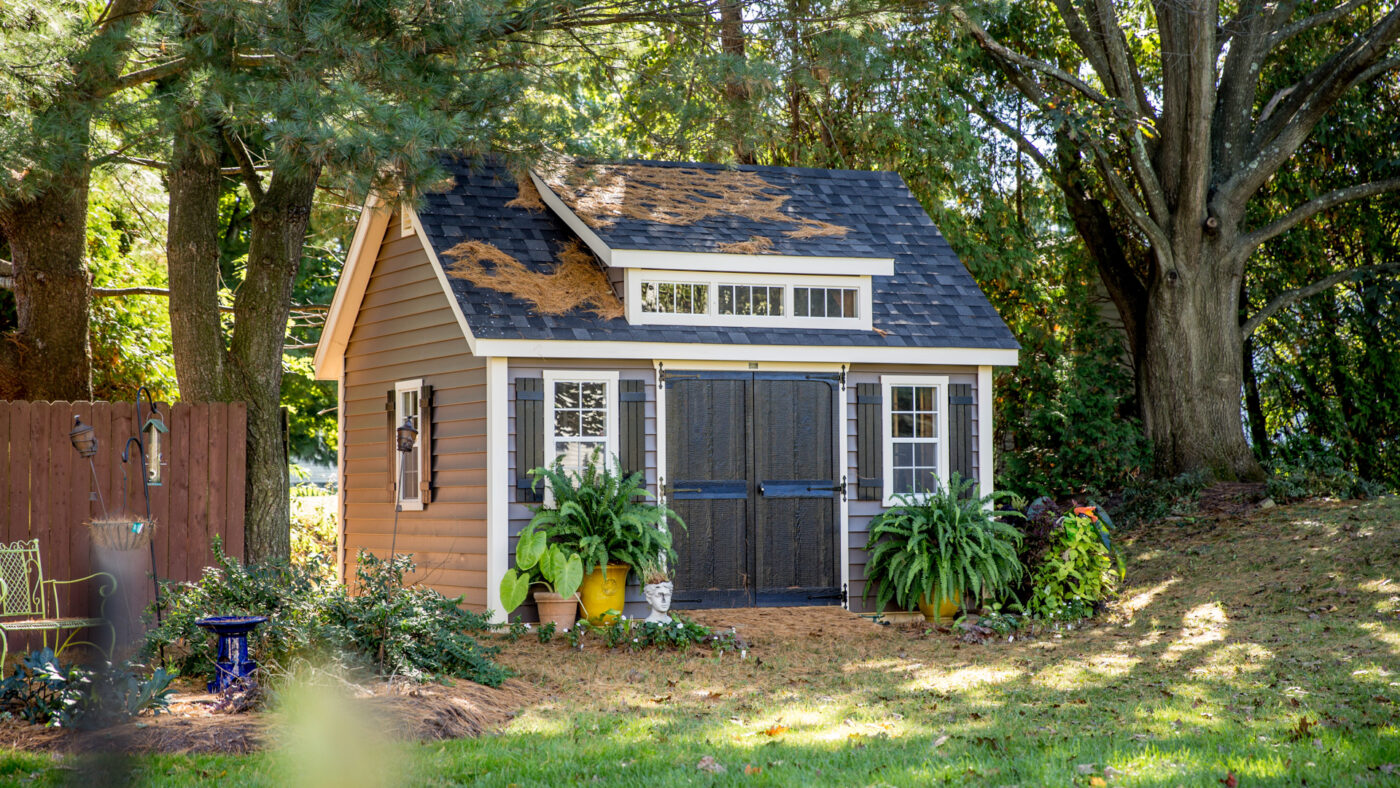
A garden shed is not just a functional structure it can become an important part of your landscape. Proper landscaping around the shed helps integrate it harmoniously into the space, making it aesthetically appealing and practical to use. At Ecolandscape Studio, we pay special attention to combining visual appeal, functionality, and sustainability.
Martin Palma, founder and CEO of Ecolandscape Studio, notes: “When we started designing landscapes around utility buildings, it became clear that achieving harmony between practicality and aesthetics requires a thoughtful approach. Even a small shed can become a focal point if the right plants, ground cover, and lighting are selected.”
In this article, we share our recommendations to help you create a beautiful, functional, and sustainable landscape around your shed.
Goals for Landscaping Around the Shed
First, it’s important to determine the shed’s purpose and how you plan to use the surrounding area. For utility sheds that store garden tools and equipment, you should provide an open area in front of the entrance and level ground for easy access with a wheelbarrow or lawnmower. Trees with dense canopies can provide shade and create comfortable conditions for storage.
If the shed serves as a play area or guesthouse, it’s important to plan safe placement away from sharp objects and toxic plants, as well as to provide shade for comfortable play and relaxation. For meditation, yoga, or private relaxation zones, consider landscaping with living hedges, climbing plants, or small decorative fences.
It’s essential to ensure that the landscape around the shed allows access from all sides for maintenance and protection against the weather.
Form and Harmony of the Shed with the Plot
The shed should look like an organic part of the landscape rather than a randomly placed structure. Using colors and materials that echo the main house helps create a cohesive look. Similarly, the plants around the shed can relate to the planting in other areas of the yard.
You can also add unique accents, such as decorative plants with bright foliage or new ground cover materials that highlight the shed’s individuality without disrupting overall harmony.
Ideas and Tips for Landscaping Around the Shed
The area in front of the shed should be convenient and appropriate for its intended use. For relaxation and guest gatherings, the space can be covered with gravel or crushed granite to create a cozy rustic atmosphere. A paved terrace or small porch can accentuate a guesthouse and make the space more functional.
Plants around the shed help soften the transition from the vertical lines of the walls to the horizontal ground surface. Taller shrubs or trees are best placed closer to the walls, with low-growing plants in front. Trees and large shrubs provide shade, visually divide space into zones, and help integrate the shed into the landscape. Small ornamental trees, such as dogwood, serviceberry, or burning bush, add interesting accents and emphasize the natural beauty of the landscape.
Lighting also plays an important role. Wall-mounted lights at the entrance create coziness, uplighting trees or decorative shrubs makes the area striking in the evening, and string lights or lanterns along paths turn the shed into a focal point, creating a comfortable atmosphere.
The shed’s placement should be carefully considered. Architecturally expressive sheds can be positioned as a visual element at the far end of the plot, while less noticeable ones can be tucked among trees and plants to blend harmoniously. Consider access to driveways, relaxation zones, and maintenance areas.
Using local plants and sustainable materials reduces the need for watering and fertilizers, making the yard more eco-friendly and low-maintenance. A balanced combination of open and green spaces creates a comfortable environment and enhances the visual perception of the plot.
Landscaping around a shed can transform a simple structure into a beautiful and integral part of the yard. Thoughtful placement, careful selection of plants, ground cover, and lighting create a functional, aesthetic, and sustainable landscape. By following the recommendations of Ecolandscape Studio and the principles of eco-friendly landscape design, you can create a space where every element from trees and shrubs to paths and lighting works toward harmony and comfort.
Even a small shed can become the centerpiece of your yard if designed thoughtfully. Our tips will help you create a beautiful and practical landscape that will delight the eye and serve its purpose for many years.









