A pond in the garden is more than just a decorative feature. It transforms your backyard into a living natural corner, creates visual harmony, attracts wildlife, and promotes a sense of calm. In the Ecolandscape Studio blog, we share practical tips that will help you create a beautiful and eco-friendly garden pond on your own, taking into account landscape design and natural ecosystem nuances.
Our founder and CEO Martin Palma notes: «Experience shows that the best pond is one that integrates organically into the surrounding landscape, where every detail is carefully thought out from the shape and plants to lighting and seating areas.» His observations confirm that a well-thought-out pond design not only influences aesthetics but also impacts the ecological health of the property, creating a sustainable microenvironment.
Choosing the Right Location and Integration into the Landscape
Selecting the right spot for your pond is a key stage in landscape design. To create an eco-friendly water feature, it’s optimal to choose a location with moderate sunlight about 4-6 hours of direct sunlight per day and small shaded areas to prevent the water from overheating. This balance prevents the rapid growth of algae and helps maintain water clarity.
In our projects, we always take into account the natural lines of the garden and strive for harmony between the pond and the rest of the landscape. Curved shapes create a softer visual effect, which looks more natural than strict straight lines and allows the pond to become a part of the garden, not a separate object. It is also important to consider the micro-relief of the site, proximity to trees, shrubs, and relaxation areas to ensure the pond integrates seamlessly and maintains ecological stability.
Water Movement: From Tranquility to Dynamics
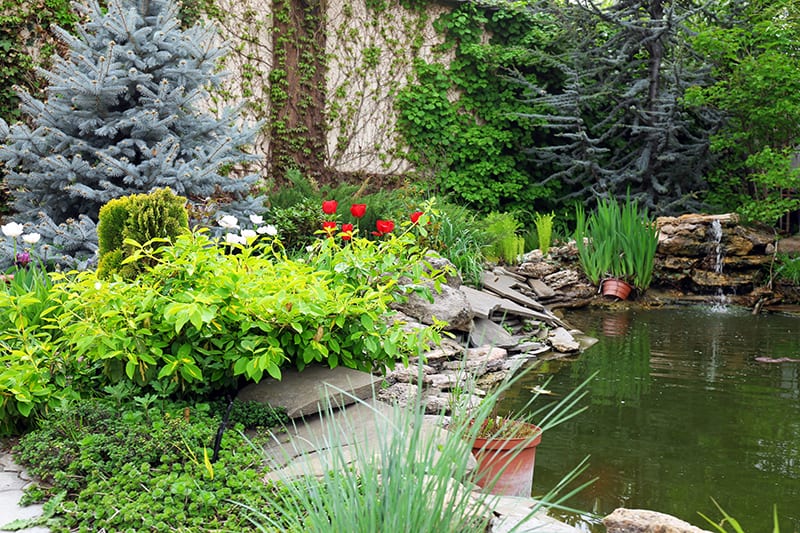
The water surface plays a central role in the perception of a garden pond. A calm, reflective surface creates a peaceful atmosphere and is perfect for relaxation areas, terraces, and places where you can enjoy watching the garden. Adding dynamic elements, such as mini-waterfalls or cascades, livens up the space, creates the natural sound of flowing water, and oxygenates the pond, which is essential for the health of plants and wildlife.
Moving water elements not only improve aesthetics and create relaxing sounds but also positively impact water quality. Constantly moving water prevents stagnation, reduces the risk of mosquito breeding, and supports the natural balance of the ecosystem. At Ecolandscape Studio, we always recommend combining still zones with dynamic features to ensure the garden pond looks vibrant and ecologically sustainable.
Plants Around and In the Pond
Plants are the foundation of any successful garden pond. Floating plants, such as water lilies and lotuses, provide shade on the water’s surface, preventing overheating and suppressing algae growth. Marginal plants and wetland grasses, such as irises and cattails, frame the edges, creating a smooth transition between the water and the garden. Decorative grasses and groundcovers add texture, seasonal interest, and a variety of shades, making the pond visually appealing throughout the year.
From a landscape design perspective, diverse vegetation also serves functional purposes: it filters the water, supports the microclimate, and creates shelters for insects, birds, and amphibians. When designing a pond, it’s important to consider the balance of ornamental and natural plants to ensure the pond looks harmonious while maintaining a stable ecosystem.
Wildlife Around the Pond
A pond becomes a biodiversity hub when the surrounding area is thoughtfully landscaped. Planting low-growing shrubs, ornamental grasses, and flowering plants creates natural shelters for birds, butterflies, beneficial insects, and small animals. Gentle slopes and stone areas make it easier for amphibians like frogs and salamanders to access the water, enhancing the pond’s ecological value.
An ecologically well-designed pond is not just a decorative object but a living part of the garden that supports local flora and fauna. In the Ecolandscape Studio blog, we recommend integrating decorative elements with natural zones so that the pond looks organic and serves as a home for wildlife.
Lighting, Materials, and Decorative Elements
Thoughtful lighting allows the pond to remain beautiful even in the evening. We use low-voltage lights along pathways and around the pond to highlight key features, create a soft glow, and add a cozy atmosphere. Stone, gravel, and sand are used not only as decorative materials but also to strengthen the pond edges, prevent erosion, and create a natural transition between the garden and water.
These materials help maintain the pond’s stability and support the health of plants and animals. Using natural elements in pond landscaping makes it an organic part of the garden and enhances the visual appeal.
Practical Steps to Create a Pond Yourself
To ensure your garden pond remains beautiful and durable, it’s essential to follow basic principles. A quality liner or membrane provides waterproofing and prevents water leakage. Installing a filtration and circulation system helps maintain water clarity and supports ecosystem sustainability. Regular maintenance, including monitoring water levels, removing leaves, and adjusting plantings, helps maintain the pond’s balance and health.
Ecolandscape Studio tip: Thoughtful maintenance and the right combination of plants and materials will help you create a garden pond that will delight the eye and maintain ecological stability for many years.
A garden pond can become the ecological heart of your property, where beauty, relaxation, and nature combine in harmony. Thoughtful placement, careful plant selection, the use of natural materials, water dynamics, and lighting transform the pond into a living feature that delights the eye and supports biodiversity. By following the recommendations and experience of Ecolandscape Studio, you will be able to create a pond that fits seamlessly into your garden, becomes a favorite relaxation spot, and serves as a home for wildlife for many years to come.