Monochromatic flowerbeds are a unique way to add harmony and style to your garden. By creating flowerbeds in a single color, you can create an atmosphere of elegance and simplicity without overwhelming the space with bright contrasts. In this blog, we at Ecolandscape Studio will share our expert recommendations for creating monochromatic flowerbeds, explain how to choose the right colors and plants for your flowerbed, and show how this style can be applied in different gardens.
Why Choose Monochromatic Flowerbeds?
Monochromatic flowerbeds not only look stylish but also have a special quality — they help create an atmosphere of harmony and unity in the garden. Instead of using multiple different colors and shades, you focus on one color but with various nuances, which allows the beauty of each plant to stand out without cluttering the overall visual background. This approach is ideal for those who appreciate refinement and prefer to avoid excessive bright accents.
Martin Palma, the founder of Ecolandscape Studio, says, “Monochrome not only creates purity and order in the garden but also allows us to work more deeply with the textures of the plants. Even within a single color, you can achieve surprising effects by combining shades and forms.”
How to Choose the Perfect Color for a Monochromatic Flowerbed?
Choosing the right color is not just an aesthetic decision — it’s an important part of the overall landscape design. The color should complement the surrounding environment and highlight other elements in your garden. Different shades of the same color can create various moods, from tranquility and comfort to dynamism and brightness.
A white flowerbed is always in style. Snow-white plants create an atmosphere of purity and lightness in the garden. White is a versatile color that pairs well with almost any type of landscape design, whether stone fences, brick walls, or even concrete paths. Plants such as daffodils, daisies, crocuses, and lilies can create a sophisticated atmosphere in your garden without distracting from other elements.
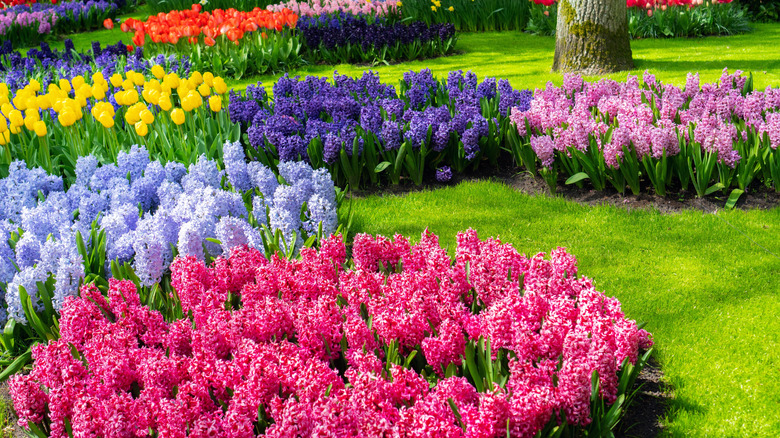
A pink flowerbed is perfect for creating a soft, romantic atmosphere. From subtle shades to vibrant pink accents, this color easily blends into a variety of garden styles. Pink roses, petunias, hyacinths, and astilbes will give it a light and airy look. When designing a pink flowerbed, it’s important to choose the right shades so they don’t clash with each other.
A blue flowerbed is a great option for those looking to bring a sense of coolness and tranquility to their garden. Blue flowers, such as irises, lavender, and muscari, look especially beautiful against a backdrop of greenery. Blue evokes natural freshness and tranquility, making it an ideal choice for creating a relaxing area in your garden.
Yellow and orange flowerbeds. Yellow and orange flowerbeds are perfect for those looking to create a vibrant accent in their garden. These colors radiate positive energy and fill the space with vitality. However, it’s important to use these colors sparingly, as they can be quite intense. Plants such as marigolds, calendula, and dahlias can add vibrant color to your garden.
A red flowerbed is for those who value expressiveness and dynamism. Red always attracts attention, and its use helps create striking compositions. Plants such as roses, asters, and phlox will create vibrant accents and highlight important elements of the garden. However, red requires careful handling to avoid overpowering the space.
How to Organize a Monochromatic Flowerbed?
Organizing the flowerbed is crucial for its visual appeal. To ensure your monochromatic flowerbed looks harmonious, it’s important to arrange the plants by height and shape. Tall plants should be placed at the back or in the center, if the flowerbed is visible from all sides. Low-growing plants and ground covers should be placed at the front to create smooth transitions and visual depth.
Pay special attention to the borders of the flowerbed. A well-defined border helps the flowerbed stand out against the rest of the garden and gives it a finished look. This can be achieved with stone or wooden edges, lawns, or decorative paths that will highlight the beauty of the flowerbed.
Martin Palma adds, “Borders are not only a visual feature but also a way to organize space in the garden. A clear border not only highlights the flowerbed but also helps integrate it into the overall garden design.”
Choosing Plants for a Monochromatic Flowerbed
When selecting plants for a monochromatic flowerbed, it’s important to consider not only their color but also their texture, shape, and size. Use plants with different leaf shapes and flower structures to add interesting accents to the composition. For example, low-growing ground covers like periwinkle or Iberis can pair well with taller plants like phlox or lilies. This combination creates layering and allows the plants to “play” with one another without overshadowing each other.
Also, don’t forget about blooming seasons. To keep the flowerbed looking beautiful throughout the season, combine plants that bloom at different times. For instance, you can start with spring bulbs like tulips and crocuses, and in summer, add roses, phlox, and asters, so the flowerbed is never empty.
A monochromatic flowerbed is a way to add sophistication and harmony to any garden. The right choice of color and plants, along with their proper placement, will help create a composition that will delight the eye all year round. This solution is perfect for those who appreciate order and beauty in the garden but don’t want to use too many different colors.
At Ecolandscape Studio, we are confident that monochromatic flowerbeds are a sustainable and stylish choice that can form the foundation for creating unique and beautiful garden spaces. If you want to bring this idea to life in your garden, we are always ready to help you at every stage of creating your perfect flowerbed.