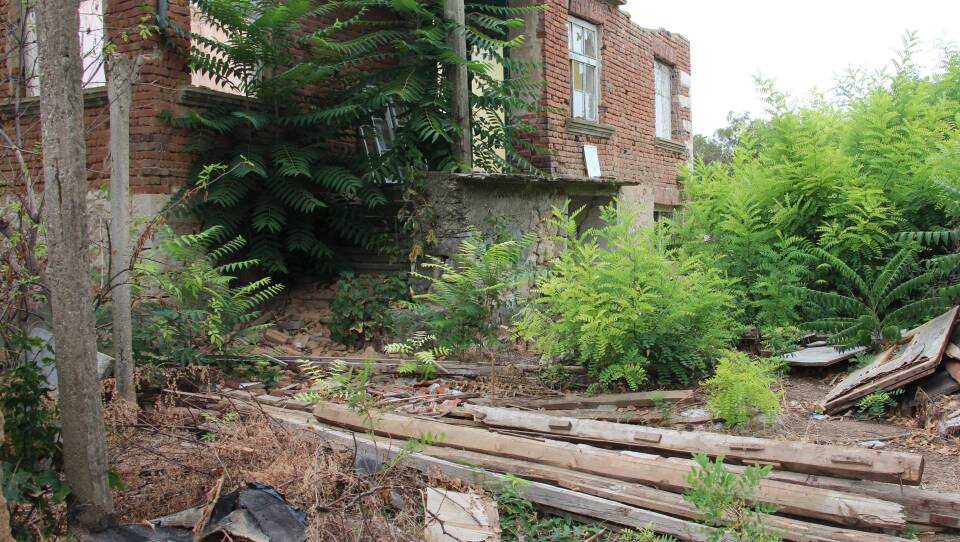
At Ecolandscape Studio, we regularly work with the restoration of disturbed territories, as this is one of the key challenges of contemporary landscape architecture today returning to nature the spaces that have been radically altered by human activity. Landscape reclamation of disturbed sites combines engineering solutions, ecological design, and landscape architecture, making it possible to transform quarries, industrial zones, and landfill sites into resilient ecosystems and next-generation public spaces.
The Essence of Landscape Reclamation
Landscape reclamation is a comprehensive process of restoring land that has lost its natural functions due to industrial or construction activities. It is not superficial beautification, but a deep transformation of territory that includes soil restoration, terrain stabilization, pollution remediation, and the initiation of natural self-regulating processes.
A distinctive feature of Ecolandscape Studio approach is that we do not attempt to “return” a site to its original state in many cases this is impossible. Instead, we design a new, resilient ecosystem that logically integrates into both natural and urban contexts.
Ecological Analysis and Site Diagnostics
Every reclamation project begins with a detailed site assessment. We conduct geodetic and geological surveys, analyze soil chemistry, assess groundwater contamination levels, and evaluate risks such as landslides, subsidence, erosion, and gas emissions (especially in landfill sites).
We also study the microclimate of the site, wind directions, water drainage patterns, and natural succession processes. This comprehensive analysis allows us to develop a strategy that takes into account not only the current condition of the site but also its development over decades.
Engineering Stabilization and Terrain Formation
After analysis, the engineering phase begins, which forms the foundation of all further work. Here we create a stable terrain: eliminating dangerous elevation differences, reinforcing slopes, forming terraces, and designing drainage systems.
Water balance management is a critical element. Disturbed sites often suffer either from water stagnation or complete lack of moisture. We design drainage systems, create artificial water bodies, or ensure even water distribution across the site.
In quarry reclamation, a “secondary natural form” approach is often applied creating lake ecosystems with gradual natural water purification and the development of riparian biotopes.
Soil Layer Restoration
One of the most complex tasks is soil restoration. In many sites, the fertile layer is completely absent or contaminated with heavy metals, petroleum products, or construction waste.
We use combined methods:
- import of structured fertile soil;
- creation of multi-layer soil systems;
- addition of organic materials (compost, biohumus);
- bioremediation using microorganisms;
- phytoremediation using plant species that accumulate pollutants.
This stage forms the foundation of the future ecosystem and directly determines its long-term stability.
Formation of Vegetation Structure
Greening in reclamation is a strategic process. We establish a vegetation “framework” that stabilizes the soil and initiates natural recovery processes.
In the initial phase, hardy herbaceous species are used to quickly cover the surface and prevent erosion. Then shrubs are introduced to structure the landscape. The final stage involves pioneer trees such as birch, willow, and pine, which can survive in harsh conditions and gradually enrich the soil with organic matter.
Special attention is given to biodiversity: conditions are created for the return of insects, birds, and small animals, thereby initiating complete food chains.
Formation of a Resilient Ecosystem
After planting is completed, a long process of natural site development begins. The soil gradually restores biological activity, humus horizons form, and the water regime stabilizes.
Within several years, the site begins to function as a full ecosystem: natural plant communities emerge, biodiversity increases, and a local microclimate develops. This is the key indicator of successful reclamation the ability of the territory to self-sustain without constant human intervention.
Reclamation as Part of Urban Development
Today, landscape reclamation of quarries and industrial areas is becoming an essential component of urbanism. Cities increasingly face a shortage of green spaces, and former industrial sites are becoming the basis for new parks and public areas.
We observe a clear trend: abandoned and hazardous sites are being transformed into parks, eco-parks, water recreation areas, and ecological corridors. This not only improves environmental conditions but also forms a new urban identity.
According to Martin Palma, founder and CEO of Ecolandscape Studio, working with disturbed territories has changed the understanding of landscape itself: “Any degraded site is not an end, but the beginning of a new ecological cycle, where humans do not restore the past, but create the future of nature.”
This approach forms the foundation of our studio’s philosophy, where each project is seen as the creation of a new resilient system rather than a simple restoration of land surface.
Landscape reclamation is a long-term, multi-layered process that requires the integration of engineering, ecology, and landscape design. At Ecolandscape Studio, we recommend viewing such projects as strategic investments in sustainable territorial development.
Only a comprehensive approach can transform disturbed lands into fully functioning natural and public spaces that not only restore ecological balance but also create a comfortable environment for future generations.