In landscape design, garden bridges play an important role not only as decorative elements but also as functional parts of the composition. They are often used to connect two areas of the garden, cross a water feature, or simply add an element of mystery and coziness. At Ecolandscape Studio, we frequently incorporate bridges into our projects to not only enhance the aesthetics of the space but also to provide additional layers of convenience and functionality.
Why Garden Bridges Are So Popular in Landscape Design
Modern garden bridges are not just ornaments; they are important functional elements that solve many design challenges. In recent years, their popularity has grown because they fit perfectly into the concepts of ecological gardens, water features, and natural landscapes. Bridges not only add beauty but also provide convenience for moving around the garden.
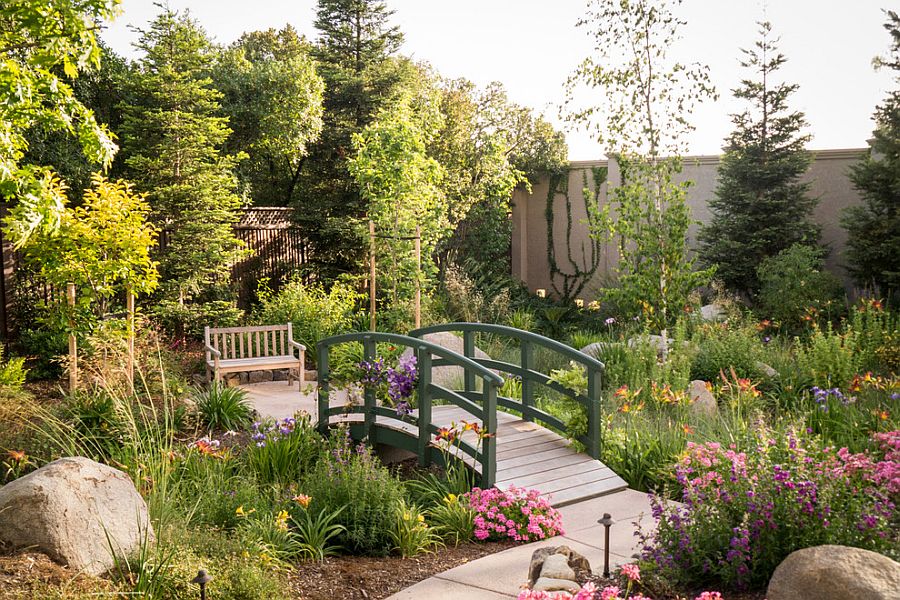
They are often used in areas with elevation changes or water features. Instead of building stone or concrete structures, many gardeners opt for wooden or metal bridges that create a natural feeling of crossing over a pond or stream. They help preserve the natural landscape without disrupting it, offering practical solutions for issues with water or uneven terrain.
How Bridges Create Zoning in the Garden
One of the most important functions of a garden bridge is to zone the space. In areas with multiple levels or natural water features, a bridge helps clearly delineate different zones. For example, it can separate open areas from secluded corners or serve as a transition between relaxation zones and active recreation areas. Bridges can connect different parts of the garden, creating a sense of unity, improving accessibility, and adding dynamism to the space.
At Ecolandscape Studio, we always take into account the functional needs of the client when designing bridges. It’s important to understand that a bridge should be not only beautiful but also comfortable, practical to use, and in harmony with the overall style of the landscape project.
Materials for Garden Bridges: How to Choose the Best Option
The materials used to build the bridges play a crucial role in how well they blend with the surrounding landscape. For instance, wooden bridges are often used in gardens with a natural, rustic style because wood fits organically into nature and creates a cozy atmosphere. However, it is important to choose wood that is resistant to moisture and temperature changes. In this case, oak, larch, or teak are great options, as they are highly durable in outdoor conditions.
Metal bridges are ideal for modern and minimalist gardens. They create a sense of lightness and transparency, without overwhelming the space. However, it’s worth remembering that metal can oxidize and requires some maintenance to retain its appeal over time.
If you want your garden bridge to be a true focal point, consider stone structures. These are perfect for large, enduring projects where stability and longevity are important. Stone bridges can be made in both natural and processed styles, depending on the garden’s overall design.
The Role of Bridges in the Garden’s Aesthetics
Garden bridges also serve an important visual function. They can create a sense of mystery and romance, highlight features of the garden, and add depth to the space. Even in small gardens, a bridge can become a unique detail that visually expands the area, creating a sense of layering.
One example from our projects is where a bridge was used to connect two levels of the garden, each with a different color scheme. This approach helped create a space filled with light and air, as well as facilitated the proper distribution of water throughout the garden.
Bridges and Water Features: Enhancement and Harmony
Bridges are perfect for gardens with water features. If your garden includes a pond, water body, or even a rain garden, a bridge is not just a decorative element but a necessary link that allows you to move through the space without polluting the water. A bridge over a water feature not only provides convenience but also seamlessly connects different parts of the garden, improving the overall composition. It is important that the bridge harmonizes with the water feature and is made of materials resistant to water’s effects.
At Ecolandscape Studio, we ensure that every element of landscape design is thought out down to the smallest detail. A bridge connecting the shores of a pond becomes part of the overall ecosystem of the garden, without disrupting the natural balance. With this approach, the garden will not only be beautiful but also ecological.
When to Avoid a Garden Bridge
A garden bridge is not always a necessary element. In small gardens without elevation changes or water features, a bridge might appear out of place, overwhelming the space and disrupting the overall balance. In such cases, it is better to use other elements, such as borders, flower beds, or pathways, that perform the zoning function without disrupting the harmony of the space.
It is also important to consider the style and concept of the garden. A bridge may not be suitable for strict geometric gardens or modern minimalist designs where every element must be carefully chosen.
How to Avoid Mistakes When Installing a Bridge
When designing a bridge, several factors must be taken into account:
- Proper Placement: The bridge should harmonize with the landscape. It should not be too bulky or overshadow the rest of the garden. Consider which elements of the garden you want to highlight and which functional zones you need to connect.
- Materials and Durability: Choose materials that can withstand the weather conditions of your region. For instance, if your area experiences frequent rain or high humidity, wood or metal should be treated with protective coatings to prevent damage.
- Size and Shape: The bridge should not be too narrow or too high. Ensure that it is comfortable to use and suits the scale of your garden.
A garden bridge is not just a beautiful element; it is an important detail that helps solve functional challenges in landscape design. It can create transitions, improve zoning, and enhance the visual appeal of the garden, especially if it is carefully chosen and integrated into the overall design.
As Martin Palma, founder of Ecolandscape Studio, puts it: “A bridge in the garden is not just an ornament; it is an element that connects different parts of your garden and helps create a unique atmosphere. The right choice and installation of a bridge can completely transform a space, adding elegance and functionality.”