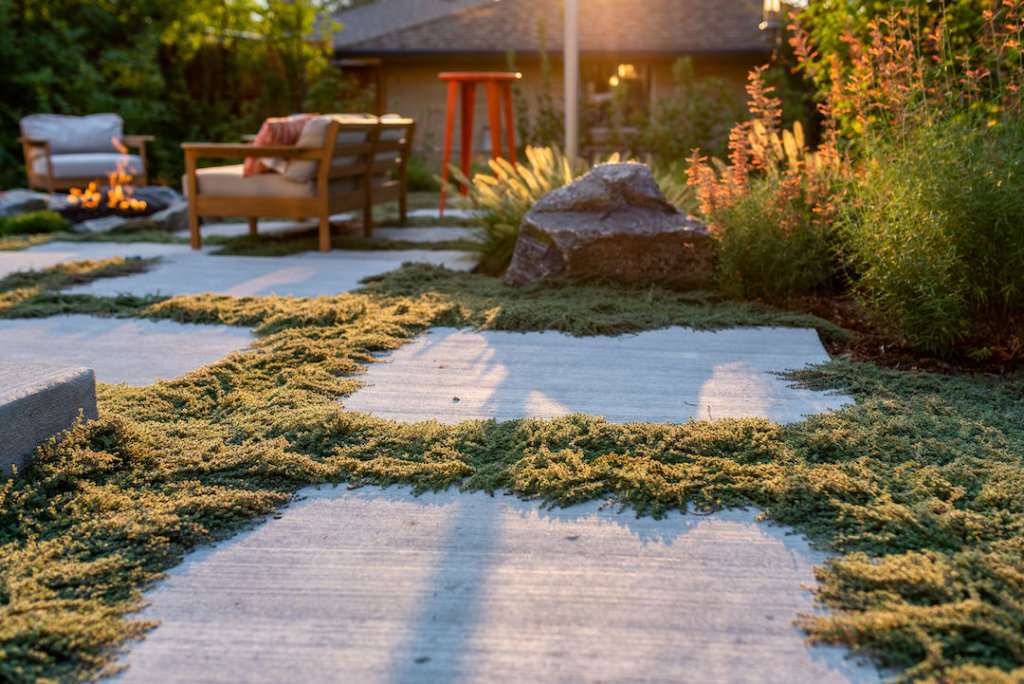
Why move away from traditional lawns and switch to eco-friendly alternatives? With climate change, water scarcity, and environmental issues, the traditional lawn is no longer an ideal solution. Every year, the need for more sustainable, resource-efficient, and biodiverse landscapes grows. At Ecolandscape Studio, we help our clients create projects that support ecosystems, reduce water consumption, and simplify landscape maintenance. Let’s explore the eco-friendly solutions that can replace traditional lawns and how they improve the landscape.
Why move away from a lawn?
Traditional lawns require significant resources: water, chemicals, and frequent mowing, all of which have a negative impact on the environment. Lawns do not provide a habitat for local pollinators and wildlife, and they increase resource consumption, making them an inefficient ecological option. In light of droughts, growing water shortages, and climate change, the need for more environmentally sustainable solutions has become evident. Replacing a lawn with more suitable plants and ground covers helps not only to reduce carbon footprints but also to create a more harmonious and functional landscape.
Martin Palma, founder and CEO of Ecolandscape Studio, shares his experience: «When we first started thinking about landscape redesigns, we realized that lawns consume too many resources. Instead of continuing to maintain them, we decided to find ways to create sustainable, practical, and beautiful landscapes that support ecological diversity and lessen the environmental impact. It was a huge step forward for both our studio and our clients.»
Eco-friendly Alternatives to Lawns
There are several alternatives that can serve as excellent replacements for lawns, offering the desired aesthetic effect with minimal environmental impact.
Using native plants is an eco-friendly and practical choice. These plants are perfectly suited to your region, as they are adapted to local climatic conditions and require far less water, fertilizer, and maintenance. For example, Dymondia margaratae (silver carpet) is drought-resistant and looks great in sunny spots, while creeping thyme (Thymus spp.) is not only decorative but also attracts beneficial insects. You can also consider options like Lippia nodiflora (frog fruit), which thrives in sunny areas, or Dichondra argentea (silver ponyfoot), ideal for partial shade.
These plants will beautify your space and help maintain the balance of the local ecosystem by attracting the right pollinators and wildlife. Transitioning to native plants is one of the easiest and most effective ways to improve the ecological value of your landscape and reduce water usage.
Meadow grasses are an ideal choice for creating a natural and sustainable landscape. These plants do not require frequent maintenance and thrive without regular watering. They help stabilize soil and prevent erosion. For instance, Buchloe dactyloides (buffalo grass) uses 75% less water than traditional lawns and is perfect for arid regions. It is also highly drought-resistant, and its roots strengthen the soil. Additionally, you can opt for Carex spp. (sedges), which are perfect for partially shaded areas and create beautiful green carpets.
For those looking to harmonize with nature and reduce maintenance costs, meadow grasses are the best option. Not only do they give your landscape a natural look, but they also play a crucial role in supporting the ecosystem.
Gravel and crushed granite are excellent alternatives for creating pedestrian paths and recreational areas. These materials are not only aesthetically pleasing but also improve drainage, preventing flooding. Gravel is easy to lay down, allowing water to quickly penetrate the soil and preventing stagnant water. Crushed granite, on the other hand, creates a durable surface ideal for high-traffic areas like walkways.
Both materials are eco-friendly and durable, making them a great choice for landscape design. They help reduce the need for irrigation and minimize the use of chemical fertilizers, contributing to a sustainable landscape less vulnerable to climate changes.
Mulch is also a vital element in landscape design, not just as a decorative material but as a tool to improve soil health. It retains moisture, prevents weed growth, and protects plant roots from temperature fluctuations. Wood-based mulch is perfect for garden beds and flower borders, enhancing soil structure and encouraging plant growth. Cow manure or compost can also be used to feed the soil and improve its composition, creating optimal conditions for plant growth and supporting the ecosystem.
Using mulch also helps reduce the need for frequent watering, which is particularly important in drought-prone areas.
When it comes to artificial turf, its use may be justified in situations where traditional lawns cannot be maintained due to a lack of water or time for upkeep. However, it is important to note that artificial turf does not support the ecosystem, and its production involves synthetic materials. We always recommend considering natural materials as a more sustainable and long-term choice.
As Martin Palma, the founder and CEO of Ecolandscape Studio, points out: «Artificial turf can be a suitable solution in certain situations, but it’s crucial to remember that it doesn’t support biodiversity. We always strive to use natural materials that support ecosystem balance while meeting all our clients’ needs.»
How to Integrate Eco-friendly Alternatives into Your Landscape
To integrate eco-friendly alternatives into your landscape, you need to consider the specifics of your property: climate, soil type, and sunlight. At Ecolandscape Studio, we help you choose the best solutions based on your preferences and natural conditions. It’s important to combine native plants, natural ground covers, and other landscape elements effectively to achieve the best results.
Using native plants and sustainable ground coverings will not only make your landscape more beautiful and eco-friendly but will also simplify its maintenance. All of this helps significantly reduce the need for irrigation, fertilizers, and constant mowing.
Replacing your lawn with eco-friendly alternatives is a step toward creating a sustainable and harmonious space that looks beautiful while helping to maintain balance in the ecosystem. Native plants, natural ground covers, and mulch require fewer resources and less upkeep while greatly improving soil health and supporting biodiversity. At Ecolandscape Studio, we believe every property can be transformed into an eco-friendly oasis that will delight you with its beauty and harmony with nature.









