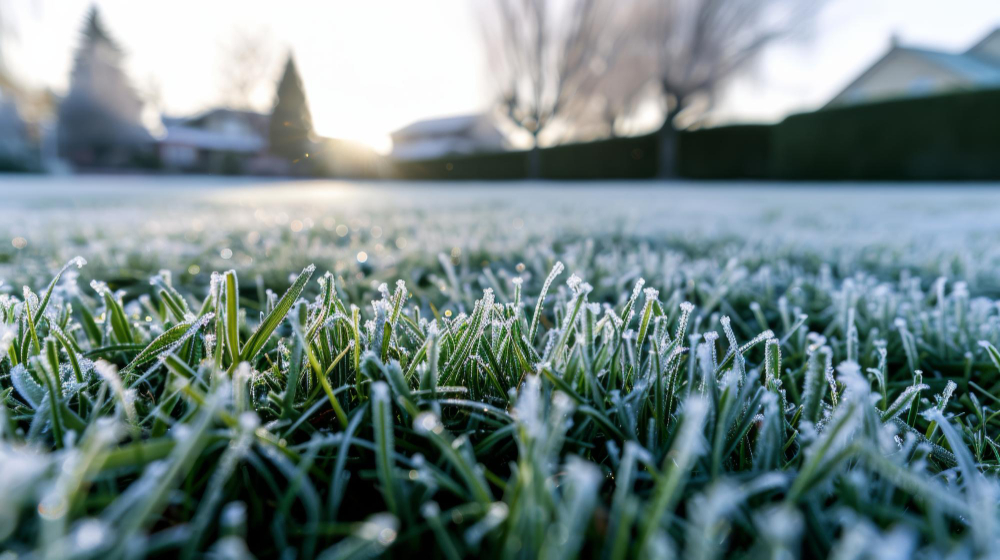
Winter lawn care is an essential part of maintaining your landscape. Many people believe that with the arrival of winter, they can forget about their lawn, but this is far from the truth. Although the lawn is covered with snow, it still requires attention to ensure it stays healthy and lush in the coming season. At Ecolandscape Studio, we share some important tips for winter lawn care so that your lawn not only survives the cold but also prepares for the upcoming spring.
Why Proper Winter Lawn Care is So Important
The winter period can be both beneficial and hazardous for your lawn. Like in summer, your lawn needs attention in winter to avoid damage from adverse conditions. Beneath the snow, the grass retains its potential for growth; however, if you don’t follow a few important recommendations, your lawn could suffer from ice, frozen patches, or improper snow exposure. Martin Palma, the founder and CEO of Ecolandscape Studio, believes that «the lawn needs rest in winter, but with minimal intervention, to maintain its health and structure.»
Snow, for example, can be extremely helpful to your lawn, protecting it from harsh frosts. It forms a natural barrier against the cold, preventing damage to the roots and grass cover. It’s important to remember that a stable snow cover is the key factor that provides the best survival conditions for your lawn during winter.
Avoid Covering Your Lawn
One of the most common misconceptions among gardeners is the use of various protective materials like spunbond to shield the lawn from frost. In reality, this is not only ineffective but could harm the plants. Such materials can trap moisture and warmth, leading to condensation and, as a result, the rotting of the grass. Snow is the perfect natural «blanket» for your lawn. It not only protects the roots from the cold but also prevents the soil from freezing. Martin Palma points out: «I always follow the principle: if nature has provided snow, let it be the main cover for the lawn. It creates ideal conditions for the grass, and no additional protection is needed.«
How to Avoid Lawn Damage
During winter, it is important not only to avoid damaging your lawn but also to minimize any interventions that could worsen its condition. The main rule for winter care is to avoid walking on the lawn, especially if the snow hasn’t yet formed a thick cover. The process of compacting the snow can damage the roots and create bare spots that will only be visible in the spring. If the snow is deep (about 20 to 25 cm), it’s fine for children to play on the lawn, but you should avoid heavy foot traffic, which could cause damage.
When there is little snow or it is blown away by the wind, leaving uneven patches, the lawn may suffer from incomplete coverage. In this case, protective shields or barriers can be installed to trap snow and distribute it evenly across the lawn. This will help avoid the formation of thick ice layers, which are harmful to the grass.
The Importance of Even Snow Distribution
If snow is unevenly spread across the area, it can also become a problem. With deep drifts in some places and almost no snow in others, temperature fluctuations can cause stress for the plants. After heavy snowfall, it’s best to evenly distribute the snow across the lawn to ensure a uniform layer. This will prevent temperature fluctuations, where the roots may freeze, and maintain the lawn’s health.
Dealing with Ice Layers
In winter, when temperatures fluctuate between thawing and freezing, an ice layer can form on the lawn, which impedes air exchange and slows grass growth. In such cases, it is necessary to carefully break up the ice layer to allow the lawn to «breathe.» You can use regular garden rakes to break the ice. It’s important to do this gently to avoid damaging the grass. This simple and effective method will prevent the development of rot under the ice and ensure oxygen reaches the roots.
Preparing Tools for the New Season
Winter is also a great time to prepare your garden tools and equipment. During this season, you can check your tools, sharpen the blades, and ensure the equipment you’ll use in the coming season is in good condition. It’s essential to ensure that all necessary gardening tools are in working order so that you don’t waste time on repairs when spring arrives.
Martin Palma adds: «Winter care is not only about taking care of the lawn. It’s also a moment to prepare for spring. Performing an inventory of your garden equipment during the winter helps avoid panic when the peak season arrives, and all your tools need to be in perfect condition.»
Winter lawn care may not seem as crucial as summer care, but it is actually a critical moment for the health of your grass. Proper snow distribution, careful handling of the lawn, and timely removal of ice layers all contribute to ensuring the lawn survives the winter without damage. The key is not to interfere too much with natural processes and let the snow do its job.
At Ecolandscape Studio, we believe that with a little attention to the winter state of your lawn, you can ensure its health and beauty for many years to come. A proper approach to winter care is the key to having a lush and vibrant lawn in the spring.