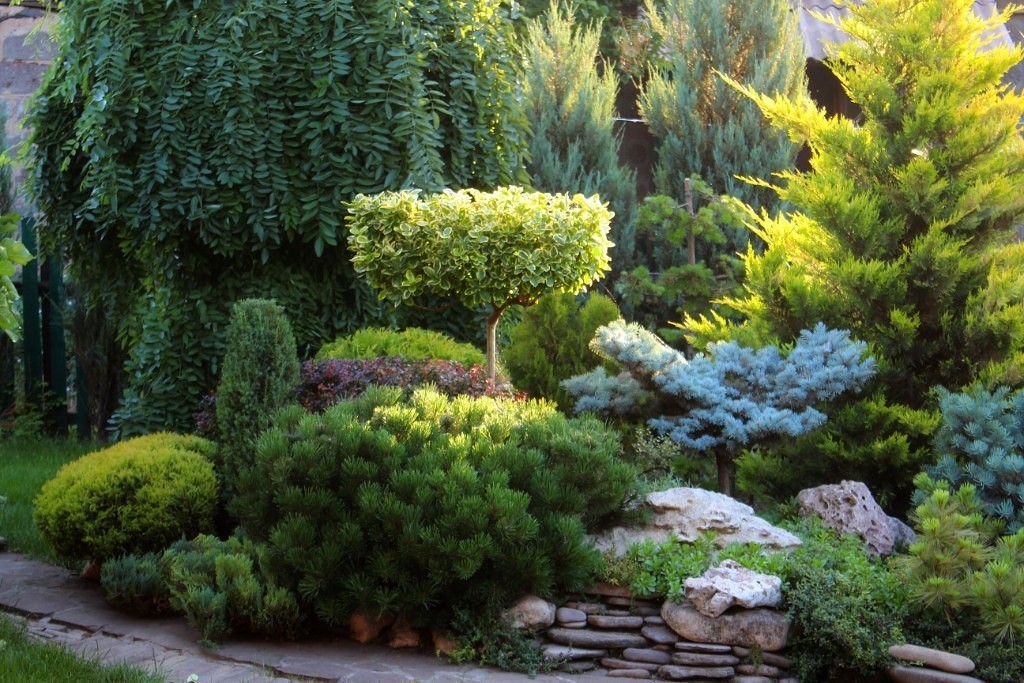
Coniferous plants are not just decorative elements for the garden, but also important components of landscape design that provide structure and harmony to the space. They remain green and attractive throughout the year, making them indispensable for creating picturesque and functional outdoor spaces. At Ecolandscape Studio, we’ll share valuable tips on selecting, planting, and caring for coniferous plants, as well as the best practices for integrating them into your landscape design.
Why Coniferous Plants Are So Important for Your Garden?
Coniferous plants play a key role in landscape design because they maintain their ornamental value during the colder months. Unlike flowering plants, which lose their beauty in autumn, conifers stay green and can serve as a backdrop for other plants. These plants add structure and balance to the garden and provide visual depth.
Martin Palma, the founder and CEO of Ecolandscape Studio, emphasizes: «Coniferous plants are not just decorative elements. They create the foundation for your garden and serve as an unchanging backdrop, allowing other plants to fully reveal their potential. Proper use of conifers breathes life into the garden throughout the year.»
How to Choose the Right Coniferous Plants for Your Plot?
One of the first steps in creating a garden is selecting the right coniferous plants. It’s important to consider several factors to ensure they harmonize with your overall design concept and are suitable for your garden.
First and foremost, pay attention to the soil type and drainage. Coniferous plants require well-drained soil because standing water can lead to root rot. For plants like spruces and firs, more fertile soils are preferred, while pines and junipers thrive in sandy and light substrates.
Before planting, ensure the area is properly prepared by adding sand or other components to improve drainage. Proper soil preparation will ensure healthy growth and help avoid root issues.
Equally important is considering the future growth of the plants. When selecting conifers, it’s essential to understand how large they will grow. Some conifers, like thuja and firs, can grow significantly over several years, so it’s important to allow enough space for them to thrive. For instance, with thujas and firs, it’s crucial to account for their potential size in 5-6 years, ensuring enough distance between plants.
In landscape design, conifers often play the role of a backdrop for other plants, but they can also be used as focal points. You can select conifers with unique foliage color or interesting shapes to make them a central element in your garden. These plants are perfect for highlighting the beauty of other flowering or deciduous plants.
How to Care for Coniferous Plants?
Caring for coniferous plants is relatively simple if you follow a few basic recommendations.
Watering coniferous plants requires moderation. They don’t need frequent watering, but in dry periods, it’s important to ensure the soil doesn’t dry out. Avoid over-watering, which can lead to root rot.
Regular pruning is an essential part of caring for coniferous plants. It helps maintain the shape of the plant and promotes its health. For example, thujas and junipers require pruning to prevent excessive growth and maintain a compact form. Pruning also improves ventilation and reduces the risk of diseases.
Additionally, it’s important to take care of winter protection for coniferous plants. In winter, they may suffer from freezing temperatures and cold winds. To protect them, you can use mulch to cover the roots and wrap the plants in special materials. This will help keep the plants healthy and resilient to the cold.
Tips for Landscape Design with Coniferous Plants
Coniferous plants can serve as either background elements or central features in landscape compositions. It’s essential to combine them with other plants thoughtfully to create a balanced and aesthetically pleasing picture.
One effective way to use conifers is by creating layered compositions. Tall trees and shrubs can be placed in the background, while shorter forms can be positioned in the front. This adds depth and richness to the garden.
Conifers are also excellent for zoning your plot. They can be used to separate different areas of the garden, create secluded corners, or highlight specific sections.
Coniferous plants are an integral part of landscape design, helping to create a harmonious space that is pleasant to be in throughout the year. They offer numerous benefits, from providing a backdrop to forming accents in compositions. Proper selection and care of conifers will ensure that your garden stays beautiful and vibrant no matter the season.
By following our recommendations at Ecolandscape Studio, you can create a garden that will not only please the eye but also seamlessly incorporate coniferous plants into any style or design concept.