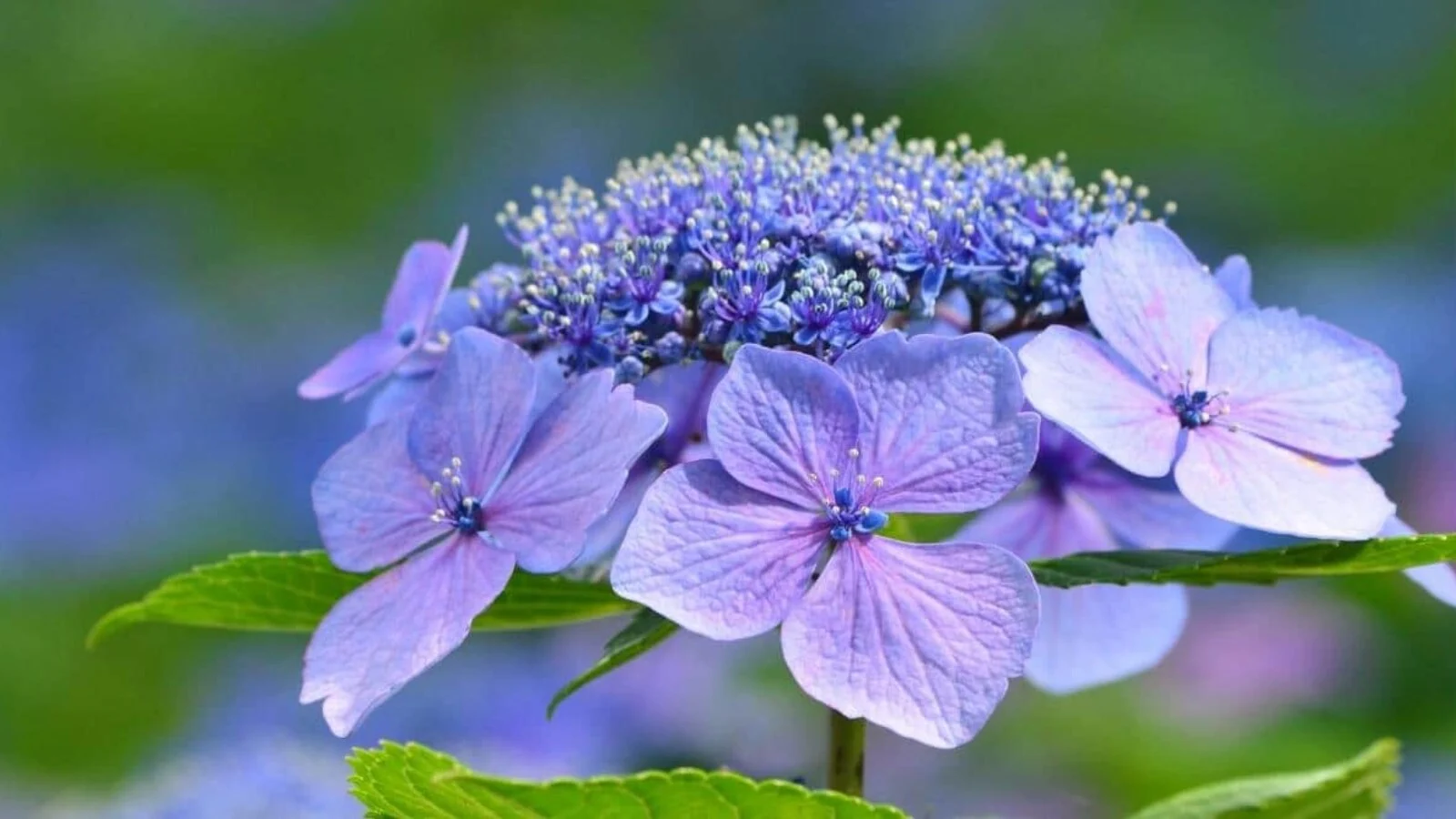
Lacecap hydrangeas are one of the most attractive and elegant plants for the garden. Not only do they beautify your landscape, but they also become the focal point in any corner of your yard. These shrubs from Japan, with their unusual lace-like inflorescences, are perfect for creating romantic and decorative compositions. In this article, Ecolandscape Studio shares how to properly care for lacecap hydrangeas, ensuring they delight you with their blooms, and provides tips on planting, watering, pruning, and propagation.
Key Features of Lacecap Hydrangeas
Lacecap hydrangeas, belonging to the species Hydrangea macrophylla, are shrubs with large leaves and beautiful flowers arranged in inflorescences. These inflorescences feature small flowers in the center, surrounded by large petals. These plants grow rapidly, and in one season, they can grow up to 60 cm or more. The flowers can be pink or blue, depending on the soil’s acidity, and some varieties have white or purple shades.
Lacecap hydrangeas are an ideal choice for any landscape design. These plants fit perfectly in both traditional and modern gardens, where they can serve as the centerpiece of a composition.
The Best Location for Planting Lacecap Hydrangeas
Choosing the right location is key to the health and abundant blooming of lacecap hydrangeas. Hydrangeas require good lighting, but they should be protected from direct sunlight, which can damage the foliage and cause it to yellow. Therefore, it’s best to plant them in areas with partial sunlight, where they will receive morning sun and afternoon shade. These are the optimal conditions for hydrangeas.
However, it is important to note that if the plant is placed in too much shade, it may result in weak growth and a lack of flowers. Also, ensure that the plant is not exposed to excessive heat, as high temperatures and direct sunlight can negatively affect the health of the hydrangea.
Watering and Humidity
Lacecap hydrangeas require regular watering, especially during hot summer months. However, it’s important to avoid over-watering the soil, as hydrangeas do not tolerate waterlogging. To check whether the plant needs watering, insert your finger about 10 cm into the soil. If it feels dry, it’s time to water.
Watering should be abundant but not frequent. It’s crucial that the water reaches the roots, not just the surface of the soil. The best approach is to water the plant once a week, but thoroughly, ensuring that the soil is sufficiently saturated.
Additionally, hydrangeas enjoy humidity, and maintaining moderate air moisture is essential for their growth. This is especially important during hot summer days when the air tends to become dry.
Soil Type
Lacecap hydrangeas prefer rich, well-drained soil with a neutral to slightly acidic pH. To increase soil acidity and get blue flowers, you can add aluminum sulfate to the soil. To achieve pink flowers, you should add lime.
The soil should be not only moist but also rich in organic matter. Adding compost or manure will help improve the soil’s structure and provide the necessary nutrients to the plants. Also, remember that the soil must be well-drained to avoid water stagnation.
Pruning Lacecap Hydrangeas
Pruning is one of the most important aspects of hydrangea care. Lacecap hydrangeas bloom on the previous year’s growth, so pruning should be done after flowering to avoid damaging future flower buds.
When pruning, remove old and damaged stems, as well as faded flowers. Some gardeners prefer to leave faded inflorescences for decorative purposes, as they can add interest to the plant’s winter appearance.
Martin Palma, Founder and CEO of Ecolandscape Studio, advises: “Pruning hydrangeas isn’t just about maintenance; it’s a way to keep the plant’s shape and health. If you prune hydrangeas properly, they will reward you with blooms for many years. It’s essential to always follow the correct seasonal timing and not rush the pruning process, so as not to damage the flower buds that will bloom next season.”
Propagating Lacecap Hydrangeas
Lacecap hydrangeas can be propagated by cuttings. However, since many varieties are hybrids, growing them from seed will not result in plants that retain the characteristics of the parent variety. Therefore, propagating by cuttings is the most effective method.
To propagate, cut a healthy 10 cm long cutting and remove the leaves from the bottom half of the stem. You can treat the end of the cutting with a rooting hormone. After that, plant the cutting in a pot with moist potting mix and place it in a bright, warm location.
In a few weeks, the cutting will begin to root and grow. Once the plant becomes strong enough, it can be transplanted into the ground or into a larger container.
Fertilizing and Feeding
Hydrangeas require regular feeding to ensure healthy growth and abundant blooming. In early spring, it’s recommended to apply a balanced fertilizer to support the plant during its active growth phase. However, it’s important not to over-fertilize, particularly in late summer, as this can stimulate late growth, making the plant more vulnerable to winter cold.
Organic fertilizers, such as compost, are also helpful for improving soil structure and enriching it with nutrients.
Wintering Lacecap Hydrangeas
If you are growing lacecap hydrangeas in the ground, they typically do not require winter protection unless the winters in your region are very harsh. However, hydrangeas grown in pots need protection from the cold. In this case, you should wrap the pot in insulating material and place it in a sheltered spot.
Yellowing Leaves and Other Problems
If the leaves begin to yellow, it may indicate over-watering, insufficient watering, or excess fertilizer. Yellowing may also be caused by poor drainage or high levels of aluminum sulfate in the soil. To fix the situation, reduce watering frequency and check the drainage quality.
Wilting leaves during midday can be a normal occurrence on hot days, as the plants try to protect themselves from overheating. In such cases, simply wait until the temperature cools down in the evening.
Growing lacecap hydrangeas requires careful attention and diligent care. With the right conditions, such as moderate lighting, regular watering, good soil, and timely pruning, lacecap hydrangeas will bloom and delight you with their colorful inflorescences for many years. These plants are perfect for a variety of garden compositions and can be a true highlight of your landscape.
Ecolandscape Studio always focuses on using native plants, which helps create harmonious and sustainable landscape solutions. With the right care and by following our recommendations, your hydrangeas will thrive and bring beauty to your garden throughout the spring and summer.