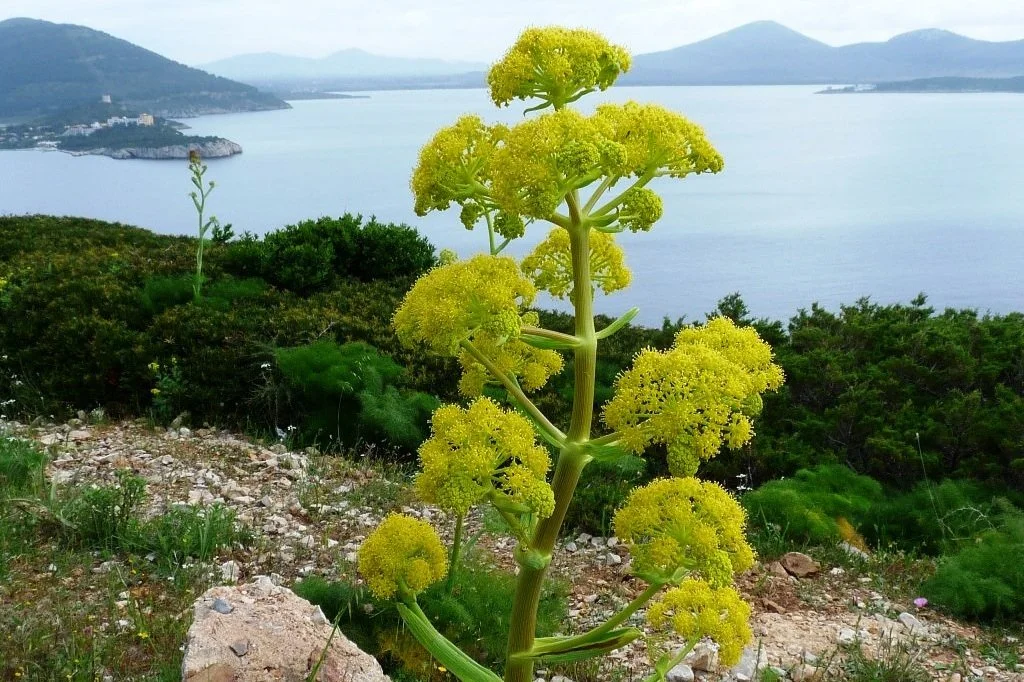
In the world of landscape design, every detail matters, from choosing the color palette to the texture of plants and their role in the space. Among decorative plants that fulfill multiple functions at once, such as height, shape, seasonality, and ecological role, Ferula communis, better known as giant fennel, occupies a special place. This plant from the Apiaceae family draws attention with its large architectural form, striking yellow umbels, and its ability to create expressive compositions in any garden or yard.
At Ecolandscape Studio, we focus on plants that not only beautify the garden but also strengthen its structure, create visual focal points, support biodiversity, and contribute to natural ecosystems. Ferula communis is a prime example of a plant that combines all these qualities.
A Striking Vertical Accent for Garden Design
Giant fennel can grow up to three meters or more, making it a unique tool for designers. It draws the eye upward, creating vertical lines that are particularly effective in wide open spaces of a yard or garden. Such vertical accents help visually enlarge the area, create a sense of depth, and even highlight the architecture of the house.
In Ecolandscape Studio projects, Ferula communis is often used as a visual landmark along pathways, in terrace compositions, or as a backdrop for low-growing perennials. This plant works on scale rather than just color, which allows it to harmonize with ornamental grasses, shrubs, and other perennials, creating dynamic planting structures throughout the season.
Balancing Form, Color, and Texture
In landscape design, decorative flowering is not the only important aspect. Leaf and stem texture also matter. The giant fennel’s large, feathery leaves form a dense basal rosette, providing characteristic shapes and shadow play that enhance the visual complexity of plant compositions. During flowering, the yellow umbels become real beacons in the garden, especially when neighboring plants favor pastel or neutral tones.
This contrast is highly valuable in yard landscaping, where it is often necessary to create depth of color and form without relying on bright artificial elements. In garden design projects, this plant helps add living texture with minimal maintenance, particularly when combined with drought-tolerant species such as lavender, sage, ornamental grasses, or succulents.
Resilience and Low Maintenance
Ferula communis prefers sunny locations. For full development and abundant flowering, the plant requires at least six hours of direct sunlight per day. This makes it an excellent choice for sunlit zones of yards, terraces, and open lawns. In shaded areas, the plant quickly loses its decorative appeal, with weaker stems and less impressive flowering.
The soil should be well-drained, even slightly poor, which is actually an advantage when creating naturalistic plantings. At Ecolandscape Studio, we often design Ferula communis alongside rocky paths and borders, where the soil naturally drains and water does not stagnate around the roots. This solution is ideal for regions with hot, dry summers, where it is important not only to keep plants alive but also to minimize maintenance, water consumption, and human intervention.
To establish the plant successfully, moderate watering is needed during the first weeks. Once the deep root system develops, it can withstand drought without harming its ornamental qualities. This makes giant fennel one of the best options for eco-friendly landscaping zones where climate resilience and resource conservation are important.
Ecological Role in the Garden and Supporting Biodiversity
A key criterion in modern landscape design is creating a living environment that supports local flora and fauna. Ferula communis flowers are rich in nectar and attract bees, bumblebees, butterflies, and other beneficial pollinators. This means that when planning yard landscaping, giant fennel functions not just as a decorative element but as an active part of the ecosystem, supporting pollination processes and contributing to garden sustainability.
Additionally, the dense root system helps stabilize the soil, preventing erosion on slopes or loose grounds, especially important for gardens with uneven terrain or naturalistic designs, where preserving soil integrity without extensive engineering is desired.
In my experience as a landscape designer, plants that attract pollinators increase the overall vitality of the garden. This positively impacts the health of neighboring perennials, shrubs, and ornamental grasses, making the garden more resistant to pests and diseases without the use of chemicals.
Practical Recommendations for Planting and Placement
When planting, it is important to consider the mature size of the plant. Providing space for Ferula communis allows it to expand in height and texture without shading other plants. In landscape design, this is crucial, as overly dense plantings can lead to competition for light and nutrients, reducing overall ornamental value.
Preparing soil with improved drainage is a key step. If the plot has dense soil, adding coarse sand or fine gravel helps prevent waterlogging and strengthens root health. In regions with cold winters, consider mulching or covering the plant, especially during the first few years after planting.
It is also important to note that unlike culinary fennel, Ferula communis contains resins that may be toxic upon contact or ingestion. Therefore, when choosing planting locations, consider if children or pets frequently use the area. At Ecolandscape Studio, we recommend placing such plants in controlled-access zones or alongside safe low-growing species, balancing aesthetics and safety.
Expert Opinion: The View of Ecolandscape Studio’s Founder
Ferula communis is a rare case where decorative appeal and ecological function go hand in hand. In our landscaping projects, I use giant fennel to create striking vertical compositions that enhance visual depth and help form natural garden zones. This plant not only attracts beneficial insects but also acts as an architectural element, strengthening the composition and bringing the space to life, shares Martin Palma, founder and CEO of Ecolandscape Studio.
This perspective reflects Ecolandscape Studio approach to modern landscape design. Plants should be not only beautiful but also functional, resilient within the ecosystem of the plot, and harmoniously integrated into the overall landscaping concept.
Ferula communis is much more than just a decorative plant. It adds vertical structure, enhances compositions, supports biodiversity, and withstands drought. With proper planting and pairing with other plants, it helps create natural, vibrant, and eco-friendly solutions for garden design.
If your goal is to create a garden that functions as a cohesive system, beautiful, sustainable, and diverse, giant fennel becomes an essential part of that system. In Ecolandscape Studio projects, it helps produce expressive, dynamic, and functional spaces that delight the eye and support the living processes in the garden.