Modern landscape design is reaching a new level, where the key objective is not merely reducing environmental impact, but creating spaces that actively improve the climate. At Ecolandscape Studio, we view the garden as a tool of ecological influence—one that can not only offset emissions but also achieve a negative carbon balance by storing carbon in soil and plant biomass.
What is a Negative Carbon Landscape?
A negative carbon footprint means that over its entire life cycle, a site absorbs more carbon dioxide than it emits. This outcome is achieved through integrated design, where every element from soil to materials and maintenance is taken into account. In this context, the landscape becomes part of the climate system rather than just a decorative space.
It is also important to understand that this is not a one-time effect, but a long-term dynamic. The site must retain its ability to store carbon over decades. This requires a strategic approach to planning, considering plant maturity stages, climate change, maintenance scenarios, and even potential future transformations of the site.
How This Approach Works
Soil acts as the primary carbon reservoir. Its condition directly determines the effectiveness of the entire project. In professional practice, we recommend preserving the natural soil structure by minimizing mechanical disturbance. The use of compost, mulch, and biochar increases organic matter content and stimulates microbial activity. Living soil can store carbon far more efficiently.
Additionally, regenerative agriculture methods are applied: cover crops, mycorrhizal fungi, and non-destructive aeration. These techniques not only retain carbon but also gradually build fertile soil layers, transforming even degraded soils into active carbon sinks.
Vegetation in such landscapes serves more than an aesthetic purpose. Species are selected for their ability to rapidly build biomass and develop deep root systems. Native plants adapted to the local climate are especially effective, as are mixed plantings that create resilient ecosystems. Trees play a key role, as they account for the majority of CO₂ absorption.
Plant structure is also crucial: multilayered compositions (trees, shrubs, herbaceous layers) are significantly more effective than flat planting schemes. This approach mimics natural ecosystems and increases total biomass, thereby enhancing carbon sequestration potential.
Organic matter remains within the site and is processed as part of the system. Leaves, branches, and grass are composted and returned to the soil. This reduces emissions while improving fertility, creating a sustainable, closed-loop system with no waste.
Advanced composting systems from simple compost zones to vermiculture setups can further accelerate organic processing and improve the quality of the resulting substrate.
A significant portion of the carbon footprint is generated during construction. Therefore, it is essential to reduce the use of energy-intensive materials, limit transportation, and avoid excessive machinery. Even simple decisions, such as path construction methods or paving techniques, influence the overall balance.
Project logistics also matter: careful planning of deliveries, reuse of materials, and modular construction approaches can further reduce emissions.
Materials: What to Use and What to Avoid
Projects with a negative carbon footprint rely on materials with low emissions or those that help offset them. These include sustainably sourced wood, local stone, gravel, recycled materials, compost, and biochar. They form an ecological foundation and support natural processes.
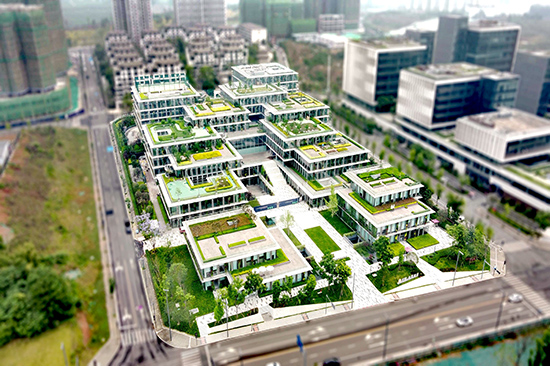
“Living” materials such as green roofs, vertical greening systems, and plant-integrated structures can also be used, continuing to capture carbon even after construction is complete.
High-carbon materials like concrete and cement are minimized or replaced with alternatives. Synthetic покрытия and peat are also avoided due to their high emissions and ecological damage during production and extraction.
Alternatives may include stabilized soils, timber decking, reclaimed stone, and innovative low-carbon mixtures.
The Role of Technology in Design
Modern tools make it possible to accurately assess the effectiveness of design decisions. Site analysis, plant growth modeling, and carbon balance calculations allow landscapes to be designed as systems with predictable outcomes. Water management solutions are also integrated to enhance resilience and ecological performance.
Another key direction is post-implementation monitoring. Soil moisture sensors, plant growth tracking, and organic matter analysis enable ongoing adjustments and improve carbon storage efficiency over time.
Maintenance and Operation as Part of the Strategy
Even a perfectly designed site can lose its effectiveness if managed improperly. That is why maintenance strategy is part of the design process. Minimal intervention, avoidance of chemical fertilizers, reduced mowing, and support of natural processes help maintain and strengthen the carbon balance.
“Low-intervention” maintenance principles are also introduced, allowing ecosystems to partially self-regulate and reducing the need for resources and human input.
Economic and Practical Benefits
Landscapes with a negative carbon footprint offer not only environmental benefits but also practical value. They require fewer resources for maintenance, retain moisture more effectively, are more resilient to climate stress, and become increasingly self-sufficient over time.
Additionally, such projects increase property value and meet modern environmental standards, making them attractive to both investors and private clients.
Why It Matters
A landscape with a negative carbon footprint becomes part of the global response to climate change. It reduces CO₂ levels, improves soil structure, supports biodiversity, and enhances resilience to external factors. This approach creates long-term ecological value that goes beyond aesthetics.
At Ecolandscape Studio, we share practical solutions and insights drawn from real-world projects. Founder and CEO Martin Palma emphasizes that modern landscapes should not only harmonize with nature, but actively contribute to its restoration.
Designing sites with a negative carbon footprint changes the very logic of working with space. It is not only the visual result that matters, but also the processes within the system. This approach requires deeper analysis and responsibility, but ultimately creates landscapes that work for the future and become part of the solution to climate challenges.