At Ecolandscape Studio, we share landscape design tips involving water and explain how to create a turnkey water garden that becomes a center of harmony on your property. A water garden is a complete ecosystem where water sets the rhythm, while plants, stones, bridges, and engineering structures work in balance. A pond, stream, or cascade becomes the focal point of the garden, creating a microclimate, ecological environment, and visual composition that delights both the eyes and the soul.
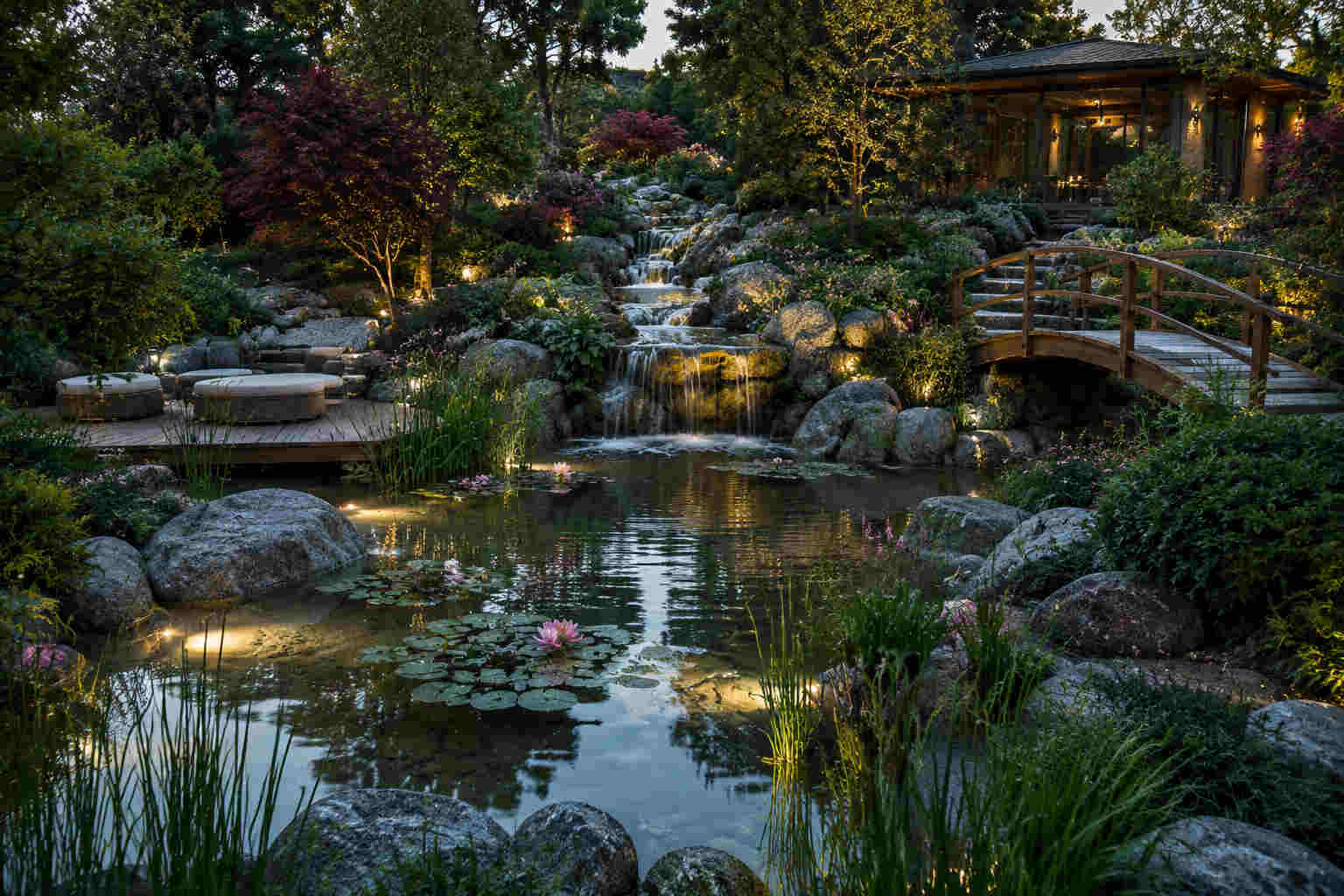
The foundation of any water garden is the pond the “heart” of the entire system. It accumulates water, maintains biological balance, and creates a habitat for plants and microorganisms. Proper functioning of the pond requires waterproofing, filters, and pumps to ensure water circulation. Moving water prevents stagnation and algae growth, keeping the water garden vibrant and aesthetically pleasing. At Ecolandscape Studio, we recommend designing the water system to look as natural as possible, even when using modern equipment.
Streams and cascades add dynamics and connect different areas of the property. Streams can meander to mimic a natural course or be straight to emphasize a modern style. Their flow rate is carefully calculated: too fast a current erodes the banks, too slow leads to stagnation. Cascades create vertical water movement, enhance visual effects, and provide a relaxing soundscape. Our founder and CEO, Martin Palma, notes: “I realized that water movement and its sound create a special emotional connection with people the garden becomes a living, therapeutic space.”
Plants in a water garden serve both decorative and ecological purposes. Marginal plants stabilize the soil and form a smooth transition from water to land, submerged plants oxygenate the water, and floating plants provide shade, preventing overheating and suppressing algae growth. Moisture-loving plants such as irises, water lilies, marsh marigold, astilbe, and reeds support the ecosystem and keep the garden alive year-round. On the Ecolandscape Studio blog, we recommend combining plants of different heights, colors, and textures for harmonious compositions and the visual effect of a natural water body.
Decorative elements enhance both the aesthetics and functionality of a water garden. Bridges, decks, stone paths, and sculptures connect different areas of the property, while lighting emphasizes water movement and reflections, especially in the evening. For lining, we use stones, pebbles, wood, and membranes the combination of aesthetic appeal and material durability creates a harmonious and safe garden. On our blog, we share practical advice: small decorative details can change the perception of the entire water garden and add individuality.
Designing a water garden begins with site analysis: terrain, groundwater level, soil type, and sunlight. This allows proper calculation of stream slopes, pump volumes, and plant placement. Water garden maintenance includes regular debris removal, equipment inspection, plant growth management, and winter preparation in cold regions. A well-planned garden remains lively and resilient, delighting owners with beauty and tranquility all year round.
Ultimately, a water garden is an organic system where water, plants, and decorative elements create a living, dynamic space. Creating a turnkey water garden combines aesthetics, ecology, and comfort, transforming a property into a place for relaxation, meditation, and connection with nature. On the Ecolandscape Studio, we share experience and recommendations so that every property owner can create a unique water garden that becomes a true source of pride and harmony.