Modern premium real estate is undergoing a noticeable transformation in how value is perceived. While scale, expensive materials, and prestigious locations were once considered the primary markers of luxury, today increasing importance is placed on something that cannot be measured in square meters or construction costs. That factor is privacy – the ability of a space to create a sense of protection, seclusion, and psychological comfort. In the context of increasing urban density, privacy is becoming an increasingly scarce resource. Martin Palma, founder and CEO of Ecolandscape Studio, analyzes this shift as one of the major trends in modern development – true premium value is increasingly defined not by how demonstrative a space appears, but by how effectively it protects personal boundaries. This is why privacy is becoming a new form of luxury, and landscape design has emerged as one of the key tools for creating it.
Privacy is no longer limited to physical isolation alone. The modern perception of privacy is much deeper and closely connected to how much control a person feels over their personal environment. The ability to relax without the sensation of constant observation, move through a property without visual discomfort, and use outdoor areas without unnecessary stress directly affects quality of life. Even visually impressive projects can experience a significant drop in perceived value when a thoughtful privacy strategy is missing. Specialists at Ecolandscape Studio analyze user behavior and note that the feeling of protection often becomes one of the strongest drivers of emotional attachment to a space.
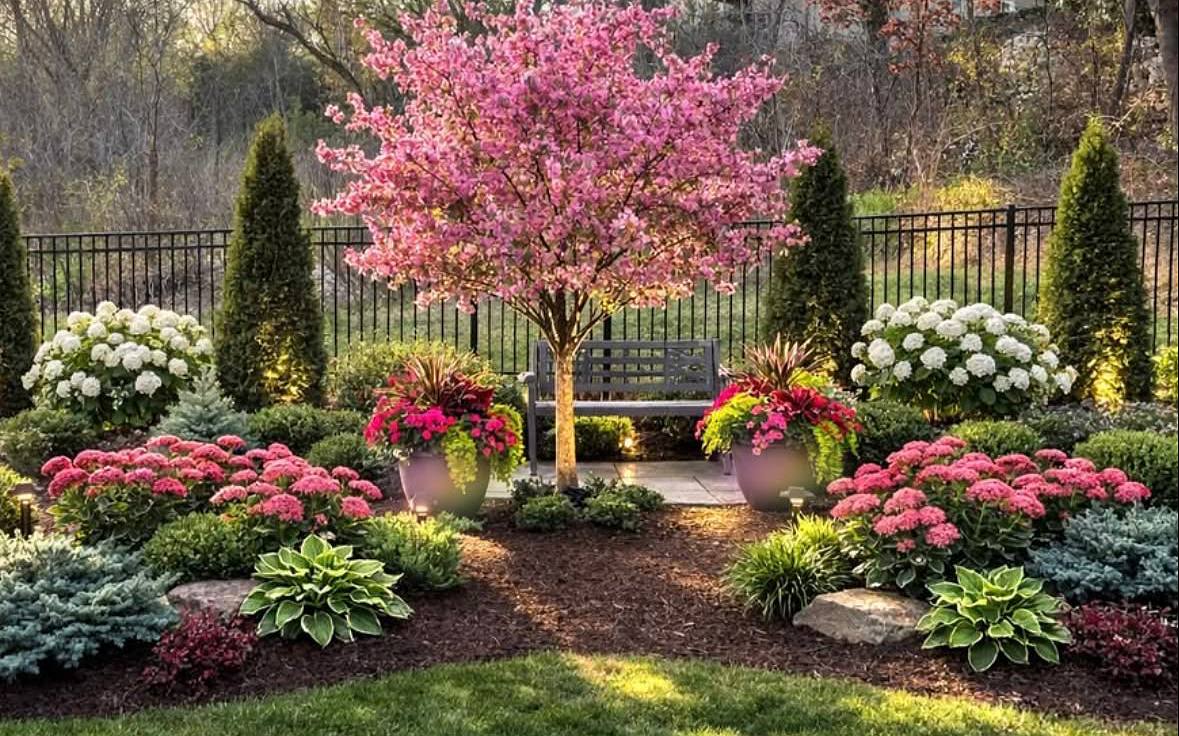
Landscape architecture allows privacy to be managed far more subtly than traditional barriers. Tall fences, heavy walls, and aggressive physical boundaries often create feelings of isolation, heaviness, and visual pressure. Premium landscape design works differently – through soft spatial transitions, layered greenery, elevation changes, and carefully designed screening systems. Green masses, trees, hedges, topographical variations, and water features can create natural boundaries without compromising openness. At Ecolandscape Studio, we analyze spatial scenarios and observe that the strongest projects create privacy in a way that feels natural rather than artificially restrictive.
Balance between privacy and openness plays a particularly important role. Complete isolation does not always equal comfort. High-level spaces should simultaneously provide a sense of protection while preserving visual freedom. Achieving this requires sophisticated compositional work. Sightlines, viewing angles, movement routes, and the degree of visual contact between zones must all be carefully considered. Even a small mistake in the positioning of greenery or architectural elements can disrupt the sense of comfort. Specialists at Ecolandscape Studio note that effective privacy management requires designing not just individual elements, but the entire scenario of human interaction with the environment.
Privacy is also closely connected to acoustic comfort. Personal boundaries are disrupted not only visually, but through noise overload as well. Urban density intensifies sound-related stress, which is why modern landscape design increasingly functions as a tool for sound buffering. Planting systems, water features, and thoughtful zoning can reduce the impact of external noise and create a calmer atmosphere. At Ecolandscape Studio, we believe true privacy exists only when a space protects people visually, physically, and acoustically at the same time.
From a commercial perspective, privacy has become a powerful value driver. The higher the property segment, the greater the demand for environments that provide a sense of control, comfort, and inner calm. This is why residential, hospitality, and luxury mixed-use projects with high levels of privacy achieve stronger market valuations and maintain premium positioning more effectively. At Ecolandscape Studio, we see privacy management as one of the most important future directions of landscape architecture, where luxury is no longer measured by excess, but by the quality of an environment capable of offering something increasingly rare – the ability to truly be alone with oneself, even in the heart of a large city.









