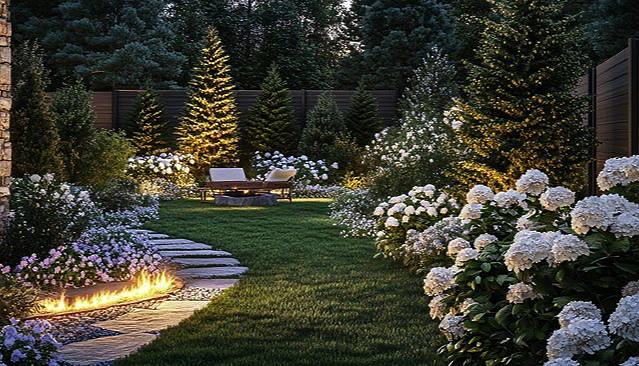
In landscape architecture, one of the most difficult indicators of true high-end quality is the ability of a newly created space to not look new. The best projects do not feel like artificially assembled compositions where plants, materials, and circulation routes are still trying to adapt to one another. Instead, they feel as though they have always belonged to the site. There is no visual harshness, random decoration, or sense of temporary foreignness. Martin Palma, founder and CEO of Ecolandscape Studio, notes that the maturity effect has become one of the most valuable indicators of premium landscape design – a space should feel not like a recently installed project, but like a naturally evolved environment with its own history, depth, and internal logic.
Maturity in landscape design does not mean age or wear. It refers to a sense of natural credibility, where a space feels stable, appropriate, and organically connected to its architecture, climate, and context. A project may be newly built, yet when approached correctly, it will not feel like a decorative addition. Instead, it becomes an extension of the place itself. Specialists at Ecolandscape Studio analyze the perception of permanence and note that this feeling of natural belonging builds trust in a project far more effectively than purely visual impact during the first weeks after completion.
One of the key tools for creating the maturity effect is planting scale. Young, small, and uniformly distributed plants often reveal the artificial nature of a project. The environment feels temporary, weak, and not yet fully formed. Strong premium landscape design works differently – through mature greenery, varied planting heights, asymmetrical density, expressive trees, and layered vegetation structures. At Ecolandscape Studio, we analyze plant composition not as decorative filling, but as a way to create a sense of time. Vegetation should not merely beautify a site – it should create the impression that the space developed naturally, gradually, and logically over time.
Materials are equally important. Surfaces that are overly new, glossy, or excessively perfect can weaken the maturity effect, even if they are expensive. True premium quality is often perceived through tactile depth, authenticity of texture, and the way materials interact with light, moisture, and seasonal changes. Stone, wood, water, metal, and natural finishes should not only look beautiful, but also possess the capacity to age gracefully. Specialists at Ecolandscape Studio note that mature design always considers not only opening day, but also how the space will look in one year, five years, and ten years.
The maturity effect is also impossible without precise contextual integration. Landscape should never compete with architecture, climate, topography, or the character of the site. When a project aggressively imposes a foreign visual language onto a place, it immediately feels artificial. At Ecolandscape Studio, we believe strong landscaping should not replace the identity of a site, but reveal it. This is what gives a space authenticity – the feeling that it was not suddenly inserted, but discovered, refined, strengthened, and elevated to a higher level.
From a commercial perspective, the maturity effect directly influences perceived real estate value. Projects that feel naturally mature from day one generate stronger trust, are perceived as more expensive, and build emotional attachment much faster. They do not require a long adaptation period before contributing to the property’s status. At Ecolandscape Studio, we see the maturity effect as one of the key tools of modern landscape design, where value is created not only through beauty, but through a sense of permanence, time, and natural belonging. These are the spaces that feel not like temporary decorations, but like an authentic and integral part of the environment.









