London is experiencing one of its most intense heatwaves on record, and while the headlines focus on public health and transport disruption, something quieter is happening in millions of private gardens across the city. Yards, patios and outdoor spaces are turning into what climate researchers are now calling «heat traps» — pockets of trapped, radiating heat that make outdoor living uncomfortable and even dangerous. For homeowners who have invested in their outdoor spaces, this is a wake-up call that residential landscape design needs to adapt, and fast.
The problem is more widespread than most people realize. Dense paving, dark-colored surfaces, lack of shade trees and minimal planting are all contributing to what scientists describe as the urban heat island effect at a hyper-local level. A backyard dominated by concrete or tarmac can be several degrees hotter than a neighboring garden with thoughtful planting design and lawn alternatives. That temperature difference is not just about comfort — it affects sleep quality, energy bills and the health of anyone spending time outdoors.
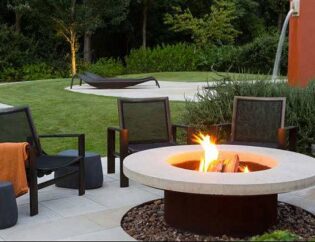
The way a garden is designed has a direct impact on how much heat it absorbs and retains. Hard landscaping materials like concrete, asphalt and dark stone absorb solar radiation throughout the day and release it slowly through the evening, keeping outdoor spaces uncomfortably warm long after sunset. This is one of the core reasons why patio landscaping ideas are shifting toward lighter, more permeable surfaces that reflect rather than store heat.
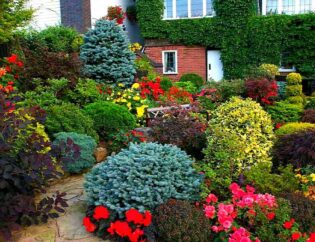
Sparse planting is another major factor. Gardens with little greenery lose the natural cooling effect that plants provide through transpiration — the process by which plants release moisture into the air. A well-planted garden with a mix of trees, shrubs and ground cover can feel noticeably cooler than a minimally planted yard of the same size. Native plant garden design and pollinator garden design are gaining real traction here, because these approaches tend to favor dense, layered planting that naturally moderates temperature.
Martin Palma, founder and CEO of Ecolandscape Studio, has observed this pattern consistently across residential projects in recent years. In his experience, clients who come in asking for low maintenance garden design often start with the assumption that less planting means less work — but the reality is that a garden stripped back to hard surfaces becomes a heat trap that nobody wants to use by July. The most practical approach is to replace unnecessary paving with drought tolerant garden design principles: permeable ground covers, gravel mulching, and strategically placed shade planting that reduces surface temperatures without adding significant maintenance demands.
Switching to water wise landscaping and xeriscape garden design is one of the most effective responses to extreme heat. These approaches prioritize plants that thrive with minimal irrigation, reducing both water consumption and the gardener’s workload during dry spells. Rain garden design is another option worth considering for properties that experience both drought and heavy rainfall — a combination that is becoming more common across the UK.
Shade is perhaps the single most powerful tool in heat management. Strategically placed trees and tall shrubs can reduce surface temperatures on patios and in small backyard designs by shielding hard surfaces from direct sun during the hottest parts of the day. Pergolas with climbing plants, sail shades and green screens used in privacy landscaping all serve a dual purpose: they create visual interest while actively cooling the space beneath them.
Landscape lighting ideas also play a role in how a garden feels during hot evenings. Cooler LED lighting positioned at ground level or along garden edging ideas can make a space feel more usable after dark without adding heat. Modern garden design increasingly treats evening usability as a core part of outdoor living space design, not an afterthought.
For front yard landscaping ideas, the shift away from block paving and gravel-only schemes toward mixed planting with lawn alternatives is both a practical and aesthetic improvement. Fire resistant landscaping principles — which prioritize spacing between plants, non-combustible mulches and moisture-retaining soil management — are also becoming relevant in the UK context as dry summers grow more frequent.
The broader shift in garden design trends is clear: homeowners are beginning to treat their outdoor spaces as climate-responsive environments rather than static decorative features. Backyard landscaping ideas that worked well in cooler, wetter decades are being reconsidered in light of what summers now actually look like. Yard landscaping design that incorporates shade, permeable surfaces, layered planting and water-efficient choices is not a niche preference anymore — it is becoming the practical standard for anyone who wants a garden that remains genuinely usable through the warmest months of the year.
If your garden feels unbearably hot this summer, the solution is rarely a single fix. It is usually a combination of surface choices, planting density, shade structure and soil health working together. Starting with one area — even replacing a section of paving with planted ground cover — makes a measurable difference and opens the door to a more comfortable, resilient outdoor space over time.