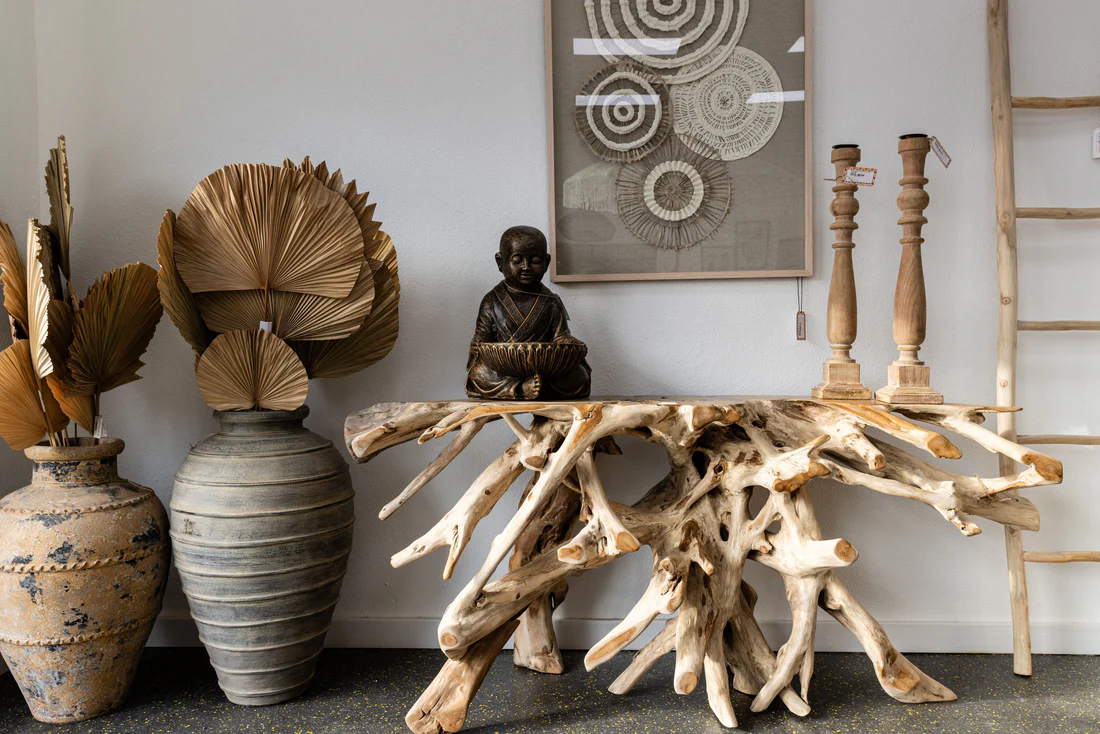
Natural wood has long been a valuable element in interior design. However, this time we are not talking about furniture made from noble wood species or eco-friendly finishing materials, but rather decor that you can create yourself. Specifically, we’ll focus on the use of roots, branches, and driftwood — elements that not only bring natural charm into the home but also uniqueness, as each object is a one-of-a-kind piece of nature. Such decor is easy to create with your own hands and will add a stylish, artisanal touch to your space.
At Ecolandscape Studio, we believe that using natural materials in interior design is not just a trend but also a way to bring naturalness and harmony to your home. Despite the wide variety of modern materials, wood always remains in fashion, especially in the form of decorative elements.
Why Use Roots and Driftwood in Interior Design?
With the rise of new technologies and the widespread use of glass, metal, and plastic in interiors, designers continue to embrace natural materials. Roots, branches, stumps, and other wood elements are becoming an essential part of decor, adding warmth and originality to a space. Natural elements not only attract attention but also create a special atmosphere closely tied to nature.
Each piece of wood has its own unique texture, shape, and shade. By buying or creating decor with your own hands, you’re guaranteed to get a one-of-a-kind item. «Materials sourced directly from nature not only look beautiful but also carry their own unique energy. These are not just decorations, but entire elements that create a distinctive atmosphere,» shares Martin Palma, CEO of Ecolandscape Studio.
Eco-friendliness: What Are the Benefits?
Using wood that has already completed its life cycle supports an eco-conscious approach to decor. Such materials do not require tree cutting and allow you to make use of parts of nature that have already served their time. Natural decor, including roots and branches, helps reduce the strain on ecosystems and avoids unnecessary deforestation. These elements also retain their uniqueness and bring an atmosphere of harmony with nature into your home.
«We recommend using only materials that have already completed their life cycle, so not only will you be decorating your home, but you’ll also be treating nature with care,» adds Martin Palma.
Where to Find Driftwood and Roots for Decor?
Roots and branches can be found in various places: in the forest, on the beach, in a park, or even in your own garden. Driftwood, or «driftwood» (wood that has been carried by water for a long time), is perfect for creating stylish accessories such as table lamps, coat hooks, shelves, and much more.
If you can’t find driftwood, don’t worry — branches and roots from forests in temperate zones will also work. The key is to select the right material and treat it properly.
How to Prepare Wood for Use in Decor?
Before using wood in interior design, it needs to be carefully prepared. It’s important to choose strong, dry elements without signs of rot. Clean the roots of dirt, sand, and dust, then treat them with a protective coating so they last for years.
«We always recommend preparing materials thoroughly before working with them, so they not only look beautiful but also last a long time,» says Martin Palma.
Ideas for Decor Using Roots and Driftwood
Roots and branches are perfect for creating various decorative elements. For example, you can use them to make:
- Lighting: table lamps or pendant chandeliers. This will add warmth and natural charm to your interior.
- Coat hooks and shelves: Driftwood can be used to create unique coat hooks or shelves that fit seamlessly into any space.
- Mirror frames and wall panels: Roots can be used to create unusual frames for mirrors, photos, or artwork.
- Table decor: Driftwood and branches can make stylish vases, decorative candleholders, and other accessories.
«We at Ecolandscape Studio recommend integrating these elements into the interior as accents that give the whole space a unique character,» emphasizes Martin Palma.