A rain garden is much more than just a landscaping feature; it plays a vital role in a sustainable approach to space creation by addressing stormwater runoff issues and water pollution, while also enhancing the appearance of your property. In recent years, rain gardens have gained popularity, and at Ecolandscape Studio, based on our experience and trends, we are confident that rain gardens are becoming an integral part of eco-friendly solutions for both urban environments and private properties.
Rain Garden: Concept and Practical Significance
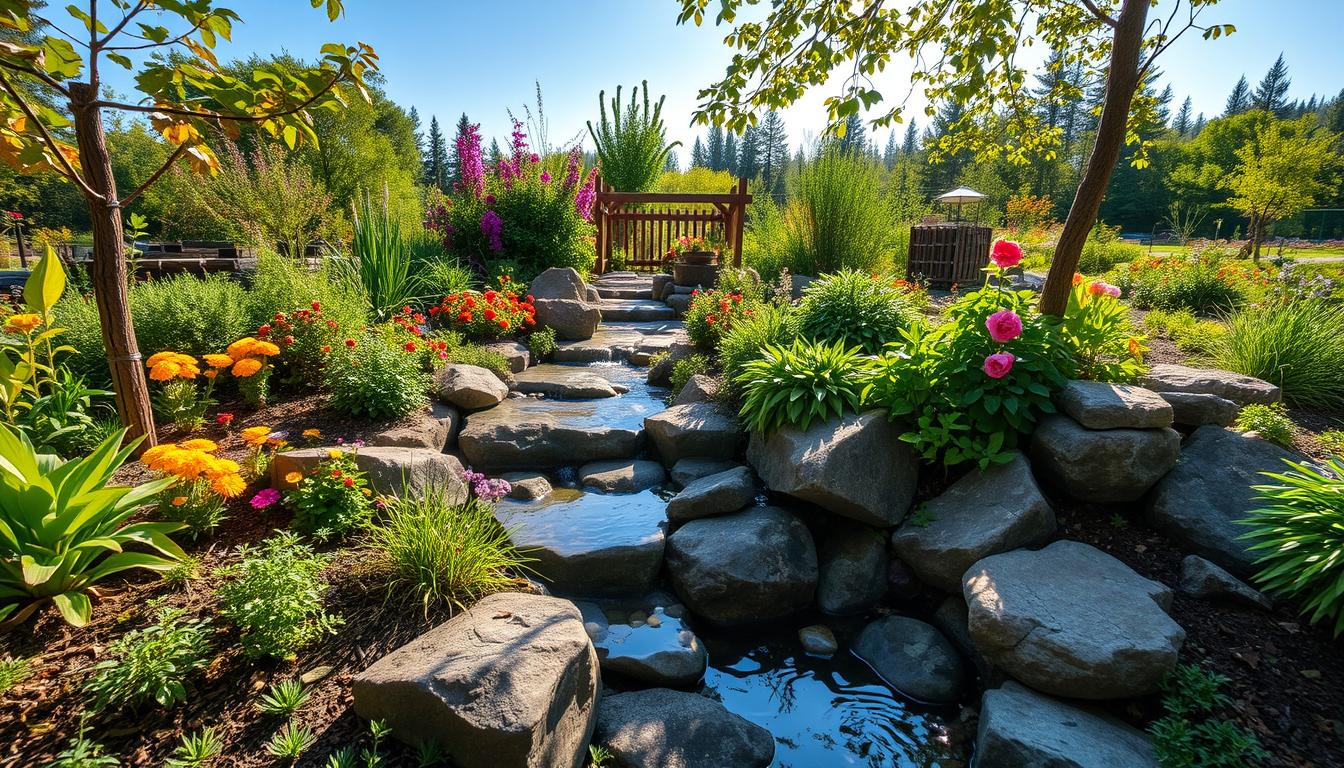
A rain garden is a sunken area with plants that helps retain and filter rainwater, allowing it to permeate into the soil. Unlike traditional stormwater systems, rain gardens reduce the burden on drainage systems and help conserve water within the ecosystem of the property. At Ecolandscape Studio, we see this not only as an ecological solution but also as a way to improve the aesthetic and functionality of your garden. «Integrating a rain garden into the landscape is not just a trendy move, but a necessity for eco-conscious homeowners,» says Martin Palma, Founder and CEO of Ecolandscape Studio.
When designing a rain garden, the first step is selecting the right location. At Ecolandscape Studio, we always begin with a thorough site analysis. The best place for a rain garden is usually in a low-lying area where water naturally accumulates after rainfall. However, if you plan to reroute a downspout, it is important to position the garden at least 3 meters away from the house to prevent water from flooding the foundation. Ideally, the site should have both sunny and shaded areas. This will create diverse conditions for plant growth and ensure a balance of moisture.
The size of the rain garden directly depends on the size of the roof and the volume of water runoff. At Ecolandscape Studio, we recommend choosing a garden size that is between 7 to 20% of the roof area to ensure optimal filtration and water absorption. The average size of rain gardens typically ranges from 10 to 30 square meters, depending on soil characteristics and runoff volume. It’s crucial to consider all these factors for the rain garden to function efficiently.
Before planting, it is essential to clear the area of grass and unwanted vegetation and assess the soil’s condition. Loose, well-draining soil is ideal for a rain garden. If the soil is too clayey, we recommend improving it with compost to enhance its water drainage properties. It’s important that the water drains within 12 to 48 hours to avoid stagnation, which could harm the plants.
The next step is to create a depression with a slope from the outer edges toward the center. This ensures proper water distribution across the entire garden area. At Ecolandscape Studio, we recommend a depth of about 15-20 cm to allow for water accumulation without causing stagnation. The structure of the garden should be such that water drains quickly while ensuring the plants are not affected by overwatering.
Choosing plants is a key aspect of designing a rain garden. We always recommend opting for native species, as they are better adapted to the conditions of your region. Plants with deep roots, such as sedges, grasses, and rushes, help the water absorb into the soil more quickly. It’s also important to select plants that can withstand both heavy watering and short-term droughts. Good choices for rain gardens include echinacea, iris, canna, and lobelia, which are not only beautiful but also beneficial to the ecosystem.
Once the garden is ready, proper maintenance is required. During the first few months, the plants need extra watering until they become well-rooted. We always suggest using organic mulch to retain moisture in the soil and prevent weed growth. In the spring, don’t forget to trim the plants to keep them healthy and prevent the uncontrolled spread of weeds. Regular care and attention will help the rain garden thrive and function effectively for many years.
Rain Garden as a Design Element
When it comes to designing a rain garden, it’s important to remember that it should be integrated into the overall landscape. At Ecolandscape Studio, we believe that a rain garden shouldn’t be a standalone feature of the property. On the contrary, it should blend seamlessly with existing landscape elements, such as flowerbeds, garden paths, or decorative stones. This will create a harmonious space that doesn’t disrupt the overall flow of the landscape.
Tips from Martin Palma
- Choose the right location: The ideal place for a rain garden is a low-lying area or a space where water naturally accumulates. This ensures efficient use of rainwater.
- Use native plants: Opt for plants adapted to your climate. This will simplify maintenance and improve the resilience of the garden.
- Promote ecological awareness: Rain gardens help reduce pollution and support ecosystem balance.
Invest in sustainability: Implement rain gardens early to gain long-term benefits for your property and the environment.
Creating a rain garden is not only a solution to stormwater runoff problems but also an opportunity to create an eco-friendly and aesthetically pleasing feature in your landscape design. We encourage anyone who cares about the future of their property to consider such a solution. If you need assistance in designing and building a rain garden, we at Ecolandscape Studio are ready to provide you with a professional solution that will perfectly fit your space and enhance its ecological characteristics.