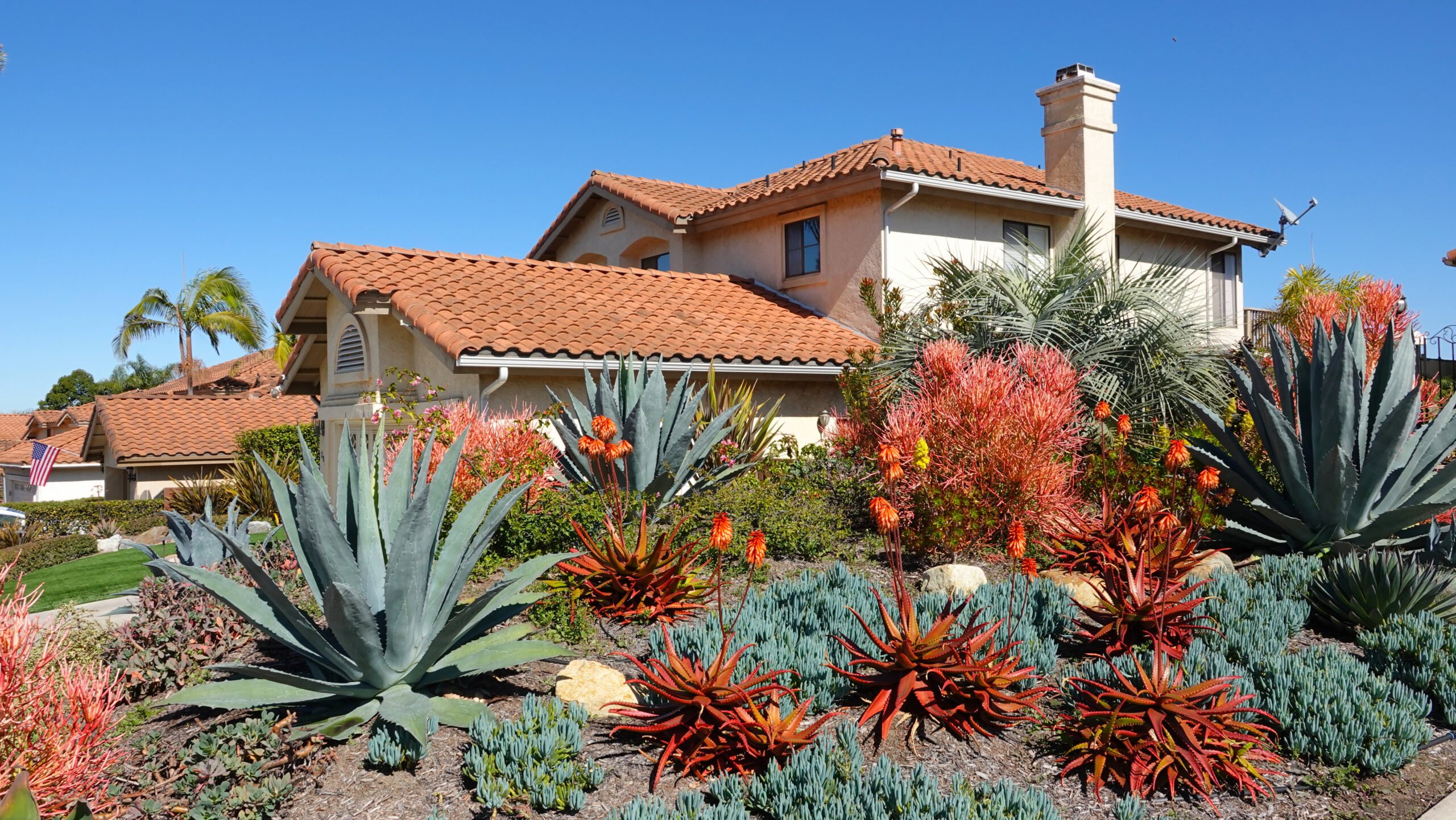
In recent years, creating drought-resilient landscapes has become increasingly important. Climate change, water supply issues, and rising water costs are pushing us to seek new solutions in landscape design. Drought-resistant design not only helps reduce water consumption but also contributes to the creation of resilient ecosystems that can withstand extreme weather conditions. In this article, we at Ecolandscape Studio will discuss how to approach the design of water-saving gardens and share our recommendations.
As noted by the founder and CEO of Ecolandscape Studio, Martin Palma, “xeriscaping is not just a trendy movement, but a vital necessity for creating sustainable, cost-effective, and environmentally safe landscapes.”
Drought-Tolerant vs. Drought-Resistant Plants: What You Need to Know
It’s important to understand the difference between drought-tolerant and drought-resistant plants. These terms are often confused, but they have significant differences.
Drought-resistant plants are those that can survive during prolonged periods of drought. They are perfectly suited for desert or semi-desert conditions, where rainfall is minimal and temperatures often exceed 30°C. Cacti and agaves are prime examples of such plants. They require little to no watering and can survive for extended periods without water.
Drought-tolerant plants, on the other hand, require moderate watering and are well adapted to milder climates. Plants like echinacea, black-eyed Susan, and ornamental grasses can withstand drought conditions but thrive with regular watering. These plants are ideal for regions with variable climates where rainfall is irregular.
How to Choose Plants for a Drought-Resilient Garden
When planning a drought-resistant garden, it’s essential to consider several key factors that will guide your choice of plants for your site.
First, evaluate the climatic conditions of your region, such as annual rainfall, temperature, and seasonal fluctuations. In hot and dry climates, choose plants adapted to desert conditions, such as cacti and agaves, that can survive with minimal water. In more temperate climates, where rainfall is more frequent, ornamental grasses and native perennials are an excellent choice as they require moderate watering.
Soil type is also a crucial factor. Soil can be sandy, clayey, or rocky, and this will influence the selection of plants. For example, cacti and succulents grow best in sandy or rocky soils that drain well and quickly expel water. Understanding how fast your soil drains and how long it retains moisture will help you choose plants that can adapt to these conditions.
Lastly, consider the amount of sunlight and humidity in your garden. In areas with intense sunlight, it’s important to choose plants that can retain moisture in the soil despite the high temperatures. In shaded areas, moisture will stay in the soil longer, allowing you to choose plants that require less water and perform better under moderate lighting.
Recommendations for Creating a Drought-Resilient Garden
At Ecolandscape Studio, we are confident that creating a sustainable and water-saving landscape is not only a way to reduce water consumption but also a means of improving the ecological health of your site. Here are some key approaches we recommend for designing a drought-resilient garden:
- Using Native Plants
Native plants are the best choice for your garden because they are already adapted to your region’s climate. They require minimal care and watering once established and help maintain ecological balance by attracting local pollinators and beneficial creatures. - Grouping Plants by Water Needs
By grouping plants with similar water requirements together, you can significantly reduce water usage, avoiding both over-watering and soil dehydration. This approach helps maintain plant health and makes water usage more efficient. - Minimizing Lawns
Lawns require significant amounts of water, especially during hot summer months. We recommend replacing traditional lawns with groundcover plants such as thyme, moss, or sedums. These plants need much less water, help prevent soil erosion, and suppress weed growth. - Using Permeable Materials
For paths and paving, use materials like gravel or porous tiles that allow water to permeate the soil, helping retain moisture and minimize water runoff. - Rainwater Collection System
Installing a rainwater collection system is an effective way to save on irrigation costs. Rain barrels or cisterns help collect rainwater from roofs, which can then be used to irrigate the garden during dry spells. This not only saves water but also contributes to the secondary use of natural resources. - Rain Gardens and Multi-Level Planning
We recommend creating rain gardens to collect and manage water runoff from your property. Rain gardens help efficiently distribute even small amounts of rainfall throughout the garden. Multi-level planning allows you to place moisture-loving and drought-tolerant plants in areas where water accumulates or drains quickly, helping optimize water use and reduce waste.
As Martin Palma, the founder of Ecolandscape Studio, points out, “Investing in a drought-resistant landscape is an investment in the sustainable future of your garden and region.” At Ecolandscape Studio, we are always ready to help you create a beautiful and sustainable landscape that will delight you for many years to come.









