The modern country estate industry is increasingly facing challenges far removed from idyllic images of untouched nature. Sites affected by aggressive development, former industrial zones, and areas saturated with construction waste, salts, or heavy metals have traditionally been subjected to a radical and highly unsustainable solution: the complete replacement of the soil layer. Removing hundreds of tons of contaminated soil, transporting it elsewhere, and replacing it with imported topsoil is an extremely costly process that merely conceals the problem by relocating toxic material while simultaneously damaging ecosystems at the extraction site. At Ecolandscape Studio, we offer a fundamentally different and environmentally responsible alternative: the creation of a self cleansing art system where turnkey premium landscape design becomes a tool for biological land regeneration, transforming the harsh aesthetics of post apocalyptic environments into a form of high conceptual art.
The primary biological and engineering driver of such a landscape is phytoremediation technology, based on the use of hyperaccumulator plants. These unique species possess the evolutionary ability to extract, concentrate, and bind hazardous chemical compounds from the substrate through phytoextraction and phytostabilization processes. Instead of attempting to isolate contaminated soil, the site is planted with carefully selected botanical species and cultivars featuring powerful root systems. Certain strains of Indian mustard and common sunflower, for example, efficiently absorb mobile forms of lead, cadmium, and nickel from the soil solution. Specific willow and poplar species, known for their exceptional transpiration capacity, not only immobilize but also metabolize complex organic pollutants and residual petroleum products within their tissues. Wild sedges, reeds, and halophytic grasses successfully cope with extreme soil salinity by removing excess sodium and chlorine through specialized salt glands. These plants accumulate toxins in their aboveground biomass, stems and leaves. Why is this important? This approach enables controlled land remediation: at the end of each growing season, the biomass is harvested and disposed of according to hazardous waste regulations, gradually reducing contaminant concentrations to safe levels without disturbing the structure of the underlying soil layers.
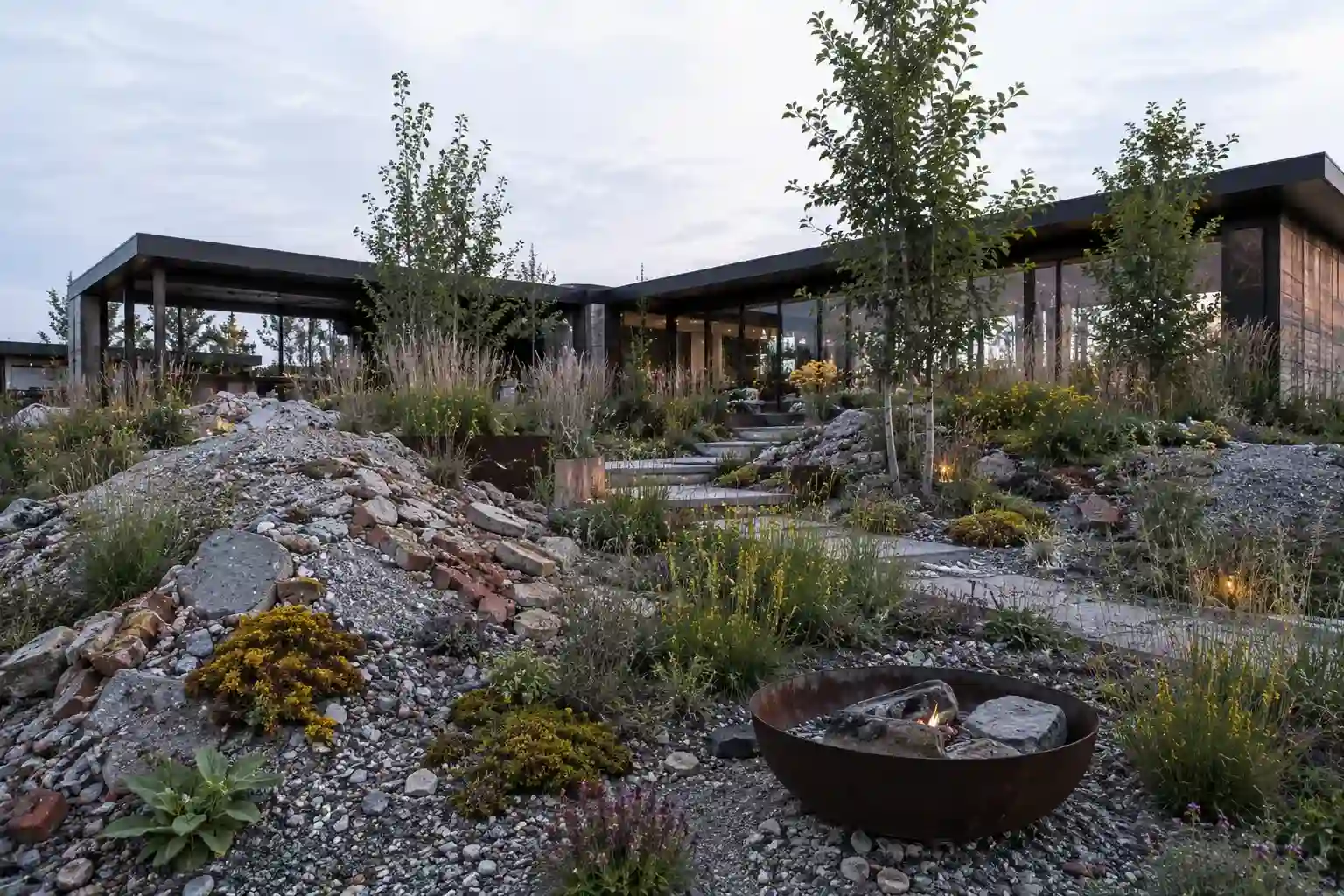
At the same time, the approach to hardscape materials is completely reimagined, giving rise to an aesthetic of rugged substrates and redefining the very concept of garden soil. Construction screenings, gravel piles, crushed concrete, slag, and broken brick left behind after demolition or intensive construction are no longer removed from the site as waste. Instead, they become the foundation of an authentic industrial rock garden. Martin Palma, Founder and CEO of Ecolandscape Studio, has concluded through years of practice that these anthropogenic wastelands possess tremendous hidden potential for minimalist design. Crushed concrete and brick provide an ideal drainage base rich in calcium and trace elements while creating a unique texture reminiscent of rocky canyon slopes. On these seemingly barren substrates, resilient strains of mosses, lichens, and petrophytic succulents such as sedums, hens and chicks, and saxifrages are introduced. These species thrive under extreme conditions and initiate the primary stages of soil formation by releasing lichen acids that gradually weather the artificial stone, transforming lifeless construction debris into a living, breathing, and remarkably stylish ecosystem requiring virtually no maintenance or irrigation.
The entire concept of such a property is governed by the principle of transformational design, where the healing of the land unfolds as a long term artistic performance and a manifesto of ecological renewal. The landscape is not conceived as a static composition. Instead, it remains dynamic, revealing each stage of its recovery through annual changes in color, texture, and density. A well designed country estate in this style takes into account the time required for the breakdown and removal of contaminants. During the first phase, which may last from two to four years, the site is dominated by striking monocultures of remediation plants featuring bold foliage architecture and graphic inflorescences, creating a powerful industrial visual statement. As ongoing laboratory analyses confirm declining levels of toxicity, heavy metals, and salts, the garden structure gradually becomes richer and more refined. Technical hyperaccumulators are replaced by ornamental perennials, prairie grasses, flowering shrubs, and mature canopy trees. The garden literally regenerates before the owner’s eyes, shifting its visual identity from bold industrial tones to a softer, more natural palette and evolving from a stark environmental statement into a flourishing and completely safe oasis.
Ecolandscape Studio notes that investments in post-apocalyptic landscape design arose as a response to local environmental issues and as the foundation of a new premium aesthetic, in which every element serves a meaningful engineering purpose. Professional landscape planning for sites with a history of industrial pollution allows property owners to openly demonstrate life’s triumph over degradation, rather than conceal the scars of the soil beneath artificial turf, which inevitably deteriorates without constant chemical maintenance. These landscapes address complex engineering challenges through natural processes, minimize the carbon footprint associated with construction, eliminate the release of pollutants into nearby waterways, and embody a new definition of luxury: the luxury of conscious creation, genuine collaboration with natural forces, and the creation of a fully sustainable and healthy environment for future generations.