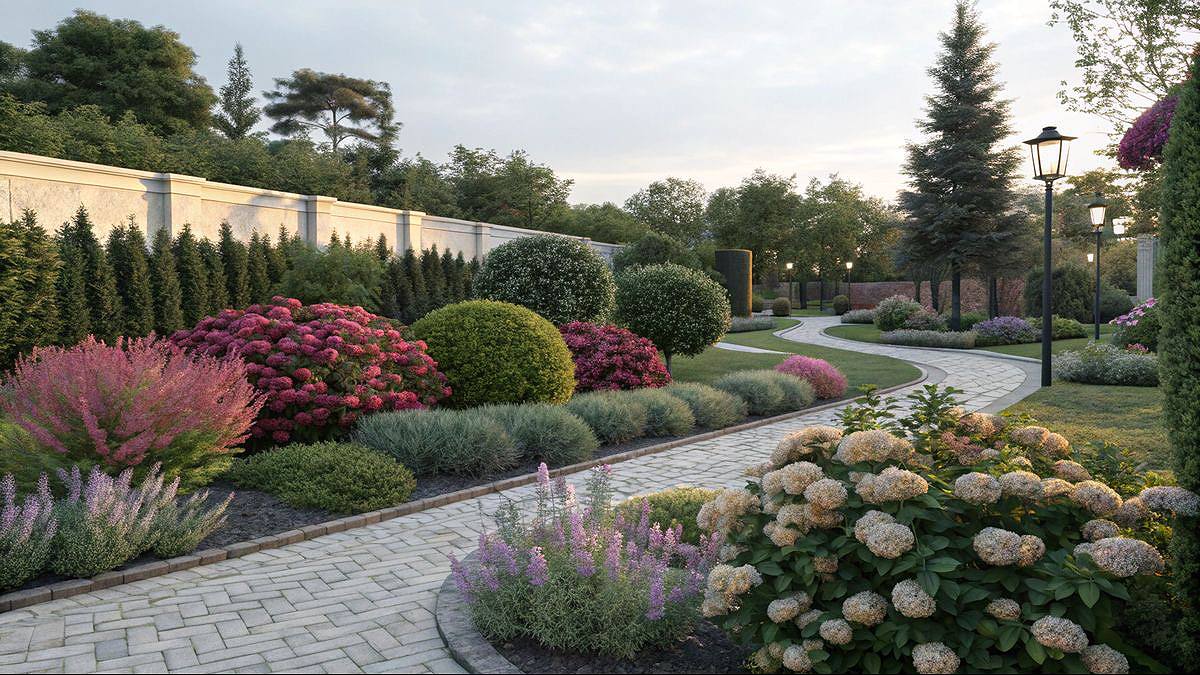
Strong landscaping is almost always perceived as something natural, calm, and visually effortless. People see clean pathways, healthy greenery, even surfaces, soft lighting, and harmonious composition, yet rarely think about how many technical decisions are hidden beneath that apparent simplicity. In landscape architecture, invisible elements often determine whether a space will maintain its quality for years of use or quickly begin to deteriorate after the first seasonal stresses. Martin Palma, founder and CEO of Ecolandscape Studio, emphasizes that true premium landscape design is built not only on aesthetics, but on precise engineering logic that remains invisible to the user while supporting the stability of the environment every single day.
It is a mistake to view landscape as merely a collection of decorative solutions. Behind every strong project stands a complex system where visual composition is deeply connected to drainage, irrigation, grading, materials, lighting, plant root zones, and future maintenance requirements. If even one of these layers is poorly designed, the aesthetic quality begins to collapse quickly. Water starts accumulating on surfaces, plants suffer from either insufficient irrigation or overwatering, paving deforms, and lighting behaves like a random set of fixtures rather than a carefully planned experience. Specialists at Ecolandscape Studio analyze project lifecycle performance and note that most visible landscaping problems begin with invisible engineering mistakes.
One of the most critical components is water management. Drainage, grading, runoff control, and surface water flow directly affect the longevity of a landscape. Even the most expensive material will not maintain its quality if water consistently accumulates in the wrong areas. Excess moisture damages surfaces, weakens root systems, accelerates erosion, and increases long-term operational costs. At Ecolandscape Studio, we analyze site hydrology before finalizing the visual concept because water is not a secondary technical issue, but one of the primary determinants of landscape resilience.
Irrigation systems are equally important. They must support plant health without creating excessive dependency on resource-heavy maintenance. A common mistake is treating irrigation as a technical addition after plant selection is complete. In reality, irrigation must be designed together with plant strategy, soil conditions, climate, and operational requirements. A strong system remains invisible to the user, yet it is precisely what allows greenery to appear healthy, stable, and mature over time. Specialists at Ecolandscape Studio note that premium planting is impossible without a precise balance between natural biological processes and engineered support systems.
Materials and structural foundations also create the hidden strength of a space. A paving surface may look impressive in a rendering, but real-world performance depends on sub-base preparation, correct layer thickness, load calculations, permeability, and thermal resistance. The same applies to retaining structures, stairs, curbs, and high-traffic zones. At Ecolandscape Studio, we believe premium landscaping begins not with the final decorative layer, but with the technical foundation that enables that layer to preserve both beauty and safety over time.
Hidden engineering also defines lighting quality. Good lighting design should never feel like a display of fixture quantity. Instead, it operates through carefully designed scenarios, safety, spatial depth, visual accents, and eye comfort. Poor beam angles, excessive brightness, or weak technical integration can undermine even the strongest landscape composition. At Ecolandscape Studio, we see landscape engineering as the foundation of true quality, where premium value is expressed not through visible complexity, but through the flawless daily performance of a space. That is precisely why strong landscaping feels effortless – because all complexity has been anticipated, engineered, and hidden within the system itself.









