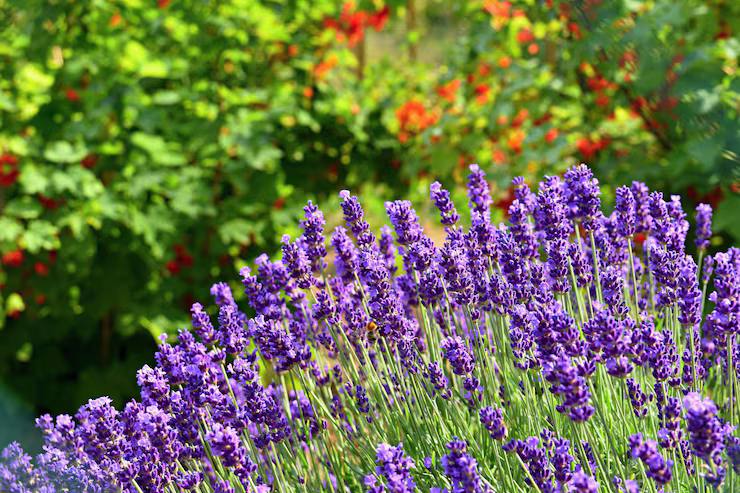
Lavender has the ability to give a garden a distinctive identity by combining expressive color, delicate fragrance, and elegant natural structure. Martin Palma, founder and CEO of Ecolandscape Studio, notes that the successful use of lavender begins not with selecting the most attractive variety, but with understanding the specific conditions of the site. Lavender requires abundant sunlight, good air circulation, and well drained soil that quickly removes excess moisture. When planted in the right location, it develops into dense silvery shrubs, retains its decorative appearance for many years, and becomes an essential part of the overall landscape composition rather than simply serving as a seasonal accent.
Proper site preparation has a greater influence on the future development of lavender than ongoing maintenance. Heavy soils should be improved with sand, fine gravel, and mineral components because standing water can seriously damage the root system. At Ecolandscape Studio, we analyze the terrain, drainage patterns, sun exposure, and soil characteristics before creating a planting plan. On level sites, slightly elevated planting areas often provide better growing conditions, while on sloping landscapes lavender naturally performs well in the driest and sunniest locations. This approach significantly reduces the risk of winter damage while helping the shrubs maintain their compact and attractive shape after rainy periods.
Selecting the appropriate variety depends on the local climate, the scale of the project, and the desired visual effect. Compact cultivars are ideal for borders, smaller flower beds, and pathways, whereas larger varieties reveal their full beauty in extensive mass plantings. Flower colors range from soft lavender shades to deep violet tones, making it important to establish the overall color palette before planting begins. Introducing too many different varieties into a limited space often creates visual disorder, while repeating one or two carefully selected cultivars establishes rhythm and gives the composition a more harmonious appearance.
The spacing between plants should always be determined according to the mature size of the shrubs rather than the dimensions of young nursery specimens. Dense planting may create an immediate decorative effect, but it eventually reduces air circulation and complicates maintenance. Excessively wide spacing, on the other hand, leaves the composition looking unfinished for many seasons. Specialists at Ecolandscape Studio point out that each plant requires sufficient room to develop its naturally rounded shape while allowing convenient access for pruning. In linear plantings, maintaining consistent spacing is particularly important because even small irregularities become highly noticeable as the shrubs mature.
Successful plant combinations are based on similar growing requirements, especially regarding sunlight and soil moisture. Lavender pairs beautifully with sage, thyme, catmint, yarrow, ornamental grasses, and other drought tolerant perennials. Their contrasting textures, heights, and flowering periods help maintain visual interest throughout the growing season. Roses are also frequently combined with lavender, although adequate spacing should always be maintained because these plants differ significantly in their irrigation requirements and nutritional needs.
Color combinations allow designers to shape the atmosphere of a landscape without unnecessarily expanding the plant palette. Purple flower spikes appear especially refined beside silver foliage, white blossoms, and light natural stone. Pairing lavender with soft pink and cream flowers creates a romantic environment, while surrounding it with rich green foliage produces stronger visual contrast. We believe that lavender becomes particularly expressive when its characteristic tones are echoed in outdoor furniture, decorative textiles, or architectural lighting. This repetition creates a natural connection between planting and the surrounding built environment.
Positioning lavender near pathways and seating areas enhances its aromatic qualities. The fragrance becomes more noticeable whenever people brush gently against the foliage, making it especially suitable for terraces, benches, and entrance areas. However, shrubs should not be planted too close to narrow walkways because mature growth may interfere with comfortable movement. Along wider paths, lavender creates elegant borders that naturally guide the eye, while in open spaces it forms distinctive fragrant islands within the landscape.
Regular maintenance should preserve the natural shape of the shrubs while preventing excessive woody growth at the base. After flowering, careful pruning encourages healthy development without cutting into old wood, while damaged shoots should be removed during spring maintenance. Excessive fertilization is undesirable because it stimulates leafy growth at the expense of flowering performance. Irrigation is mainly required during establishment and prolonged dry periods. Once properly rooted in suitable soil, mature lavender generally thrives with only moderate moisture.
The decorative value of lavender extends well beyond its flowering season. Its silvery foliage continues to provide structure within planting compositions, while dried flower spikes often remain visually attractive until seasonal pruning. Combined with evergreen plants and ornamental grasses, lavender helps preserve the volume and texture of the landscape even during cooler months. This quality is particularly valuable in gardens designed to maintain an elegant appearance throughout the entire year rather than only during peak flowering periods.
Thoughtful planting transforms lavender from a popular ornamental species into a powerful landscape design element. At Ecolandscape Studio, we see it as an opportunity to create color rhythm, fragrant outdoor environments, and strong spatial structure at the same time. A balanced combination of suitable varieties, properly prepared soil, correct plant spacing, and carefully selected companion plants results in a sustainable composition that requires minimal maintenance while becoming increasingly natural, dense, and visually impressive with every passing season.