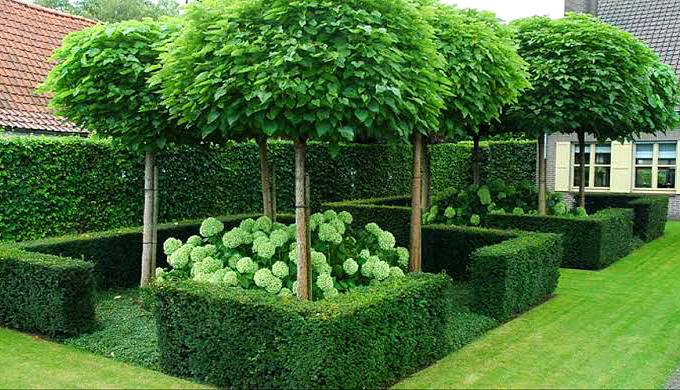
Tree trunks establish the vertical structure of a landscape, define the scale of a property, and naturally become visual focal points. However, the overall impression depends greatly on how the area surrounding the base of each tree is designed. Martin Palma, founder and CEO of Ecolandscape Studio, believes that the tree base should never be treated as a purely technical section of the landscape. Instead, it should be considered an integral design element capable of emphasizing the shape of the canopy, complementing the architecture of the home, and connecting different areas of the garden into one cohesive composition. A thoughtfully designed tree base creates a finished appearance, supports the health of the root system, and eliminates the visual emptiness that often surrounds mature trees.
The first stage involves evaluating the condition of the tree, the depth of its root system, available sunlight, and soil moisture. Dense canopies frequently create dry shaded conditions, while surface roots limit the possibility of extensive soil cultivation. At Ecolandscape Studio, we analyze these characteristics before selecting plants or finishing materials because decorative solutions should never compromise the long term health of the tree. Adding excessive soil around the trunk, installing hard surfaces directly over the roots, or burying the root flare too deeply can reduce air circulation and gradually weaken the plant. A professional design preserves the natural soil level while allowing water and oxygen to reach the root system freely.
Mulching remains one of the most practical and visually effective methods of designing tree bases. Natural bark, wood chips, gravel, and decorative stone reduce moisture evaporation, suppress weed growth, and create a clean visual background around the trunk. The material should always correspond with the architectural style of the property, the paving finishes, and the overall landscape palette. Organic bark blends naturally into informal gardens, while decorative gravel and stone are particularly suitable for contemporary projects. Regardless of the material selected, mulch should never be placed directly against the trunk because excessive moisture in this area may damage the bark over time.
Planting beneath mature trees offers the opportunity to transform the space into a layered landscape composition. Shade tolerant perennials, ornamental grasses, groundcover species, and compact shrubs with non aggressive root systems perform particularly well beneath established canopies. Specialists at Ecolandscape Studio note that plant selection should be based not only on visual appeal but also on compatibility with the specific tree species. Vigorous plants may compete for moisture and nutrients, making it preferable to choose reliable varieties that retain their decorative qualities with minimal maintenance and without frequent division.
The geometry of the tree base has a direct influence on the character of the surrounding landscape. Circular layouts create a softer and more natural appearance, square forms complement contemporary architecture, while free flowing outlines can visually unite several trees within a larger composition. The size of the planting area should always correspond to the proportions of the canopy and the surrounding open space. A circle that is too small appears insignificant, while an oversized planting bed can disrupt the balance between lawns, pathways, and planting areas. We believe that the outline should connect naturally with paving lines, flower beds, and the movement patterns throughout the garden.
Decorative edging helps preserve a clear transition between the tree base and surrounding lawns. Materials such as steel, natural stone, brick, timber, or concealed landscape edging may all be appropriate depending on the design concept. Visible edging becomes part of the overall aesthetic and should complement the materials already used throughout the property. Hidden edging is more suitable for projects that aim to maintain a seamless and natural appearance. In every case, edging should protect the tree without interfering with root growth or restricting the natural expansion of the trunk.
Landscape lighting further enhances the composition after sunset. Carefully directed uplighting highlights the texture of the bark, emphasizes the branching structure, and reveals the volume of the canopy, while subtle lighting around the base improves safety along nearby walkways. Larger trees generally require several moderately powered fixtures rather than a single intense light source to avoid harsh shadows and an overly dramatic appearance. Lighting equipment should always be positioned with future root growth and maintenance access in mind while preserving the integrity of surrounding planting areas.
The functionality of the tree base also depends on its location within the landscape. Spacious gardens may accommodate circular benches, intimate seating areas, or decorative compositions combining stone and planting around mature trees. Adjacent to pathways, the design should eliminate protruding elements that could obstruct movement. Where trees are located within lawns, the surrounding treatment should simplify maintenance while protecting the trunk from accidental damage caused by garden equipment. Such solutions improve both visual quality and long term maintenance efficiency.
A successful tree base combines plant health, practical maintenance, and strong visual character into one balanced composition. At Ecolandscape Studio, we emphasize that the area surrounding a tree should never exist independently from the overall landscape concept. Its shape, color palette, planting design, and lighting should reinforce the architecture, circulation routes, and seasonal appearance of the property. When approached in this way, mature trees become much more than background elements. They evolve into defining focal points that bring rhythm, depth, and lasting individuality to the entire landscape.









