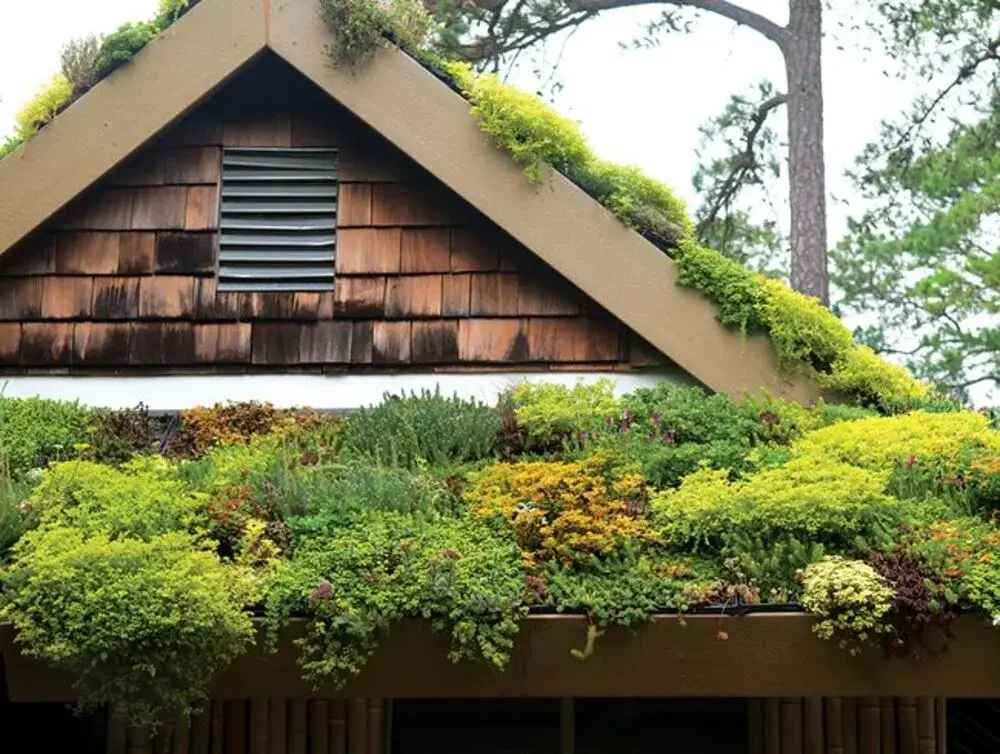
Innovative urban design and the integration of autonomous biosystems into private residential landscapes have long moved beyond the realm of simple surface decoration. Professional design of advanced green roofs by Ecolandscape Studio experts is based on the intersection of structural engineering, microclimatology, soil biodynamics, and botany. A next-generation living roof is a finely tuned, man-made biotope capable of recreating the extreme conditions of natural high-altitude environments, from harsh alpine plateaus to weathered rocky ledges. Our design team develops such systems as independent, energy-efficient eco-modules that can dramatically transform a building’s exterior and turn an unused rooftop into a defining artistic feature of a luxury estate.
The viability of a rooftop garden depends directly on its concealed multilayer infrastructure, where accurate load calculations and flawless waterproofing ensure the long-term durability of the entire roofing system. Since specialized rock-garden flora is highly intolerant of water stagnation, the creation of a technologically advanced drainage layer is a fundamental part of the preparation stage. During installation, company specialists construct a dedicated roofing framework that includes root barriers, anti-corrosion membranes, and water-retention mats, topped with a filtering geotextile layer. Ecolandscape Studio approaches this process as the creation of a closed biodynamic system in which every component, from the drainage matrix to the final substrate, performs a specific protective and life-supporting function while minimizing the risks of structural deformation and water infiltration.
The physicochemical properties of the materials used must be carefully balanced with the biological requirements of the selected plant species. When choosing mineral substrates and stone aggregates, our landscape architects meticulously evaluate their petrographic characteristics. The use of limestone, dolomite, or porous tuff gradually shifts substrate pH toward alkalinity, creating ideal conditions for calciphilous plants such as saxifrages, edelweiss, and alpine carnations. Conversely, incorporating these materials into areas designated for heathers, rhododendrons, or dwarf conifers may cause iron deficiency and eventual plant decline. For acid-loving species, we use inert granite, basalt, or quartzite. Material physics ultimately determines the development of the biocenosis: porous volcanic rocks retain water and gradually release it to plant roots while encouraging lichen development, whereas dense granite elements function as thermal stabilizers, absorbing solar heat during the day and releasing it throughout cooler nights. The team at Ecolandscape Studio considers this the only viable way to move beyond the limitations of conventional landscaping and recreate the authentic tectonics of wild nature on modern rooftops.
Founder and CEO of Ecolandscape Studio, Martin Palma, believes that true mastery of rooftop phytodesign lies in understanding the hidden principles of natural geoplastic formation. During many years of expeditions through remote mountain ranges, he observed that cliffside plant communities survive not because of deep soil deposits, but through a unique symbiosis with stone and the ability of epiphytic mosses to capture atmospheric moisture. According to Martin Palma, a premium green roof should move away from the monotonous concept of a monoculture lawn and instead embrace «artisan» micro-ecosystems, where a sophisticated combination of succulents, wild grasses, and rock-dwelling perennials forms a living tapestry that naturally changes color throughout the seasons.
Traditional garden topsoil or peat-based mixtures are entirely unsuitable for lightweight green roofs. Therefore, a specialized porous substrate is developed specifically for elevated ecosystems. It consists of purified turf soil, mature leaf compost, and graded washed sand, supplemented with expanded clay or granite aggregate in a precisely balanced ratio of 1:1:2. The high concentration of porous mineral components ensures excellent aeration and capillary conductivity, encouraging plant roots to penetrate deep into rocky crevices where stable temperatures are maintained. Reduced organic content intentionally limits excessive vegetative growth, allowing plants to retain their natural cushion-like forms while promoting abundant flowering. Within this environment, mycorrhizal fungi play a crucial role, forming close symbiotic relationships with plant roots and helping them absorb valuable mineral compounds directly from the rock structure.
When creating plant compositions, our specialists rely on the principles of phytocenology, completely avoiding incompatible plant associations and dividing the roof into distinct microclimatic zones. On exposed southern slopes and areas with maximum solar exposure, pronounced xerophytes are planted, including houseleeks, various sedum species, drought-tolerant spurges, and thyme. In shaded northern pockets, where moisture evaporation is minimal, entirely different plant communities thrive, including dwarf woodland ferns, miniature hostas, primroses, and liverworts. The architectural structure of the rooftop garden is designed to maintain year-round visual appeal. To ensure that the space remains attractive after the spring decline of small bulbous plants such as crocuses and muscari, perennials with diverse foliage textures are integrated throughout the composition. Structural vertical accents are provided by dwarf columnar junipers, graphic contrast is achieved with blue fescue, and visual softness comes from dense carpets of Irish moss. At Ecolandscape Studio, we view this as a long-term, environmentally responsible investment in landscape architecture capable of preserving its elegance and sculptural character for decades.
A high-performance living roof is a continuously evolving organism that passes through natural stages of ecological succession. During the first two years after installation, maintenance efforts focus primarily on preventing the invasion of aggressive weed species whose seeds are dispersed by birds and wind currents. Professional mechanical separation of root zones during the planting phase prevents rare alpine species from being overwhelmed by faster-growing groundcovers. By approximately the fourth year of development, a natural patina of pioneer mosses begins to form on the stone surfaces, signaling ecosystem stabilization. At this stage, the need for supplemental irrigation decreases significantly, while winter preparation is largely limited to protecting delicate conifer forms from snow loads and preventing the formation of ice crusts during periods of early spring temperature fluctuation.