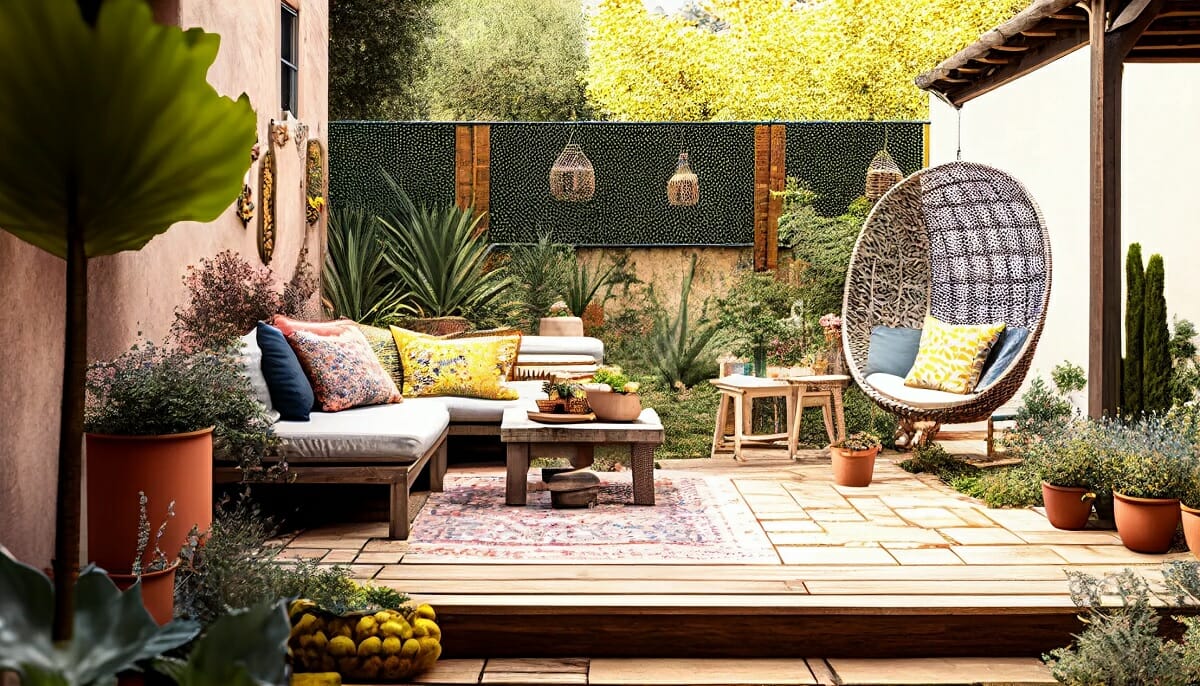
Welcome to the Ecolandscape Studio blog here we share experience, ideas, and simple tips on how to transform your property into a lively, beautiful, and comfortable garden. Today, we want to talk about the concept of “living rooms” in the garden an approach that helps every corner of your yard have its own function while harmoniously fitting into the overall composition.
Have you ever noticed that some gardens feel cohesive and well-thought-out, while others seem chaotic and inconvenient? In most cases, this is due to the layout. Living rooms create a structure similar to the rooms in a house: zones for relaxation, socializing, play, or solitude. For us at Ecolandscape Studio, it’s not just a trendy term but a way to make the garden a place where you truly want to spend time.
What Are Living Rooms in Landscape Design
The idea of living rooms originated in classical European parks, where spaces were divided into sections using trees, shrubs, and decorative hedges. Today, this approach has become popular for private yards because it helps create thoughtful, cozy, and functional zones. In English, it’s called a “garden room.”
It’s important to understand that living rooms are more than just flowerbeds and lawns. These are distinct areas, each of which feels like a separate space. For example, a corner with chairs surrounded by a living hedge immediately feels like an “outdoor living room,” while a quiet spot among trees can become a personal space for reading or meditation.
Martin Palma, founder and CEO of Ecolandscape Studio, always emphasizes that a garden should reflect the owners’ lifestyle, and that well-designed areas make time spent outdoors comfortable and inspiring.
Why Living Rooms Make a Garden More Comfortable
Modern yards are no longer just lawns with flowers. People want places to relax, work outdoors, host family gatherings, and enjoy evenings with friends. Living rooms help organize all of this.
We’ve noticed that even small changes like a living hedge separating a dining area or a bench among flowering shrubs greatly influence how a garden is perceived. They make it cozier and more functional, and they help use the space more efficiently. At the same time, it’s important that the garden remains unified in style. Materials, color schemes, and transitions between zones should be coordinated so that even several small “rooms” look cohesive.
How to Create Living Rooms in Your Yard
To form these zones, use living boundaries such as shrubs or arborvitae, which create a sense of privacy. Vertical greenery, like pergolas with climbing plants or arches, helps define pathways between zones and adds height and visual interest, especially in smaller gardens.
Lighting is also important. Even soft illumination of plants and paths in the evening makes the garden cozy and atmospheric. At our studio, we often advise clients to plan lighting from the start so that the zones “work” both during the day and at night. And details matter: varying plant heights, textures, and colors create depth and visual harmony.
Functionality is key. Before creating a living room, it’s important to determine its purpose. If it’s a relaxation area, comfortable chairs and a table are suitable; if it’s a quiet corner, a bench among trees and flowering shrubs is ideal. This approach allows you to choose the right plants, furniture, and lighting so that each zone is both beautiful and practical.
The concept of living rooms in the garden is not just a design trick but a tool that helps make a garden lively, functional, and cozy. Each zone has its own role, while the entire yard is perceived as a unified space.
For us at Ecolandscape Studio, this is an essential part of our work: creating gardens where people want to spend time every day. As Martin Palma says, properly organized zones can transform the way a garden feels and turn it into a place you always want to return to.









