We view plant installation not as the final decorative stage of landscape construction but as one of the most critical phases of the entire development process. Even the highest quality plant material cannot reach its full potential if the selected species are unsuitable for the site or if their placement fails to consider future canopy size, root development, and interaction with surrounding landscape elements. Martin Palma, founder and CEO of Ecolandscape Studio, emphasizes that professional planting begins long before vegetation arrives on site because successful implementation is built upon detailed site analysis, accurate composition planning, and strict adherence to professional installation techniques.
At Ecolandscape Studio, we believe that every planting decision should contribute to the long term stability and architectural integrity of the landscape. The process begins with a comprehensive evaluation of the natural conditions of the site. Soil composition, acidity levels, moisture content, groundwater depth, sunlight exposure, prevailing winds, and local climatic characteristics all directly influence the long term health of vegetation. A species that performs exceptionally well in an open sunny location may gradually weaken in dense shade, while another may thrive in consistently moist soil but struggle where water accumulates around the root system.
Specialists at Ecolandscape Studio analyze these environmental conditions as one integrated system, ensuring that planting strategies are based not only on visual design but also on the actual compatibility between plant species and the surrounding environment. The next professional step involves selecting plant varieties that complement both the architecture of the property and the long term development of the composition. We evaluate mature plant height, canopy shape, growth rate, seasonal transformation, flowering periods, and decorative qualities throughout every season of the year. Our objective is to understand not only how the landscape will appear immediately after installation but also how it will evolve over many years. Excessively dense planting often creates competition for sunlight and nutrients, while overly large spacing leaves the landscape visually incomplete for an extended period. We therefore develop planting compositions that allow vegetation to reach its mature form while preserving balance, healthy growth, and spatial harmony.
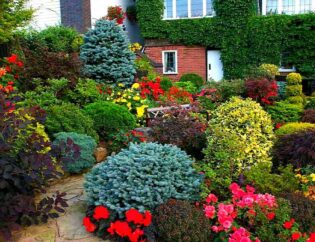
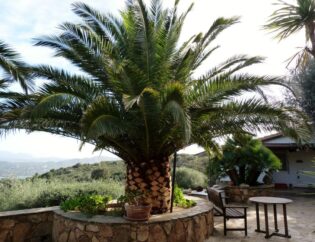
Particular attention is given to defining the functional role of every plant within the landscape. Large trees establish the primary scale of the environment while providing shade and spatial structure. Shrubs create boundaries, enhance privacy, and screen technical areas. Perennials, ornamental grasses, and ground cover species connect different planting layers, soften transitions, and maintain seasonal visual interest. Rather than filling available space with random vegetation, we create a carefully organized hierarchy in which every plant group performs a specific architectural and functional purpose within the overall composition.
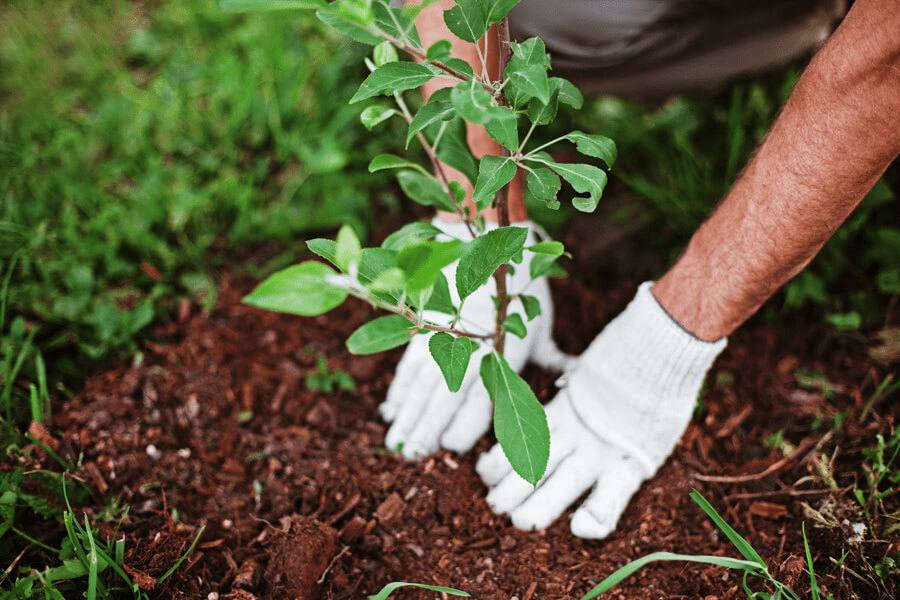
Preparing planting locations requires the same level of precision as selecting the vegetation itself. We determine planting pit dimensions according to root ball size, soil conditions, and the biological requirements of each individual species. Appropriate soil mixtures are prepared, drainage systems are introduced whenever necessary, and structural support is provided for young trees where required. Root collars must be positioned at the correct elevation because excessive planting depth can weaken plant health while insufficient depth increases the risk of root dehydration. Every installation procedure is carefully monitored because errors at this stage often become visible only months after construction has been completed.
The quality of planting material also plays a decisive role in the long term success of the landscape. We inspect root systems, soil ball stability, trunk condition, crown structure, and the absence of disease or mechanical damage. A plant may appear visually attractive while still containing hidden defects resulting from cultivation, storage, or transportation. Such weaknesses significantly reduce the probability of successful establishment and may lead to unnecessary replacement costs in the future. Professional inspection allows us to eliminate unsuitable specimens before they reach the site while preserving the integrity of the planned composition.
Following installation, every landscape enters an important establishment period that requires systematic observation. During the first weeks, proper irrigation, soil moisture monitoring, protection from strong winds, and continuous evaluation of planting conditions become especially important. No universal maintenance schedule exists because irrigation requirements depend on temperature, soil characteristics, plant size, and evaporation rates. At Ecolandscape Studio, we continuously monitor plant performance and adjust maintenance practices according to actual site conditions rather than relying solely on predetermined schedules.
Long term maintenance should support the natural development of vegetation without unnecessary intervention. Formative pruning, fertilization, mulching, pest management, and seasonal preparation are all carried out according to the biological characteristics of each species. We believe that a professionally designed planting system should become stronger and more stable over time rather than requiring continuous replacement or extensive corrective work. This result is achieved when maintenance continues the original design strategy while allowing the planting composition to gradually express its intended architectural character.
Within a completed landscape, vegetation contributes far more than decorative value alone. Plants regulate the microclimate, provide shade, reduce wind exposure, guide movement, create privacy, and establish a natural connection between architecture and the surrounding environment. We see professional plant installation as a carefully coordinated system in which species selection, placement, installation techniques, and long term maintenance operate as one integrated process. Only through this comprehensive approach can a landscape preserve its health, compositional balance, and functional value while continuing to mature successfully for many years.