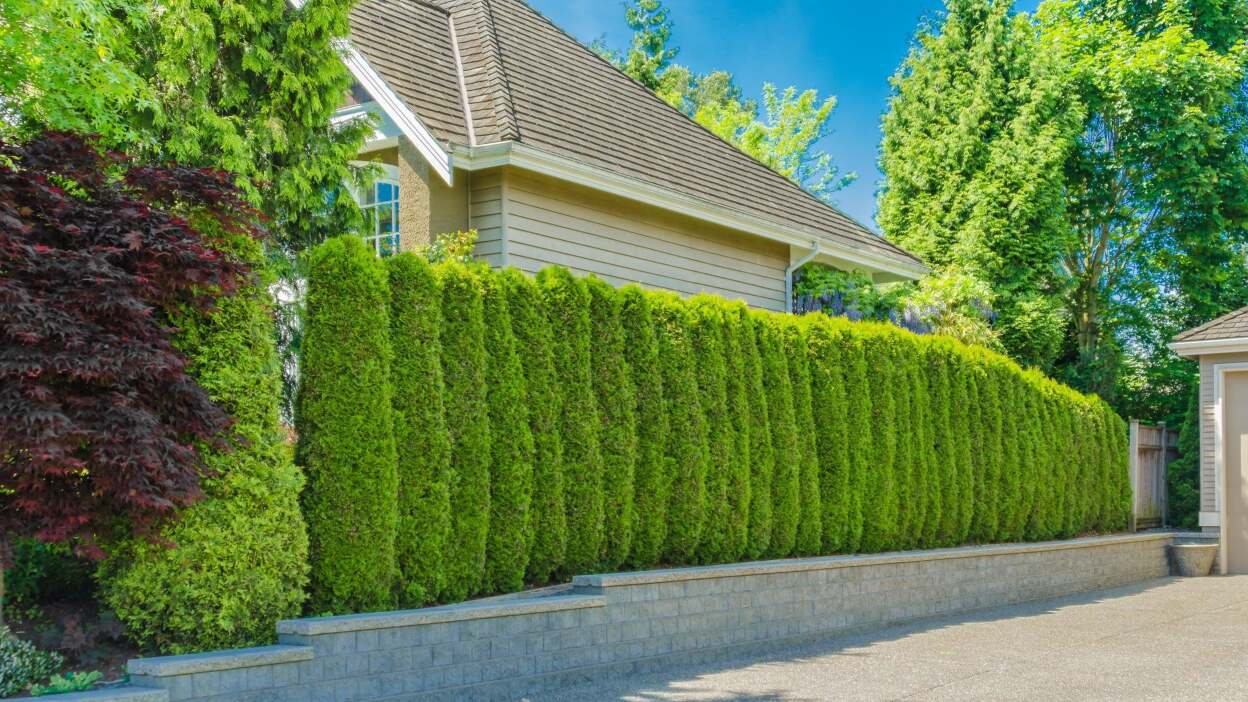
Green fencing, or live hedges, not only beautify a property but also serve important functions such as creating privacy, protecting from wind and noise. Unlike traditional fences, live hedges add ecological value and natural harmony to the garden, making them an excellent choice for modern landscaping projects. At Ecolandscape Studio, we believe that a well-chosen green fence can transform any plot. Today, we will share tips on creating live hedges that will delight you with their beauty and functionality for many years.
Why Choose Green Fencing?
Live hedges are not just decorative elements, but an important part of a functional landscape. They effectively protect your property from external factors: wind, noise, and dust, while creating private spaces for relaxation. It’s important to note that these fences also play an ecological role, absorbing carbon dioxide and releasing oxygen. This makes green fencing an excellent alternative to traditional wooden or metal fences, adding natural beauty and harmony to the garden.
Furthermore, live hedges provide privacy and prevent pollution, especially if your property is near a road. They help improve air quality by creating an environmentally clean atmosphere in the garden. But most importantly, live fences visually become part of your garden, creating a natural and organic landscape.
Choosing Plants for Green Fencing
When selecting plants for a live hedge, it is important to consider not only their appearance but also the plants’ requirements for climate, soil, and lighting. At Ecolandscape Studio, we recommend choosing plants that will thrive in the conditions of your plot and minimize the need for additional care.
For creating a dense green fence, evergreen plants such as thuja, juniper, or cypress are ideal. They will provide an attractive look year-round, protect your property from prying eyes, and maintain their shape even during winter. These plants require little trimming and have excellent decorative qualities. If you want to create a more dynamic fence, deciduous plants like lilacs, jasmine, or dogwood are great choices. They will not only bring greenery to your garden but also stunning autumn hues and bright spring flowers.
Flowering plants like jasmine or hydrangeas will make the fence even more attractive. Especially if you want to add aromas and bright accents to the garden, flowering shrubs will be an integral part of your landscape design. Climbing plants such as ivy or wild grapes are perfect for creating vertical fences, wrapping around lattice structures and adding texture to your garden.
Caring for Live Fencing
Live fencing requires regular care. To maintain its shape and health, it’s important to focus on watering, trimming, and feeding. For instance, during the summer, it’s crucial to provide the plants with enough moisture, especially on hot days. However, it’s important to remember that different plants have different water requirements. For example, conifers like thuja will require more watering than succulents. It’s essential to consider these differences in order to create optimal conditions for plant growth.
Pruning also plays a key role in maintaining the shape of a live fence. For most plants, pruning is recommended twice a year – in spring and fall. This not only helps form a dense and beautiful hedge but also helps prevent diseases and plant damage. For conifers, it’s best to avoid pruning during winter, as it could harm new shoots.
Additionally, using fertilizers is important for maintaining plant health. For conifers, fertilizers with high nitrogen content are recommended, while flowering plants benefit from fertilizers rich in phosphorus and potassium. Proper feeding will help the plants grow faster and give the fence a more vibrant look.
How to Place Live Fencing?
It’s important to consider where the live hedge will be located. For creating a barrier against noise and dust, tall plants like thujas or cypresses are ideal. Meanwhile, for separating different areas in the garden, such as flowerbeds or walkways, shorter plants like lavender or rosemary will do the job. This will create natural boundaries without overcrowding the space.
It’s also important to keep in mind that plants in live fencing may grow unevenly, and regular trimming and removal of damaged branches are necessary. Additionally, remember that plants with shallow root systems, such as conifers, should not be placed too close to plants with deep roots, like fruit trees. This will prevent competition for resources such as water and nutrients.
Martin Palma, Founder and CEO of Ecolandscape Studio, recommends «Proper placement of plants in live fencing is the key to its longevity and beautiful appearance. For successful landscape design, it is essential to consider not only the decorative qualities of the plants but also their care, water, and lighting needs. A live hedge should be harmoniously integrated into your garden, creating comfort and balance.»
Green fencing is not only an ecologically clean and aesthetically pleasing element, but also an important functional component in landscape design. By choosing the right plants and caring for them, you can create not just a beautiful but also a long-lasting green fence that will serve you for many years. At Ecolandscape Studio, we are always happy to help you choose the ideal plants and create a unique space that will bring joy and satisfaction.









