The yew (Taxus baccata) is a slow-growing evergreen tree that stands out for its longevity and unique appearance. It is perfect for use in landscape design due to its ability to adapt to various conditions and maintain its decorative value year-round. At Ecolandscape Studio, we recommend this shrub for various landscaping solutions, whether it’s for hedges, topiaries, or accents in rock gardens.
What is the Yew Tree and How Is It Used in Landscape Design?
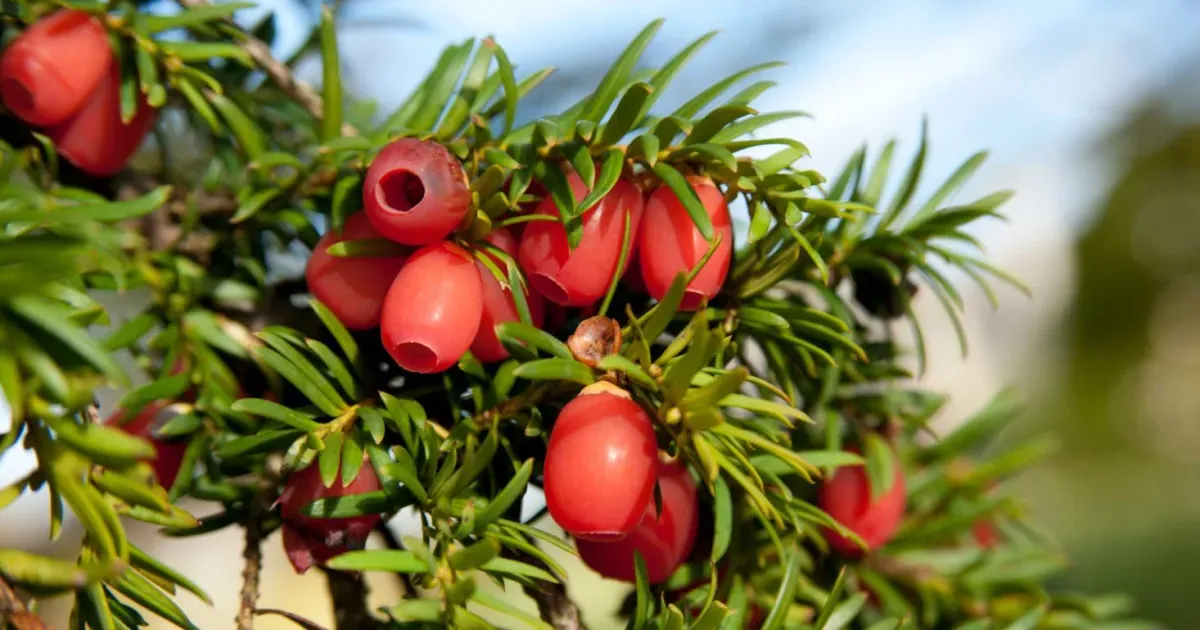
The yew (Taxus baccata) is a slow-growing evergreen tree that can live for up to 1,000 years. It is found across Europe, as well as in Asia and North Africa, though it is mainly present in the Carpathians and Crimea in Ukraine. Unlike most conifers, the yew has soft, flat leaves instead of needle-like foliage. The plant bears fruit that resembles berries, which is how it got its name. These berries can be red, blue, or brown, and are particularly ornamental in the winter months when most plants have shed their leaves.
As Martin Palma, the founder and CEO of Ecolandscape Studio, points out, «The yew is a plant that not only beautifies the area but also serves as a long-term element in the garden, requiring minimal care. It is ideal for creating various landscape shapes and looks great in any composition.»
How is the Yew Used in Landscape Design?
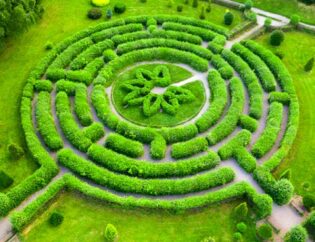
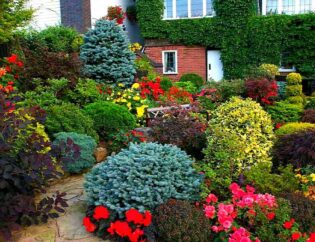
The yew is widely used in landscape design due to its ornamental qualities. It responds well to pruning, allowing the formation of various shapes such as spheres, pyramids, and other topiary forms. This makes it ideal for creating hedges and decorative elements that can serve both functional and aesthetic purposes in your garden. It is frequently used for creating «green walls» or as a backdrop for other, more vibrant plants.
The yew is also highly resilient to pruning, making it suitable for use in various landscaping projects, whether they are traditional or modern in style.
How to Plant Yew Trees
When planting a yew, it’s important to choose the right location and consider several factors to ensure proper growth. Yews prefer sunny or partially shaded spots, protected from direct sunlight, which can harm their foliage. The planting site should also be shielded from strong winds, as they can negatively affect the plant’s development.
The soil for yew trees should be slightly acidic or alkaline. Well-drained, light soil is ideal, as it allows good airflow to the roots. To improve soil structure, you can add peat, sand, and coniferous soil. It is also important to note that yews do not tolerate waterlogging, so ensure good drainage by adding sand or broken bricks at the bottom of the planting hole.
The planting hole should be about 70 cm deep to allow the plant’s roots to establish quickly. The root collar should be level with the soil surface.
Care for Yew Trees
The yew is a low-maintenance plant, but a few simple steps can significantly improve its appearance and health.
While it is drought-tolerant, the yew needs additional watering during hot periods. Watering once every two weeks is sufficient, but the frequency should be increased during dry spells. To maintain the health of the foliage, it is recommended to water and spray the crown, keeping it shiny and rich green.
Pruning is an essential part of yew tree care. Due to its ability to regenerate quickly after trimming, it is possible to create both geometric shapes and more natural hedges. Regular pruning also helps improve the density of the canopy.
Yews can be fertilized with organic fertilizers, such as compost or manure, in early spring, and mineral fertilizers for conifers during the summer. Fertilizing helps promote better growth, especially in poor soils.
In winter, the roots of the yew should be insulated to protect them from freezing. Fallen leaves, peat, or wood chips can be used for this purpose.
Propagating Yew Trees
Yew trees can be propagated by both seeds and cuttings. Cuttings are a faster propagation method that produces plants identical to the parent plant. Cuttings, 15-20 cm in length, are taken from the shoots and rooted in a mixture of peat and sand. To speed up the rooting process, rooting hormones can be used.
Seeds are collected in the fall, stratified in cold conditions for 6-12 months, and then planted in a nursery for further development.
The yew is a versatile plant that will add elegance and longevity to your garden. Due to its ability to be shaped, it is ideal for creating hedges, topiaries, and other decorative elements. With proper care, it will adorn your property for many years, providing not only beauty but also functionality.
As Martin Palma, founder of Ecolandscape Studio, says, «The yew is not just a decorative plant; it forms the foundation for long-term landscape solutions. It can be used to create both stylish and practical elements that will last for many years.»