At the Ecolandscape Studio blog, we often talk about landscape design, yard improvement, yard design, and garden landscaping. Today, however, we want to focus on one of the most expressive and functional elements of a garden, the mountain retreat. How can a rocky area not only look beautiful but also effectively protect against the elements, regulate the microclimate, and serve as a comfortable place to relax? This detailed article explores all of that.
A mountain retreat incorporates techniques inspired by natural landscapes, where rocks, vegetation, and terrain variations combine as if the site naturally formed this way. Such a zone adds dynamics, structure, and depth to the garden, and when thoughtfully planned, it becomes a true centerpiece of yard improvement, attracting attention and maintaining a sense of comfort and natural harmony.
What a Mountain Retreat Is and Why It Works
A mountain retreat is based on the principles of natural landscapes: using rocks of various sizes, terracing, multi-level plantings, and adapted vegetation. It is not just a decorative element but part of a system that manages the garden’s conditions. In natural mountains, soil is stabilized by plant roots and rock formations, water gradually infiltrates, and wind is softened by the terrain. Applying these principles to your yard design creates a space that breathes with nature and works for you.
Renowned landscape designers and gardening resources emphasize that alpine and rock gardens are not a trend but a way to use natural principles for sustainable garden development. Rocks provide stability, plants prevent erosion, and the overall composition becomes a living element of landscape design that evolves with your garden over time. Experts suggest using a variety of textures, heights, and colors to make a mountain retreat appear lively and evolving.
Examples of Successful Landscape Design
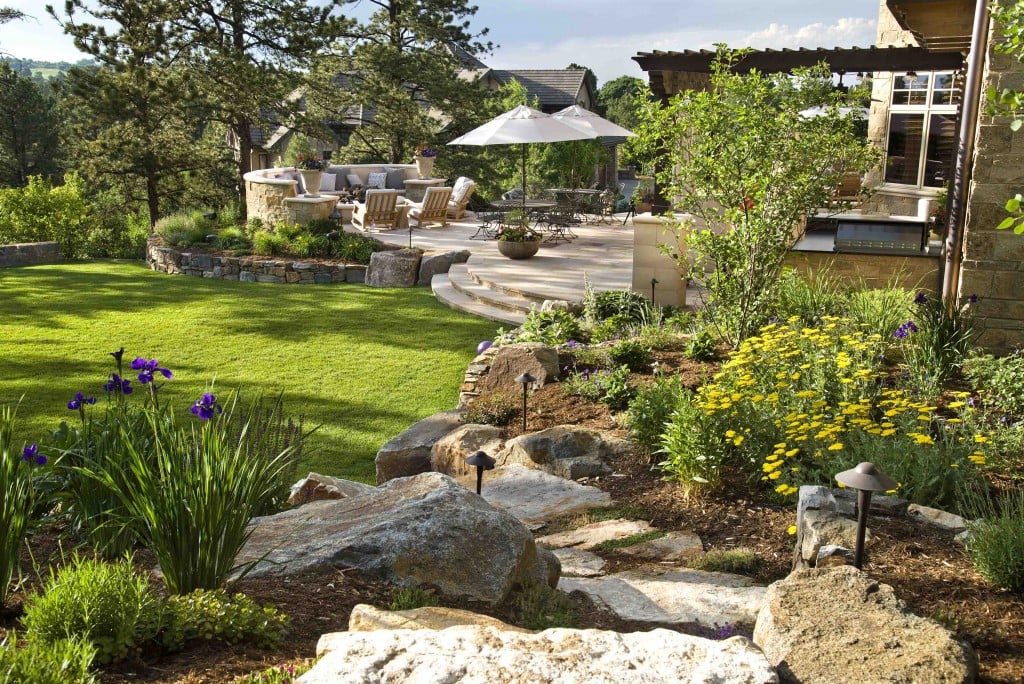
One common example in European gardens is a rocky terrace built into a slope. These terraces not only add visual volume but also provide convenient spaces for relaxation. Imagine entering a garden and seeing a composition where rocks of different shapes and sizes blend with layers of plants from low-growing sedums and thyme to tall grasses and dwarf shrubs. This is not just aesthetically pleasing, it is yard improvement that works, holds soil in place, and withstands heavy rainfall.
Another example is a rock waterfall or dry stream. It mimics a watercourse, allows rainwater to drain, and serves as a decorative line that guides the eye. Such an element in yard design creates a sense of movement and helps manage water flow naturally across the site.
How a Mountain Retreat Helps Fight Erosion and Weather
Erosion is a common problem on sloped sites. Without proper soil stabilization, water running over the surface gradually washes away soil, exposing plant roots and changing the terrain. A mountain retreat acts as a natural stabilizer: rocks slow down water flow, create natural steps, and plants with strong root systems anchor the soil.
On one steep-slope project, our team at Ecolandscape Studio designed multiple terrace levels with large boulders and drainage layers of gravel and crushed stone. Between the levels, we planted resilient plants with varied heights and leaf textures. As a result, water no longer washed the slope, the soil retained its shape, and the area became both a beautiful and functional part of the garden. This is a clear example of how thoughtful garden landscaping can solve complex engineering challenges.
Common Mistakes to Avoid
- Random placement of rocks without considering terrain
Many gardeners believe scattering rocks around the yard is enough to create a natural look. This is a misconception. Rocks should be placed so they appear part of the natural terrain; otherwise, they immediately look artificial. This reduces aesthetic appeal and prevents the structure from effectively managing water flow. - Ignoring drainage
Failing to plan for excess water drainage, especially on slopes, can cause even the hardiest plants to rot and may shift rock structures. It is crucial to consider water runoff directions and integrate drainage channels or dry streams to gently direct water to safe zones. - Wrong plant selection
Alpine gardens require specific plants adapted to rocky soil and changing conditions. Often, decorative plants unsuitable for dry, rocky environments are planted, resulting in plant loss and ongoing maintenance needs. The solution is to choose resilient species comfortable among rocks and in sunny areas, such as sedums, low grasses, thyme, and dwarf conifers.
Our founder and CEO of Ecolandscape Studio, Martin Palma, shares his insight: “When we create a mountain retreat, we don’t just place rocks and plants, we create a system that lives on its own. We consider natural processes so they work for the garden, not against it. This isn’t about decoration, it’s about interacting with nature. When done right, the garden truly comes alive.”