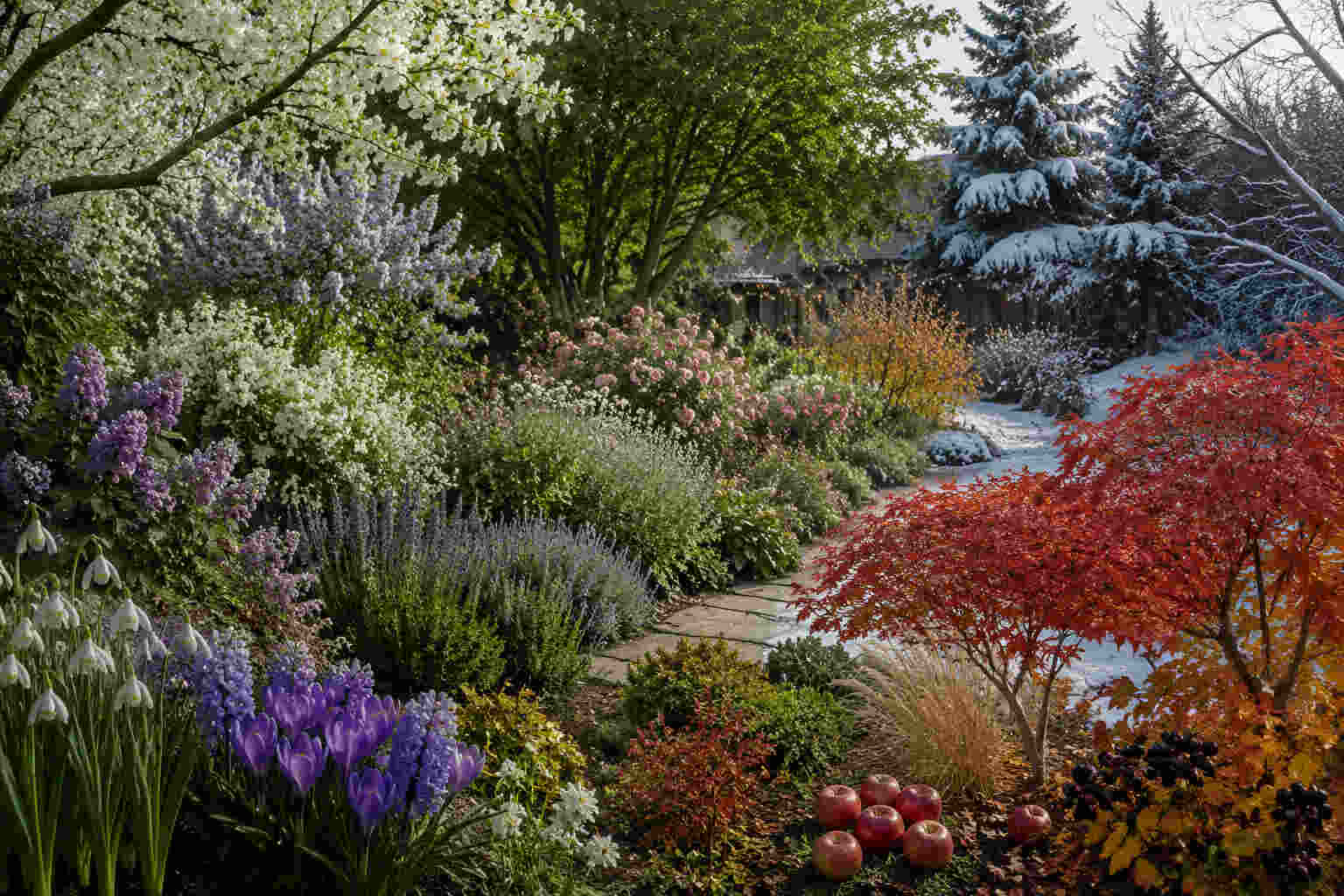
Modern landscape architecture often relies primarily on visual perception: the colors of blooms, the geometry of canopies, and the architectonics of the terrain. However, experts at Ecolandscape Studio propose expanding these boundaries and integrating full-fledged olfactory scenarios into their projects. The deep human connection with space is formed through all the senses, among which the sense of smell has the unique ability to instantly evoke long-term memories and strong emotional responses. Designing unique aromatic gardens, where the changing seasons are encoded through subtle plant fragrance compositions, opens a completely new dimension in suburban landscaping and premium greenery. This interdisciplinary approach transforms any private estate into a dynamic interactive narrative, where each month unfolds a new olfactory chapter, and volatile organic compounds act as markers of natural seasonal cycles.
The spring fragrance scenario is built on a delicate contrast of absolute freshness, damp thawed earth, and the first sweet notes of awakening flora. The season traditionally begins with barely perceptible, fragile aromas of small bulbous plants snowdrops, spring snowflakes, and crocuses which are then rapidly replaced by a powerful, concentrated wave of hyacinths, daffodils, and muscari. As the soil warms, woody and shrub species take center stage, creating a volumetric aromatic framework for the garden. Special attention in the spring composition is given to common lilac, cultivar mock oranges, early bird cherry, and forsythia, whose volatile essential compounds fill the air with a sense of total renewal. During this period, it is critical to carefully consider the local wind rose so that the spring breezes carry these delicate fragrances toward main relaxation areas, walking paths, or open windows of residential buildings. To enhance the effect, the lower layer is enriched with forest violets and lilies of the valley, creating a grounded olfactory stratum.
With the arrival of summer, the olfactory palette becomes denser, richer, multi-layered, and spicier. The delicate spring primroses give way to deep, sensual notes of rose gardens, the enveloping trail of blooming lindens, and the honeyed accords of meadow perennials such as meadowsweet and clover. A key element of summer landscaping is the creation of full-fledged apothecary gardens and stylized gravel gardens with an intensive use of aromatic herbs: narrow-leaved lavender, meadow sage, hyssop, oregano, thyme, and numerous mint varieties. These Mediterranean and meadow plants release the highest amount of valuable essential oils during the midday heat, producing a powerful natural therapeutic and stress-relief effect. The distribution of summer phytocompositions requires precise zoning into isolated micro-areas, ensuring that dominant scents, such as lilies or tubular roses, do not clash with the subtle notes of conifer resins, junipers, and flowering jasmine.
Martin Palma, founder and CEO of Ecolandscape Studio, shares his professional experience in creating such spaces: “Most people are used to evaluating a garden with their eyes, but the true magic of a plot reveals itself when you close your eyes. My personal discovery happened while restoring a historic estate park: I realized how precisely scents regulate our internal clock and biorhythms. Fragrance is the shortest path to the subconscious. By designing olfactory scenarios, we create an invisible architecture that helps people slow down, synchronize with natural rhythms, and experience each season on a deeply sensory level. We don’t just plant beautiful shrubs we make the space speak to the owner in the language of emotions and associations.”
The autumn stage of the olfactory scenario radically changes the overall mood of the garden, shifting the focus to warm, tart, deep, and earthy accords. The time of vibrant flowering gives way to the melancholic aromas of falling leaves, damp bark, and ripening fruits in the orchard. A characteristic spicy-caramel scent, reminiscent of fresh pastry or burnt sugar, is provided by Japanese maple (Acer palmatum), whose leaves release specific volatile molecules of maltol as they fall. This sweet, cozy trail harmoniously blends with the bitter notes of late Korean chrysanthemums, dry ornamental grasses, sedums, and the tart scent of moist thuja and juniper, preparing the garden for winter dormancy. Additional olfactory depth in autumn comes from the fruits of decorative apple trees and chokeberries, which emit a subtle wine-like aroma as they begin to freeze.
Even during winter, when most plants are dormant, olfactory design continues to function. The winter scenario is based on resinous, balsamic scents of conifers Korean fir, Weymouth pine, and blue spruce. During sudden temperature fluctuations and thaws, their needles release phytoncides that not only purify the air but also create a unique aroma of cleanliness and frosty freshness. In addition, there are unique winter-flowering plants, such as witch hazel or sweet viburnum, which in regions with mild winters can bloom amid the snow, emitting strong citrus or almond fragrances that contrast with the sleeping landscape.
Successful implementation of a complex aromatic garden concept requires Ecolandscape Studio specialists to possess meticulous knowledge of dendrology, plant physiology, and aerodynamics. Landscape engineers always account for the fact that heavy, sweet scents linger for a long time in low-lying areas, enclosed patios, and courtyards, whereas light, citrus, coniferous, and resinous notes unfold much better in open, well-ventilated spaces. Correct distribution of plants by height layers and the timing of daily emission of fragrant compounds allows complete avoidance of olfactory chaos. A professionally designed aromatic garden functions as a living chronometer, transmitting the continuous cycle of life through successive waves of fragrances, restoring humans’ ability to empathize with natural changes, and supporting their psycho-emotional well-being.









