Modern cities face a serious challenge: the degradation of natural water bodies. Pollution, urbanization, and climate change lead to declining water quality, reduced biodiversity, and diminished recreational value of lakes and ponds. Restoring urban and suburban water bodies has become a priority for sustainable development, and bioremediation methods play a key role in creating ecologically balanced systems.
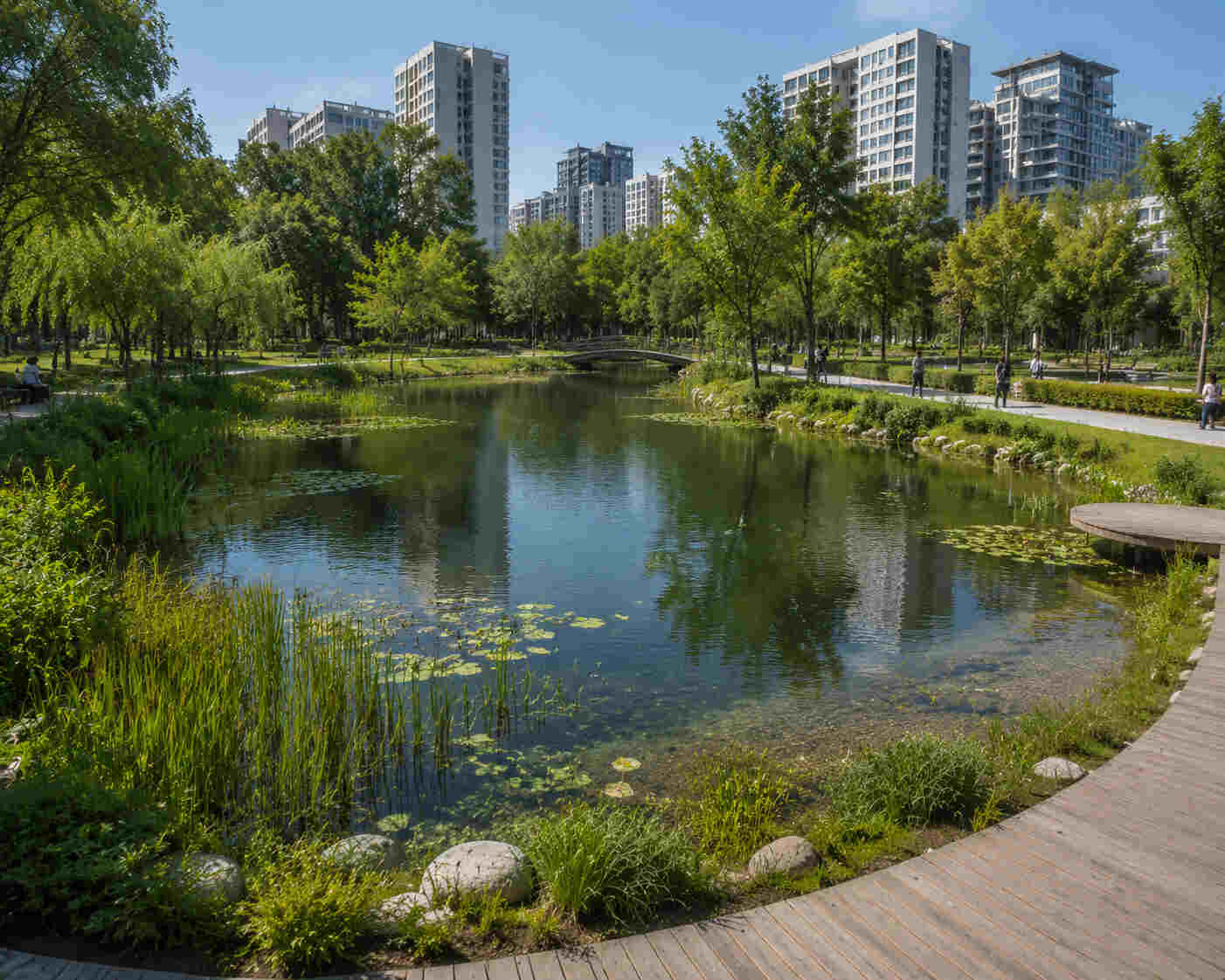
Bioremediation involves using living organisms to naturally clean water and restore ecosystems. In Ecolandscape Studio practice, aquatic plants such as reeds, cattails, and elodea are used, along with microorganisms that break down organic and mineral pollutants. Combined with ecological filters and bioengineered structures, these solutions create self-regulating water bodies that maintain water quality and provide habitats for birds, fish, and insects. This approach allows urban lakes not only to purify water but also to stabilize shores, preventing erosion.
Reviving water bodies has a dual significance: ecological and social. Aquatic areas become full-fledged public spaces where residents can relax, observe nature, and engage in active recreation. Integrating ecology and landscape design transforms lakes into visually appealing and functional spaces, enhancing the quality of the urban environment.
Martin Palma, founder and CEO of Ecolandscape Studio, emphasizes: “For us, restoring water bodies is not just about cleaning water. It’s about creating living ecosystems that benefit both nature and people. Every project is an opportunity to unite science, design, and environmental responsibility, making cities more comfortable and sustainable.” His experience shows that combining bioremediation with modern landscape approaches allows the creation of water bodies that remain functional for a long time while attracting diverse flora and fauna.
Global practice confirms the effectiveness of bioremediation. In Sweden, restoring urban ponds reduced water pollution by 70% in just two seasons, thanks to a combination of aquatic plants, microorganisms, and natural filters. In Canada, industrial water bodies are being transformed into ecological zones where water is naturally purified, and lakes become hubs for residents and tourists. These projects demonstrate that even in densely built cities, sustainable and thriving water bodies can be created.
Reviving water bodies also helps cities adapt to climate change. Water regulates the microclimate, mitigates the urban heat island effect, increases humidity, and supports the natural water cycle. Bioremediation ensures long-term ecosystem stability, reducing the need for constant intervention and lowering maintenance costs.
Thus, restoring urban and suburban water bodies through bioremediation is an investment in ecological and social futures. The experience of Ecolandscape Studio under Martin Palma’s leadership demonstrates how modern landscape design can harmoniously merge with science and nature. By creating water bodies that purify water, support biodiversity, and become centers of life for people, we shape sustainable and beautiful urban spaces.
Reviving water bodies with bioremediation is a path to harmony between cities and nature, where every element of the ecosystem works toward sustainable development and residents’ well-being.